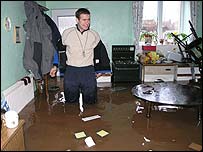
What to do after a flood*Call your insurance company's (24 hour) Emergency Helpline as soon as possible. They will be able to provide information on dealing with your claim, and assistance in getting things back to normal. 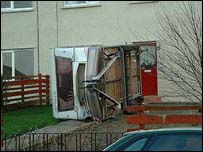 | | A caravan blown over in the strong gales |
Keep a record of the flood damage (especially photographs or video footage) and retain correspondence with insurers after the flood. Commission immediate emergency pumping/repair work if necessary to protect your property from further damage. This can be undertaken without insurer approval (remember to get receipts). Get advice where detailed, lengthy repairs are needed. Your insurer or loss adjuster can give advice on reputable contractors / tradesmen. Beware of bogus tradesmen and always check references. Check with your insurer if you have to move into alternative accommodation as the cost is normally covered under a household policy. Make sure your insurance company knows where to contact you if you have to move out of your home. Cleaning UpFind out where you can get help to clean up. Check with your local authority or health authority in the first instance or look under 'Flood Damage' in Yellow Pages for suppliers of cleaning materials or equipment to dry out your property. It takes a house brick about one month per inch to dry out. Open doors and windows to ventilate the house, but take care to ensure your house and valuables are secure. Contact your gas, electricity and water company. Have your power supplies checked before you turn them back on to make sure they have dried out. Wash taps and run them for a few minutes before use. Don’t attempt to dry out photos or papers - place them in a plastic bag, and if possible store them in the fridge. Throw away food which may have been in contact with floodwater - it could be contaminated. Contact your local authority Environmental Health department for advice. The Citizens Advice Bureau and other organisations may be able to help if you feel under pressure, their numbers can be found in the phone book. * This information has been taken from the Environment Agency website at www.environment-agency.gov.uk - there is a direct link on the top RHS of this page. |