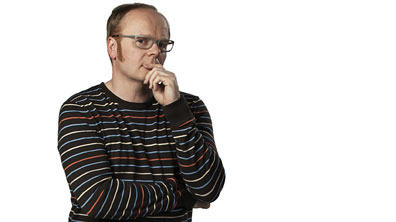
As a psychologist I have been both fascinated and appalled by the increase in TV talk show therapy.
Transformation on television - once in the realm of the home, diet or fashion make over has now moved into our lives and how we live them: from how we parent our children to how we resolve our relationships.
These shows are watched by millions and sometimes taped in front of audiences who themselves are invited to make comment on the problems and the sadness that unfolds before them.
Psychology on television isn't new - television with its sound byte reality and need for the quick digestible explanation has often exploited the profession in order to assuage the audience appetite for drama, explanation and resolution.
But is it now going too far? Are we are now moving into more dangerous territory with anyone seemingly able to have their own talk show and use it to parade and exploit the stories of the most vulnerable and the most needy for instant entertainment value? And should the professional communities that work within the mental health arena take a stand and be strategically involved in the production of these programmes in order to protect both the public and the core values of their professions?
Some of you will know that I am the psychologist working on The Vivienne Vyle Show. All of you will know of Vivienne Vyle, the broadcaster who has been on our screens since she first started working as a weather girl on morning television in the early eighties.
Vyle now has her own daytime talk show, watched by at least a million viewers each day and with her own website, publishing deal, newspaper column, book club and an enormous advertising revenue generated by her daily programme, she is arguably fast becoming the British Oprah.
Each day Vyle tapes between two and three shows in front of live studio audiences and has contributors who will talk about anything from domestic violence to addiction and eating disorders to self harm.
Vyle will resolve paternity disputes with her now weekly DNA reveal slot (subtly named: 'who's the daddy?'). Show contributors come on either crying or shouting (usually both) and are then treated to what is now famously referred to as the 'Vyle treatment': Vivienne's own brand of straight-talking honesty which is always direct, blunt and dare I say it, often hard hitting and uncompromising.
Vyle will say what she thinks in a way that feels at times admonishing and even mocking - especially when she uses the audience to make a point whether it be a subtle raise of an eyebrow that gets an audience jeering or a direct invitation for the audience to support one of her longer diatribes with wild cheers and applause.
My description of Vyle and her shows sounds critical and I know that many fellow colleagues will view her and others who inhabit this genre in a very negative light.
As a psychologist trained in the assessment and treatment of mental health difficulties I like many have viewed these shows as exploitation in the extreme. A dangerous theatre of cruelty where the contributors are there not from a genuine desire by production teams to help them with some enormous difficulties but because they provide fascinating and gruesome viewing within the format of a modern day freak show. The voyeurism of the audience is satiated one hundred fold as 'real human stories' are heard and then stage managed to give maximum pathos and horror with minimum time or intervention.
The aim of her show is to talk openly and honestly about issues that should never be hidden.
These shows, many would argue, provide the same entertainment value as was enjoyed by the Elizabethan hoards who would witness public executions or the Victorian gentry taking a Sunday outing to view the inhabitants of the local asylum.
But Vyle is no autocutie. She does not speak from a script, she speaks from her own heart and mind. Her brand of honesty while difficult to digest is never set up to be therapy or indeed therapeutic - as Vyle herself has said, the aim of her show is to talk openly and honestly about issues that should never be hidden. In effect Vyle argues that her show, rather than exploiting human vulnerability, is in fact destigmatising it.
Furthermore given that Vyle has never claimed to be a counsellor or therapist (that is why she employs me), she is in effect merely a facilitator of frank and open exchange but, by it occurring on her stage under her control, an extremely effect mediator in arguments that one suspects have gone on in living rooms in a much more heated and aggressive way.
However what is intriguing about Vyle is that her uncompromising honesty keeps them coming back. She is no soft daytime talk show sweetheart frowning sympathetically into a camera while a red dot flashing on a map of Britain is accompanied by the disembodied voice of an unhappy woman. Not at all.
Vyle is Vyle in that way that Thatcher was Thatcher - women with no female (nor male) equal within their domain, women respected and admired across gender, race, socio economic status and class.
Women who represent the strong maternal figure we all desire, the uncompromising mother who will hold us together when we feel fragile by jolting us out of our stupor of self pity, showing us where we were letting ourselves down and then motivating us into a fervour of responsibility and a wish for positive and constructive change.
Like Thatcher motivated the east end boys to infiltrate the stock exchange and make their millions, Vyle too speaks a language respected and understood by those who put themselves in front of her for their public 'kick up the a**e'.
Vyle, when she rants at her guests, is no different to their mum or their Nan who for months, even years, have been telling them what a useless good-for-nothing they are - so she communicates in a manner they understand. However Vyle with her sleek polished look that emanates her success, is telling them from a standpoint of respectability and prestige. And this is why Vyle has value.
Therapy has for many years been seen as the privilege of the articulate. The guests on Vyle's show would, in the main, never engage in therapy until in crisis and even then find the process alien given that therapy requires a form of talking that Vyle's guests don't do and don't relate to.
What Vyle does however is enable such people to engage with therapy via her ability to communicate with them in a way they instinctively relate to - aggressive, blunt and uncompromising.
Vyle will ask her guests to decide which door they are going to walk through - the door that continues them on the road of self pity and wasted opportunity or the door towards personal, emotional and psychological change. If they choose the door marked change, they will then meet me on the other side and so then the real work can begin.
So, before Vyle is judged as an evil manipulator of human distress maybe we need to recognise that she brings individuals in crisis towards mental health salvation in a way that no one else has ever done via her unique brand of honesty.
So in fact Vivienne Vyle is an important agent of social change and mental health professionals should not dismiss her work but value her contribution to the emotional and psychological well being of our society given her innate ability to bring people into contact with themselves and the possibility of counselling and therapy in a way never before achieved.
We must not judge but work alongside her. Maybe indeed, the Vyle treatment is not so vile after all.