| | | | | | | |||||||||||||||||||||||||||||||||||||
| | ||||||||||||||||||||||||||||||||||||||||||
|
In-depth reports and analysis | ||||||||||||||||||||||||||||||||||||||||||
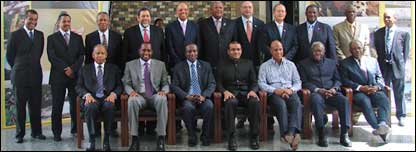
The 31st regular annual Heads of Government Conference of the Caribbean Community (Caricom) concluded in Montego Bay, Jamaica, on Wednesday (July 7 2010) with a low offering for optimism in the immediate future progress of the now 37-year-old regional economic integration movement. Having initially raised hope midway of the four-day event for a new approach to ensure realistic management appropriate for today's challenges from the global economic and political crisis, the leaders were to back off by closing time. Future in balance? Not surprisingly, they postponed for another 'special meeting', scheduled for September this year when they are to consider likely alternative governance models for better management. In its normally lively 'discussion forum', the BBC Caribbean Service has been encouraging responses to the provocative question: "Does Caricom have a future?" That was while the Community's Heads of Government were still wrestling with the cynicism and disenchantment their inactions have spawned over repeated failures to implement decisions, unanimously taken, for progress towards Caricom 's Single Market and Economy (CSME). While the official communique was not available to the region's media up to the time of writing on Thursday afternoon (July 8), the comments flowing from an end-of-summit press conference on Wednesday made sufficiently clear that the elusive governance issue had once again proved a barrier the leaders were still unprepared to scale. Deepening concerns It is a failure that could only deepen concerns over the leaders' credibility to make a reality of the Community's flagship project, either in the remaining years of this decade or the next, of a single economic space in a region that constitutes a microcosm of the world's peoples, cultures and varying levels of social and economic development. Often viewed, among Latin American, African and Asian bloc of countries as a cohesive and productive experiment in regional economic intregration, Caricom has clearly done reasonably well in wide-ranging areas of functional co-operation and foreign policy co-ordination. When, however, it comes down to implementation of decisions on major issues involving critical segments of its treaty-based arrangements for inauguration of a single, market and economy, there lies the rub. Lack of political will Their failures rooted in lack of collective political will to overcome parochialism and a narrow sense of nationalism in favour of a shared vision of "one people, one market, one Caribbean" - to which all the leaders claim commitment -continue to afflict Caricom.
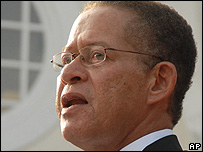
Consequently, the spreading sense of alienation and defeatism, if not the 'despair' alluded to in the BBC Caribbean discussion forum on 'Caricom’s future'. The announcement by Prime Minister Golding, in his capacity as Caricom’s new chairman, that a committee of prime ministers has been identified to come forward with proposals for the forthcoming 'special meeting of Heads' in September to address alternative forms of governance, cannot seriously be considered as anything of significance. The Community has gone that way before with 'Prime Ministerial Working Groups' and high-level Committees of regional technocrats. The coming September meeting seems destined to do what Trinidadians like to equate, as 'spinning top in mud'. Amid the expanding words game on Caricom’s future governance, more and more Heads of Government, are complaining against 'talk' and urging 'action'. They are simply reprimanding themselves, but in the current circumstance, it is an appropriate rebuke. Ironically, in rushing to announce a prime ministerial committee to consider a new 'governance' architecture, leaders present in Montego Bay seem to have forgotten to include the Prime Minister of Belize, Dean Barrow who, in Caricom’s quasi-cabinet system holds lead responsibility on governance and justice. Or did he decline to serve? |
LOCAL LINKS  That elusive governance structure That elusive governance structure 07 July, 2010 | News The case for a Caribbean Commission02 July, 2010 | News Caricom and popular sentiment02 July, 2010 | News Reconstructing Haiti urgent priority 05 July, 2010 | News EXTERNAL LINKS The BBC is not responsible for the content of external internet sites | ||||||||||||||||||||||||||||||||||||||||||
| |||||||||||||||||||||||||||||||||||||||||||
 | |||||||||||||||||||||||||||||||||||||||||||