| | | | | | | |||||||||||||||||||||||||||||||||||||
| | ||||||||||||||||||||||||||||||||||||||||||
|
Cost of living debate | ||||||||||||||||||||||||||||||||||||||||||
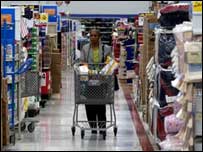
The refrain is echoing across the Caribbean: the cost of living is too high, especially for food and other basic necessities. The issue has sparked a running debate over who's to blame and what should be done. Have your say (This debate has now closed) How are you being affected by the rising cost of living and what do you think governments and businesses should do about it? What you've been saying Note: This forum is moderated by BBC Caribbean. I agree with Natasha (Christchurch, Barbados). I visit Barbados yearly and I have seen how food prices have increased year on year. All my family have returned to Barbados now and complain about the continued rising cost of food. A large portion of their pension is spent on food. The incumbent government of Barbados needs to re-prioritise the business of the island. Stop allowing foreign investors to buy up the best parts of the island. Once those condos and hotels are built there will still be the local Bajans making a pittance, so they will continue to suffer - and what of their children? Owen Arthur says grown what you need. It's easier said than done when prime agricultural land is being sold off to the highest bidder to build million dollar homes that the majority of Bajans can never afford or live in. Here in the Turks & Caicos cost of living is extremely high and the minimum wage is not enough to cover these costs therefore many persons are forced to have 2, sometimes 3 jobs. We are a very small country mostly made up of shrubbery and presently don't have the option to grow our own food as we do not have the natural resources to do so. As a result practically all of our food is imported. If the government were to implement lower import duties, the suppliers in turn could pass on cheaper prices to the consumers and still make a profit. However this is not going to happen, with the privatization of our main import dock we are soon to be facing a (massive)increase on import costs. Obviously the suppliers shall in turn pass this cost onto the people who already are struggling to make it. Living costs are also extremely high, rent being the main culprit. As the population recently has drastically increased, the majority of inhabitants live in rented accommodations. There are many families, 4+ people, living in a one bedroom apartment because they can not afford the rent of a two bedroom. Low cost housing schemes have been implemented, however the houses realistically are still too expensive for the average working class person to afford. The houses cost way less to create than the actual price that they are being sold for, thus the parties involved are making huge profits at the expense of the people. A lot of the same issues are happening through out the Caribbean and something needs to be done It is a world wide problem. Not only in the Caribbean is the cost of living is rising, here in Canada it is the same. Not at the rate it is in the islands. People need to do more for themselves. Here in Brampton I plant my own in the summer and I have them all year - fresh or frozen. The fact that St Kitts never had a national dish until just recent, speaks to the lack of interest in agriculture in my country and one of the major causes of the high cost of living. What happened to "plant your own, grow your own and feed your own”, and “buy local"? I guess the frugal days have been replaced by more exotic tastes and greater wealth that we sometimes forget what benefits and healthy living means 'eating the great greens and vegetables etc grown in these parts of the world'. Look at the present escalating health problems in this region and the potential for the a growing export market and more foreign exchange reserve, to feed the demands of the growing Caribbean and West Indians population in North America. If I and I eat Jah's itals, then cost of living is no problem. If you eat swine and them type of food you pay twice: Price and Health. Jah Rastafari Caribbean countries are price takers. There is no solution under than a return to voluntary simplicity. Illegal drugs fuelling a parallel underground economy, tourism leading to an excessively grotesque appetite for foreign foods, a lack of understanding of macroeconomics and an oppressive labour relations climate all make the cost of living a disgrace. We must cut back eating processed foods and seek food security as our number one priority. I would also nationalize the retail sector or at least set up state controlled import companies like Senor Chavez is doing in Venezuela. Finally, I would ban cruise ships from coming to our countries and tourists who leave no money in our region. The cost of living will only continue to increase at the expense of the working class in the region as Caribbean societies become urbanized due to the loss of traditional export markets for our agricultural products and way of life. The real issue is one of competition. The economies of Caribbean countries are dominated by monopolies and oligopolies. The real cost of living problem is the control of Caribbean economies by these cartels and combinations. The Governments of the Caribbean keep saying grow what you eat and eat what you grow, but if everyone has a kitchen garden then the market people will not be able to earn money hence we will have a set of unemployed people. The business places don’t absorb any rise in prices, they pass it all on to the consumer. Why not raise wages? If people have money they will spend, so no one will feel the effect. I think Barbados has done a good job. They produce their own milk, juices etc It time to stop. What we need in these countries are governments that are for the people and willing to make sure that the people get the best price for their money. What we have now iare governments, that only look out for themselvs and special people, while the poor get poorer and the cry from the people get lounder. It's got to stop. This has gone on for way too long. The problem of high food prices is just one of the many manifestations of the Caribbean so called development. Development and modernization are one and the same in the Caribbean and the current wrong footed leadership (except Barbados)of the cabal that calls themselves CARICOM Heads of Government do not inspire confidence for a future for many Caribbean people living in the Caribbean. So migration is a very viable option. What has ever come out of the big US engagement they prided themselves about so much last year? Our problem has been made worse by the lack of support for agriculture by succeeding governments. In fact our present Prime Minister called cane growing & cutting "slavery". If producing food is slavery no wonder we are facing skyrocketing prices. In addition many people believe that the removal of VAT will reduce prices, however so few food items now have VAT that this will only result in a very small reduction of only a few TT$ weekly. We expect to get more for our oil and for others to keep their prices the same, this does not make sense. I am at my wits end at the price of living in the Islands. I’m from St Kitts an island that once depended on sugar as an export crop. Sugar is dead now and alternatives must be sought. When you look at the produce of local goods it’s a disgrace. Many indigenous foods are imported now. There was a time when most, if not everybody had a ‘ground’( a patch to grow food). Obesity was unheard of people were healthy, we grew and bought local. With the decline of sugar the Government have vast tracks of land at their disposal. It would make sense if some of it was set aside for agriculture. The West is moving in and we are eager to appease them for a quick the dollar at the expense of the nations health which will cost in the long run with the emergence of poor Western diets. The decline in health in the past twenty years has been astonishing. The increase in prices of goods and cost of living are too high for us in the region on a whole. The people ought to be blamed because they spend too much money buying gadgets and other unnecessary products and concentrate less on a daily meal. The governments have to be blamed as well as they only care about themselves and their well-being when they get into power. Things are getting way out of hand. The last time I visited my home island, on my first visit to the supermarket I left feeling ill, without having bought anything. Items are being overpriced and taxes are way too high. Middle and lower class people are struggling to survive. But it does not have to be this way. It seems to be a deliberate attempt to wipe out the middle class and force a return to a feudal society. It is true that we are moving away from our traditional skills (farming etc) to take on new practices to cope in the world. I believe this must happen because of the rising dept and the inadequacy of traditional skills to leverage the kind of productivity that is need to quell our growth pains. I believe the Caribbean needs to make synergies to achieve economies of scale for competitive exporting. Enter niche markets to provide health supplements and organic and specialised foods and restrict imports from countries outside the Caribbean and Latin America. I think we need a plan for intra island transportation and communication that will support these efforts. The price of food in the Caribbean (St. Lucia in particular) is ridiculous. Everything has increased, especially our basic necessities. Rice, flour, milk, salt, sugar, tinned foods etc. What is going on? The disparity between smaller islands and the larger island is quite evident. The cost of living, especially food, is extremely high. This I find is quite (odd) since many of these islands boAst of a strong agricultural background and growth. I wonder if it is that we dispose of our income on other trivialities and then complain about the necessities that we postponed. Our leaders allow our islands to be the laundry of the West. I say raise the salaries of the people. I agree with Karen G. People in Guyana are lazy. The cost of living is so high .It’s all over the world that the rich ones are squeezing the poor to remain rich and in control. Most (parties) would promise you all sorts of things when they have no power, but as soon as they get into power they forget about the poor because they plate is full now. I think the 15% vat hasn't done any good in reducing prices - food continues to rise at prices it makes you wonder we are just barely surviving. St Lucia and indeed much of the Caribbean has always been known as a place where people can "live off the land" However, sadly the reality is that in recent times, people are reluctant to farm their land, and therefore are becoming more dependent upon having to buy everything. With such fertile land in St Lucia, surely we should invest some time in growing more food for ourselves, otherwise one has no choice but to go to the local market or supermarket where I acknowledge the prices are certainly on the increase! Interesting, I often find it odd (some UK branded products from at the higher end of the price scale are sold in St Lucia!) As a Guyanese who visits home often, I see the laziness with everyone wanting ready-made food. Get back to the basics from the land. When I come home it is fruits, vegetables and seafood. I don't want the processed food imported since it is causing us lots of illnesses. Your garden and farms are the best sources of food. Leave the canned and frozen stuff that is not natural to our region. I moved to Canada from St. Lucia in 2003. Living on a small student's budget I quickly learned how and where to get the best deals on groceries, and was very proud to find that I could live on just over $150 Canadian worth of groceries per month! Whenever I visit St. Lucia and run to the shop for my parents, I am baffled to find that less than half of what I would buy in Canada (most being of the same brands) cost more than twice as much in St. Lucia! I just cannot believe how rapidly prices go up for basic needs over there. I definitely hope that the new government in St. Lucia (and governments in the rest of the Caribbean) will do all in their power to help people to be able to start affording food and other basic needs for themselves and their families. Government waste and mismanagement has created deficits which in turn impact the cost of everything including food. Local truck farming is not supported by our Senators expect in re-election speeches. The increasing cost of electricity, water and gas impacts the ability to purchase food for many families. As a nurse working in the community and in homes all over the island, it is not unusual to find people trying to decided whether to buy food, medicines or pay their basic rent and utility bills. With low pay scales and high living costs, many of our best and brightest are leaving for Canada, UK or USA in order to have a decent future. This is not an overnight manifestation. Food prices have been increasing steadily within recent times. Due to a lack of foresight, Caribbean leaders are faced with a situation that they can no longer ignore. The importance of agriculture is virtually non existent in Trinidad and Tobago. It has always taken a backseat to industry and infrastructure. Many farmers walked off the land because they got no support from the government. The deplorable conditions of the markets clearly show the lack of regard for the people that provide food for a nation. They face losses annually either from flooding or ironically, water shortages. High crime has also been a major factor. If the goods aren't stolen, there is the chance that a farmer can be beaten or murdered while tending to his crop. Proper systems must be put in place. At this point in time, there is little room for mismanagement and inadequacy. As previously mentioned, this is as much of a public health crisis as it is an economic one. In the Caribbean, it is very difficult to eat healthy foods without having the means to pay for it. As the population becomes more obese, these problems will become much more expensive for government in the decades ahead as today's children establish the unhealthy diets that carry over into tomorrow. Funds and/or subsidies must be allocated to ensure that food prices are reasonable and proportional to wages to allow citizens to live long and healthy lives! Another considerable point is the source of the food. On Nevis, the less expensive items seem to be those imported from China at the Chinese grocery. Perhaps the government or CARICOM can look into other sources of trade in addition to the seemingly expensive North America and Europe. Of course, apt quality control must be put into place before any large scale trade can begin with other countries. The most favourable, yet most difficult solution is to increase the self-sustainability of the market and ensure that more foods are produced locally, to virtually eliminate the costs added by transportation. With such high prices and reducing wages (real terms), I think it’s time that governments start to implement maximum price policies in order to improve people’s standard of living as some merchants continue to sell over-priced goods and continue to benefit from a society lacking competition. We have heard the Minister for Agriculture in Dominica saying that the food import bill too high and that we need to start producing. I am in total agreement with this point of view. However, government should create the environment and provide the support that is needed, so that locals can be more productive. Locals with available resources should collaborate and form a working partnership to better compete against imported products. Finally, I think a collective effort is required on the part of our Caribbean governments to lower food prices as we are aware that even goods imported from our sister islands are increasing in prices. Cost of living is getting very expensive around the world, not just in the Caribbean. The people have to change their eating habits and get back to basic like previous generations. Many people are dependent on imported foods from North America and Europe. These imported foods are expensive and unhealthy. They can grow most their own organic foods, but because of laziness, they just let their land go waste. I was surprised to see how much fruits and vegetables are imported from the US. I lived in the US and I grow and freeze about 50% of my vegetables. Friends in London do the same. So stop complaining and get the garden going. Too much food is imported into Barbados and that includes a high proportion of 'fresh' food including vegetables and fruit that could be grown here on the island if encouraged. The fact that most food is sold by a major monopoly doesn’t help either as there is a serious lack of competition when it comes to prices and standards. The supermarkets here could play a more prominent part in persuading the government to invest in local agriculture and encourage local farming. The importation of food, of course is affected by the rise in oil prices, but duties and the weakness of the US dollar are other contributing factors. The current greed in the value of land and diminishing land for agriculture is a recipe for disaster for the future population of Barbados. How local people on a minimum wage can afford to subsist is quite astonishing here. We are importing most of the food that we used to grow. We need a drive to return to the land. Urbanization has us hypnotized and farming seems unattractive to a large per cent of the population and the ones who are farming are exporting their goods. The ones who do farm need to be subsidised more by the government. Its unfortunate for the Caribbean low income class that food prices have gone that high, but who is responsible for all that misery? Few people say it’s due to the current increase in oil prices. Considering it a fact, then (some… Ed.note) Caribbean leaders are to be blamed for rejecting Chavez’s Petrocaribe proposal, saying that trusting Chavez is like walking on the fragile land, and indeed they are now walking on the fragile Land. We complain of the increase in the price of food as if the governments of the region have any control over such. Import duties have been falling over the years. The application of VAT has reduced the price of a number of food items. We can argue that the basket of goods without VAT could be increased. However, we have to make choices. Most of the persons who are complaining about food prices, still look to have 2 and 3 of the best phones, even better than the business persons who can afford. They waste their money on that which is not bread in terms of alcohol and entertainment. They refuse to till the lands to supplement and augment their incomes, preferring to purchase from the stores. They are seen in the latest fashions and styles. It is a matter of choices, realigning their priorities. I honestly don't know how much longer the poor people can hold on. What I'm puzzled about the most is why the Caribbean is not exporting more? We're even importing rice!! The Caribbean countries should band together (similar to the EU) and decide how to stop the bleeding. Haiti's problems are more extreme but they are the same - everything is too expensive, the rich are getting richer as the poor get poorer. Together the Caribbean nations can make a difference. The cost of food in the Caribbean is frightening, and ridiculous. I find it cheaper to buy a barrel, pack it with food, pay to ship it, and still send money to collect from customs. Prices of basic food items in Belize have steady risen over the past few months. Although this form of imported inflation can be reduced by governments using tools such as price controls and export taxation, this will tend to distort the markets and create further problems. Citizens of the Caribbean need to be encouraged to grow and eat more locally. The increasing cost of food stuff has many contributing factors including high input costs (fertilizers and fuel for example), increased demand from developing nations especially in Asia not to mention high oil prices. Countries like Belize need to continue to diversify their sources of energy such as using hydro and sugar based ethanol. This worldwide phenomenon of increasing food prices requires the cooperation of governments and citizens. What is quite troubling in many countries in the Caribbean is that we use many of our arable farm lands to build the tourism industry, with little or no concern for Caribbean food security. I am convinced that our food security policy is to import more. Now with this current cost of living crisis facing the Caribbean, we are caught between a rock and a hard place. Yes!!! There are external factors beyond our control, but our myopic policies and practices have further endangered us. I believe that we will witness higher prices in the coming days. The reason? Oil prices. I live in the small island of Saba, where almost nothing is produced locally. Therefore, everything from food to clothing has to be imported. Oil prices have gone up, leading to higher shipping costs. Shipping costs in turn is added to the bill. The Solution? Not sure if we can manage to replace fuel for boats and planes from oil to something else. The 16% VAT levied by out government has pushed me to cut into the bone now. We are desperate. The entire region has to see agriculture as a vital means of survival. Too much importation and the added cost will and must be decreased. The use of all land must be carefully and strategically controlled and not sold to speculators and parasitic investors. We must stress agriculture over tourism. We must use the tourism dollar to develop our agriculture infrastructure in order to support and sustain an increasing population. The global village is still very nationalistic. The Caribbean heads of state must begin and persist on creating cooperatives and partnerships in agriculture, energy, transportation and education. Hurry time is not on our side. I remember 9 years ago a box of chicken was around $15 dollars in my home land Dominica, now my brother tells me it is almost close to $30.00. This is outrageous. The price of meat is so high, and not only meat, but even the smallest thing such as canned corned beef. VAT should be removed from all food items because it is the end-user that really pays the VAT. Companies include their input VAT as part of the cost of an item and also net off input VAT against output VAT when doing their VAT return but the household have to bear the cost of the VAT.A dollar is now worth 0.85 as 15% VAT is added to an item. For me, it's kind of depressing as a young university graduate. Now that people in my age group start their careers and have the salaries they were dreaming of, they see that due to ever-rising food prices, their income just doesn't seem to mean as much as it ideally should. The Government of Guyana increased the salary of public servants. Prices have gone up in Georgetown. We need the cost of living to go down. It’s hard when you have to pay high prices for products you do not import. Basic foodstuff items are so expensive and they are already beginning to climb for Christmas. We need Caribbean leaders that care for everyone whether they support their party or not. I believe lifestyle diseases are on the rise due to cost of living. Eating right is expensive and people end up eating three or more starches in a given meal instead of a balanced meal. Starches seem to be affordable. Women work more than one job and have limited time to cook creatively. Because working in an international hotel is the ideal, there is hardly anyone choosing agriculture as their pastime. The governments have to go back to the drawing board and find out how agriculture can be revived. They have to work with agricultural experts from other regions to find out how Caribbean people can eat what they grow locally. If not, lifestyle diseases will continue to be leading cause of death. Why is it taking so long for Caribbean leaders to meet? Yes, we know about the external factors that are affecting food prices but shouldn't regional governments be seeking solutions to mitigate the effects? Other first world countries are doing it. Why can't we? What’s really depressing and ironic, is that every time the price of oil goes up per barrel(and T&T being an oil producing state)the price of almost everything from salt go back goes up! Isn't it supposed to be the other way around? Aren't we Trinis supposed to be benefiting from this and not the other way around? Why is the blame with the government? The cost of living and eating here in TCI is very high. We are considered a wealthy nation, but the rise in costs does not reflect the true standing of the average worker here. We have an expat class and they are wealthy, so the shops cater to them. We have a TCI class of mid-upper class and we ‘feel the burn’ at the checkouts. Lastly our working class is made up of immigrants, whose wage is $5 an hour. And I do not know what they can afford. And we wonder why we are a nation of over weight children, as junk food is cheaper than good ole fruits and vegs. The govt needs price control and lower import duties, and maybe we will all live a good life. There is the need for a price control department to regulate prices. Government is to blame. Since the sky-rocketing of food prices in the region and especially in my country, I no longer have the right to nutritious food(which seems to cost much more than I can afford) and I've lost the sense that the right to food is seen by our governments as a human right. I now have the right to only cheap food at the expense of my health and my children's. Governments need to take this matter seriously. One suggestion is for them to consider fostering domestic farming programmes for households. Our regional situation is a GRAVE food security issue. I can't believe the extremely high price of basic food items in Grenada especially compared to the average salary, which is so low. And this is exacerbated by the ridiculously high property prices. I don't know how people make ends meet. The cost of living in Jamaica is very high and even with the recent change in government, little or no change is expected in the short term. Yes! No question we all agree that things are expensive all over the world and it’s just the beginning with oil prices going up and the treat of terrorism in every corner of the globe further threatening countries economies. It’s going to get worst before it can be tackled on a global level. There also seems to the perception that Yes! things are expensive but we have certain people crying poverty but they are the ones driving the most expensive cars and buying the expensive gas to run those vehicles. A more aggressive approach should be mounted to encourage people to eat what they grow and grow what they eat. It’s only then we will all see some semblance of change in high prices of the basic necessities. Prices in Antigua have gone through the roof and the government seems to lack to political will to do anything about it. In the recent throne speech delivered by the Gov. General, the government blamed it all on external forces. Certainly there are some things that the government can do internally to cushion the effects of these high prices on the citizens. A lowering of the import duties and taxes would be a start. It certainly does not take a rocket scientist to figure that out. I don't think the ordinary citizen will be able to take it much longer. For too long that general population of these Caribbean islands, have abandoned their culture and dietary tastes, in order to copy any other cultures. I have lived in England for many decades but I still consume food that is produced in the tropics. When you have abandoned your agriculture and depend on other people to feed you, may God help you. The price of food in the Caribbean is unreal. The governments need to put more into farming and livestock for its own people. Why does one have to buy potatoes from USA in St. Kitts when they could be grown right there? The cost of living rises world over each year. Governments in the Caribbean don't sell food. Yes, import taxes contribute to the retail prices. If Government is to reduce import duties, private sector fail to suggest what Government-funded programmes should be reduced or ended. I moved to Barbados three years ago from England. Between then and now I can't believe how much food has increased in the supermarkets. The basic staple things like milk, eggs, bread and cheese are so expensive. I can't believe a whole chicken is now $B30 (US$15). The government of Barbados needs to start looking after the people of the island instead of focusing on the tourists. Everything in Barbados is being torn down to build condos. When will they learn that condos don't feed people. The government needs to start encouraging people to grow there own rather than buy from outside, to help reduce the import bill. What's sad in Trinidad where food prices are now extremely high is the poor people just voted the same government back in, where they're the ones who's catching their tails to buy food! Firstly the government should downsize as too many public servants doing nothing. The cost of living is too high in the Caribbean region because the division between the rich and poor is continuously growing. The rich people are the ones keeping the cost of living so high. Governments in the region need to increase the minimum wage and reduce taxes, so people could enjoy a better standard of living to buy food and other basic necessities. With the rising cost of living it is becoming more difficult for the poorest people of my country to make ends meet. We see cost of living increase but wages remain the same. Structures should be put in place by people in authority to manage the cost of living so as to help the people, of not only my country, but the entire region. It is very hard on those who are working for the minimum wage. Somehow or the other those at the top will not understand how little people at the bottom with children find it hard to get the basic food for their children. Everytime you go to the supermarket things raise. Now you pay like around 40 TT dollars ($US6.35) for a chicken. Powdered milk went up about 50%, rice went up, flour went up, cheese here is 25 TT dollars($US 3.95) a pound up from 16 dollars. Prices are very high, especially processed baby food, which is out of my range. Baby cereal and powdered milk is not only high but also scarce. Onion, garlic, cooking oil are still high. Also tissue paper and diapers. high. Cheese; it is about months now, I can not afford cheese. That is so correct. Food prices are soaring in Anguilla. Bread, cheese, milk, fruits and vegetables, just to name a few. Healthy eating? Whoosh! That is a difficult and extremely endeavour in this neck of the woods. If the politicians place more emphasis on agriculture and less on tourism, our food import bills would be a lot lower. Also they need to lower import duties. | LOCAL LINKS  Consumers hit by rising prices Consumers hit by rising prices19 November, 2007 | News Cost of living concerns19 November, 2007 | News | ||||||||||||||||||||||||||||||||||||||||||
| |||||||||||||||||||||||||||||||||||||||||||
 | |||||||||||||||||||||||||||||||||||||||||||