



 | | | | | | | |||||||||||||||||||||||||||||||||||||
| | ||||||||||||||||||||||||||||||||||||||||||
|
A fading Britain in the Caribbean | ||||||||||||||||||||||||||||||||||||||||||
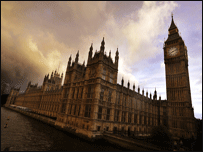
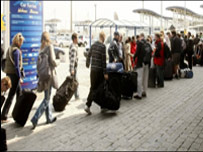
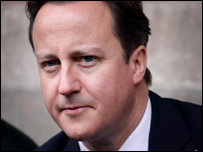
Britain, the once glorious empire on which 'the sun never set', has long been a world power whose influence kept declining. In some regions of the global community, such as ours, this has been of its own design to facilitate its closest and most powerful ally, the USA, to spread its political and economic power in Latin America and the Caribbean. Diminishing interests However, even before the close the first decade of this 2Ist century last year, and with a Conservative-led coaltion government in London, it was becoming increasingly evident that Britain was pursuing a new policy to further diminish what political, economic and cultural interests it has been sustaining in this region as a former colonial power. The negative messages for the Caribbean have been coming quite rapidly within recent times, starting last year with Prime Minister David Cameron's administration, enforcing the Air Passenger Duty (APD) tax, a problem inherited at the time of the demise of Gordon Brown's Labour government. The Caribbean tourism industry, a most vital sector for foreign exchange earnings and direct and indirect employment of natiionals across this region, was still howling over the negative consequences of the APD when there came the very surprising announcement from London.
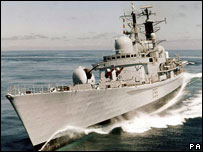
It had to do with the Cameron government's decision on whopping budgetary cuts to the BBC's World Service (including the Caribbean), effective later this year. For us in this English-speaking region it could be mean total closure of the BBC Caribbean Service and a very serious blow for pan-Caribbean broadcast journalism which had already been affected when the wire and radio services of the Caribbean News Agency(CANA) went out of business as we knew it. Current silence At the time of writing, Caricom governments and leading regional media enterprises were still holding their silence on this dramatic communications development, perhaps in the absence, just yet, of a surprising likely creative alternative initiative project. I will return to some of the lamentations that have been flowing over the coming disappearance of 'BBC Caribbean' with the proposed cuts to the World Service in general. But first, I must allude to two other significant negative signals that have emerged from Britain. They relate to a planned withdrawal of its warships from this region and, secondly, to move away from a hitherto encouraging policy of 'multiculturalism' that Prime Minister Cameron now feels is "weakening our (British) collective identity..."
Barbados' Police Commissioner, Darwin Dottin, was reported in the (barbados) 'Daily Nation' earlier in the week, as expressing deep concerns about the implications for the regional battle to combat drug-trafficking when Britain ceases patrols by its warships. There would undoubtedly be wider responses from Caricom on this other surprising move by Britain, the former so-called "mother country". Also expected to be forthcoming would be critical assessments of the British government's reactionary politics to de-emphasise the value of "multicultutralism" that so deeply involves at preesent huge immigrant communities from across the Commonwealth and elsewhere, including the Caribbean diaspora. Some responses Last Sunday, 'The Observer' in London whacked away at Prime Minister Cameron's defensive concept of 'multculturalism', deeming it a "crude caricature that solves no problems".
Caribbean scholars, social commentators and, I presume, political leaders as well, could be expected to have their say on this very strange posturing on multiculturalism by a British Prime Minister in the year 20II. For now, I offer some brief comments on the implications of the coming closure ofr the BBC Caribbean Service that has for many years been offering professional informative radio and online pan-Caribbean journalism. For Leonard Robertson, long-serving Communications Adviser to the Secretary General of Caricom, "this shut down will undoubtedly affect coverage of Caribbean Community (Caricom) matters as the BBC had a special relationship with some regional newsmakers as their media house of choice. "In the immediate future this closure presents an opportunity for the Caribbean Media Corporation (CMC) as the only surviving pan-Caribbean broadcaster. "It remains" said Robertson, a Trinidad-born journalist, "for us in the region to bolster this operation, otherwise we will be at the mercy of the international news agencies and national media who themselves, with very, very few exceptions, seem to have little or no interest inm what is taking place in our region." Still to come will be further responses from the London-based Caribbean Council and the Association of Caribbean MediaWorkers (ACM) as well as the comments of some British journalists and the news media in Britain. | |||||||||||||||||||||||||||||||||||||||||||
| |||||||||||||||||||||||||||||||||||||||||||
 | |||||||||||||||||||||||||||||||||||||||||||


 Archive