



 | | | | | | | |||||||||||||||||||||||||||||||||||||
| | ||||||||||||||||||||||||||||||||||||||||||
|
Tomas the Terrible | ||||||||||||||||||||||||||||||||||||||||||
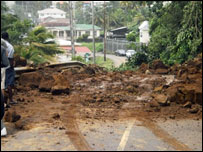
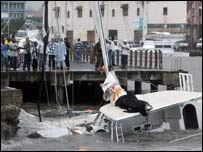
People in St Vincent, Barbados and St Lucia are still surveying the damage after a weekend encounter with Hurricane Tomas. For St Vincent and the Grenadines, hardest hit by the storm, Prime Minister Dr Ralph Gonsalves describes it as their worst in living memory. From 2pm to 10pm on Saturday, Hurricane Tomas pounded the agriculture-dependent island with torrential rain and relentless winds. By the time the storm had passed, St Vincent's vital agriculture sector was left virtually in tatters. The initial damage estimate was US$25 million - and that was to farming alone including the important banana sector. Much of the road network has been rendered impassable by landslides, subsidence caused by raging torrents of water, and blocked by fallen trees.
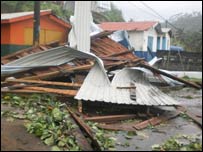
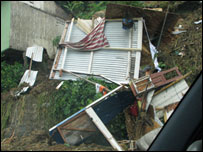
Property damage is equally extensive. According to Dr Gonsalves, 1200 homes have been damaged and many residents were without electricity. Only the capital has power; the rest of the island will have to make do with other forms of current until Friday. Islandwide water supply is out until about Thursday. Schools have been closed for the next week - many of the buildings were used as hurricane shelters. More woe And the tales of woe do not end there. While no deaths were reported in St Vincent, Hurricane Tomas cut a path of destruction and disruption across Barbados and St Lucia. It first pounded Barbados early Saturday morning as a tropical storm ripping roofs off houses, cutting power lines and blowing down trees.
Residents of Barbados, where a storm of this magnitude hasn't hit in years, were advised by disaster management officials to stay indoors well in advance of the storm's arrival. They've started cleaning up and fortunately the important tourism sector was not badly hit. After slamming into St Vincent next, the storm hit St Lucia with force causing damage estimated at around US$37 million. There's also considerable property damage and disruption to the road network. The capital Castries was also flooded.
Government officials in St Lucia, where there have been at least three confirmed deaths, described the damage as worse than they could have thought of. St Lucia's banana industry, like St Vincent's, is vulnerable to storm damage. The government in Castries fears that the impact on that sector could have a serious effect for the entire economy. The island's southern coast bore the brunt of the storm. Who's next? The wide girth of Tomas also made its presence felt in Dominica, Martinique and other islands before moving out into the Caribbean Sea. It was expected to once again strengthen as it appeared headed for Haiti, the Dominican Republic and Jamaica. The US National Hurricane Centre said the storm could however regain strength as early as Tuesday. Jamaica was put on alert after Prime Minister Bruce Golding met with the heads of all emergency relief agencies. In Haiti, officials are preparing crowded quake survivor camps and coastal towns for a possible hit although forecasters say the precise track of the storm remains uncertain. Counting the cost Tomas has triggered a $US12.8 million insurance payout to the three countries from the regional coverage scheme known as the Caribbean Catastrophe Risk Insurance Facility. Preliminary calculations based on the facility's modelled losses will see Barbados getting US$8.5 million, $3.2 million for St Lucia, and $1.1 million for St Vincent and the Grenadines. The payout is based on the premium paid by each country. However, Vincentian prime minister Gonsalves has noted that the payouts were generated by a computer model which he describes as "far removed from the reality on the ground". | |||||||||||||||||||||||||||||||||||||||||||
| |||||||||||||||||||||||||||||||||||||||||||
 | |||||||||||||||||||||||||||||||||||||||||||


 Archive