



 | | | | | | | |||||||||||||||||||||||||||||||||||||
| | ||||||||||||||||||||||||||||||||||||||||||
|
'Compromise' document announced | ||||||||||||||||||||||||||||||||||||||||||
Trinidad sought to deal with gridlock on two fronts on Sunday. One was the compromise needed to allow some form of final joint declaration when the 34 leaders of the Americas hemisphere could not agree on the original final document. The other was the traffic gridlock in the capital Port of Spain, as leaders moved their final deliberations north of the city into the St Ann's suburb. At a closing news conference, host Prime Minister Patrick Manning sought to explain why the original final declaration had not been agreed to by the Americas' leaders. He said it had been pulled together before the global financial crisis, which meant that it could not fully address the concerns expressed at the weekend summit. Not every country would see "eye to eye", Mr Manning said at the end of discussions, speaking of consensus but not unanimity. Mr Manning said that he signed the compromise document. Mexico's Felipe Calderon said that one of the reasons why the final document had not been signed by all countries was because it does not deal with the international economic and financial crisis. President Calderon added that the document did not tackle the issue of Cuba and that the hemisphere "could not describe ourselves as democratic countries". He added "we know we are so that was a suprise to us". Cuba "Cuba did not dominate our deliberations," Mr Manning told journalists before going on to outline that all countries at the summit had expressed a wish to see Cuba re-integrated. Several leaders had called for the new United States administration to end the US embargo against Cuba. The Trinidadian leader said on the subject that there was now "new thinking in the United States". He added that it is "reasonable" to expect a proper re-integration of Cuba into the hemisphere. Speaking after Patrick Manning, the Canadian leader Stephen Harper said there had been a breakthrough. "The most important outcome of the conference was the atmosphere of goodwill...the winds of dialogue will prevail," Mr Harper told journalists. "We did not agree on everything but we held a real dialogue and failed to break out in conflict." US is 'critical' In a separate but simultaneous news conference, US President Barack Obama put the emphasis on economic co-operation.
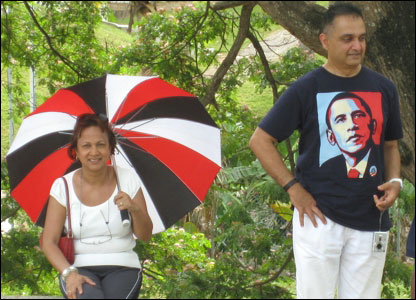
He told journalists, mostly from the US press corps, that American exports and remittances meant that the US economy needed to grow to help the wider region. He said that the US was "critical to the economic growth of the region". "People are routing for America's success," he added. Gridlock outside As official cars were escorted to and from the Diplomatic Centre, the official reception area for the leaders, police and soldiers extended the security zones to the northern suburb of St Ann's. Sunday morning traffic backed up behind police barricades as cars flying the flags of Latin American countries swung into the St Ann's presidential residence. The Diplomatic Centre and the Trinidad Hilton are located in the same area, which meant that curious 'Trinis' left their cars and took Sunday morning strolls to do a bit of Obama spotting. Many brought their cameras to look out for the American leader. "We're delighted...we're just so sorry we haven't been able to see him at close-up quarters," one woman told BBC Caribbean. "But we're really honoured that he can come to Trinidad, especialy so early in his presidency. "We did get a glimpse of him...he slowed down and waved at us...it was worthwhile." Debt Dealing with debt had been one of the main official items on the agenda. Leaders agreed to put more money into the Inter-American Development Bank (IDB). "We have to ensure that access to credit is achieved. We need to have flexible rules to allow countries to access credit from the IDB in conditions of economic emergency," Mexico's Felipe Calderon told journalists. What next? Officials say that the agreement signed by Patrick Manning will now be passed onto an Inter-American joint summit working group. This will include OAS member groups which will be asked to flesh out the summit proposals. One key issue will be the re-capitalisation of the IDB to allow it to disburse G20 allocated money in a way acceptable to all OAS member states. This document will then be put up for further discussion at the next OAS General Assembly in Honduras in June. Have your say on the summit. Join the live call-in debate: What did the Summit achieve? You can also email your views in advance to caribbean@bbc.co.uk or via the 'summit forum' on this website. |
| ||||||||||||||||||||||||||||||||||||||||||
| |||||||||||||||||||||||||||||||||||||||||||
 | |||||||||||||||||||||||||||||||||||||||||||



 Cuba inside, shutdown outside