| | | | | | | |||||||||||||||||||||||||||||||||||||
| | ||||||||||||||||||||||||||||||||||||||||||
|
Summit: whose agenda? | ||||||||||||||||||||||||||||||||||||||||||
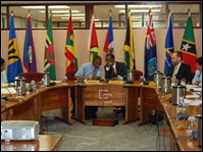
Much attention is being focussed on this week's Summit of the Americas in Trinidad. The event, organised by the Organisation of Americas States (OAS), will have around 34 leaders from throughout the Americas in attendance. Caricom countries alone make up almost half of the OAS membership with 14 countries. That the meeting is being hosted by a Caricom member state has raised the level of expectation on what the grouping should aim to get out of it. But, what influence Caricom leaders will yield or exploit at the Trinidad summit is still an issue of much debate. However, several of them will have prominent speaking roles during the gathering. Host prime minister Patrick Manning, and Caricom chairman, Belize prime minister Dean Barrow, will address Friday’s opening ceremony. Other leaders will give presentataions during specific forums: Ralph Gonsalves of St Vincent and the Grenadines will speak on democratic governance, public security and summit follow-up; President Rene Preval of Haiti will address the issue of human prosperity; while Grenada’s Tillman Thomas is down to give an address on environmental sustainability. For his part Prime Minister Patrick Manning has said the summit provides an opportunity for Trinidad and Tobago and its Caricom partners to play a leadership role in the geopolitics of the hemisphere.
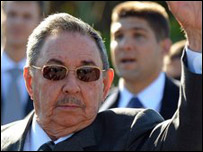
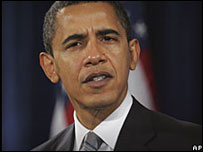
He also sees it as a chance to help shape a development agenda that'll serve to enhance sustainable development across the entire region. However, the issues which are likely to dominate the meeting are in some respects already being defined. The effects of the global economic crisis, Cuba, security and immigration are topping the list. Economic crisis The global recession is expected to be the top talking point. Analysts say prudent economic policies adopted by several countries in the Americas region have helped them weather the recession better than in previous decades. But officials say a drop of 1 per cent in the region’s gross domestic product could send up to 15 million people back into extreme poverty. The recent G20 summit in London approved a $1 trillion package to help developing countries, with Latin America nations - including some Caribbean states - among the main beneficiaries. Cuba Cuba is expected to be another top agenda issue for both the US and Latin American countries. According to the Washington-based Council on Hemispheric Affairs (COHA), President Obama will travel to Trinidad in the knowledge that the biggest diplomatic challenge he will face is most likely the question of US policy towards Cuba.
While the US government maintains an opposition to Cuba’s membership in the hemispheric grouping, a growing number of Latin American countries are calling for its re-instatement. Caricom leaders are expected to support their Latin American counterparts. Cuba was kicked out of the OAS in 1962 for not being a democracy. There have also been growing calls, supported by several Caricom leaders, for the US to end its half century embargo against the communist country. Venezuela Another COHA perspective on the summit regards Venezuela. It notes that “while President Chavez initially welcomed Mr Obama’s election, their subsequent exchanges have largely been tense and disagreeable unpleasant”. Mr Chavez has effectively been leading the call to have Cuba back in the OAS fold. He has been equally vociferous is demanding that the US drop the trade embargo against Cuba. Security Security concerns including crime, fuelled by the downturn in some regional economies, and the drug trade elsewhere in the region, are widespread. The summit’s draft declaration has a section on strengthening public security. Immigration
Some 12 million illegal immigrants live in the United States, mostly from Mexico and Central America. However, although figures are not immediately available, it’s believed that proportionately, there is a sizeable number from the Caribbean. Efforts by the US to reform the system, granting some immigrants the right to stay while requiring others to return home and apply for re-entry, failed in 2006 and 2007. During his election campaign, Mr Obama had promised to work for immigration reform. Recent reports suggest that he intends to reopen the debate on immigration reform this year. The Summit from 17to 19 April is being held under the theme ‘Securing Our Citizens’ Future by Promoting Human Prosperity, Energy Security and Environmental Sustainability’. | LOCAL LINKS  Getting set for the summit Getting set for the summit10 April, 2009 | News Setting the summit's agenda14 April, 2009 | News Americas Summit: A Caricom agenda14 April, 2009 | News Summit: A Caricom opportunity15 April, 2009 | News | ||||||||||||||||||||||||||||||||||||||||||
| |||||||||||||||||||||||||||||||||||||||||||
 | |||||||||||||||||||||||||||||||||||||||||||