



 | | | | | | | |||||||||||||||||||||||||||||||||||||
| | ||||||||||||||||||||||||||||||||||||||||||
|
'Tax havens' towing the line | ||||||||||||||||||||||||||||||||||||||||||
Caribbean offshore financial sectors say they are bracing for tougher measures on tax havens expected to come out of the summit of rich nations known as the G20 Group on April 2. Leaders from Britain, the United States, and Australia had raised the issue of tax havens in advance of the London meeting. And a day ahead of the April 2 Summit, French President Nicholas Sarkozy threatened to walk out unless there is a deal on tough new regulation of global finance and the curbing of offshore tax havens. No-one expects the summit to end Thursday without some comment, if not an agreement on tighter rules, for offshore tax havens. Caribbean reaction For the countries where many financial companies are registered, the offshore financial centre industry can be a major source of revenue. The focus on so-called tax havens ahead of the G20 has forced many countries to indicate what they're already doing to be transparent. It has also caused some experts to indicate that some of the lack of transparency is to be found in the US and Britain as well. The Bahamas is among those on record as saying that it is ready to open talks with other nations on tax information agreements that comply with international standards. In a statement Prime Minister Hubert Ingraham, insisted that his country "had always sought to be a responsible financial services centre". He said his government "recognised significant advances in commitments to broader application of standards of transparency set by the Organisation for Economic Cooperation and Development, the OECD".
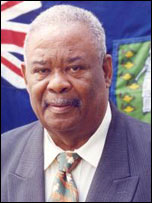
Mr Ingraham said the Bahamas stood ready to negotiate and conclude appropriate arrangements to accommodate the OECD wish list. "It is therefore the intention of the government of the Bahamas to enter into these negotiations as a matter of priority," the prime minister said. He indicated that there were a number of outstanding requests for the Bahamas to enter into agreements which provide for the exchange of information, and that each request would be dealt with on an individual basis. Signing up The Bahamas is one of the latest offshore financial centres to sign up to tax information sharing standards amid a push by the Group of 20 industrial and developing nations to tighten rules on such centres. Leaders from G20 countries gather in London April 2. The premier of another offshore financial centre, the British Virgin Islands, Ralph O'Neal, had said the BVI was already meeting OECD standards.
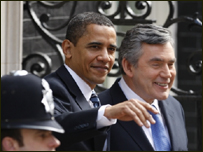
Mr O'Neal said the government had secured "recognition from governments such as Australia and the United Kingdom that we already meet current standards of regulation and international cooperation". The premier made the comment after meeting with British official Michael Foot of the UK Treasury, who conducted a review of the islands' regulatory system. But BVI officials, while boasting of being compliant with international standards, have acknowledged that there was room for further improvement, including legislative changes. Mr Foot for his part said he was taking on board Premier O'Neal's call for the creation of a level playing field. Cayman concerns In the Cayman Islands, local people feel their territory has been unfairly targeted in the debate over offshore financial centres. Many of them told BBC Caribbean that the Caymans were being made a scapegoat for the failings of other financial centres while New York and London protected their own financial environment. Leader of government business in the Cayman Islands Kurt Tibbets asked for caution and warned Caymanians about the outcome of this week's G20 Summit. "The G20 environment is exceedingly political and anyone perceived to be in the offshore cohort, as defined by Britain and the United States, is vulnerable," Tibbets said. Mr Tibbets said that the territory recently signed tax information sharing agreements with 15 European countries, in addition to a long-standing agreement with the US. New "rules of the road" White House officials in Washington have said that world leaders would issue new "rules of the road" for tax havens and offshore financial centers such as the Cayman Islands when they meet in London. Mr Tibbets said that by any rational analysis the territory is transparent and co-operative. He also responded to British Prime Minister Gordon Brown's comment last week that G20 leaders are ready to take action that will mark the beginning of the end for tax havens and offshore financial centers.
The leader of the British territory said he hoped Mr Brown was not intending to destroy legitimate, cooperative and transparent centres such as the Cayman Islands. Mr Tibbets said the territory would continue to be relentless in the pursuit of proper recognition of its status as a responsible and cooperative international financial services centre. Developed nations tax centres such as Switzerland and Liechtenstein have also agreed in the past month to relax their banking secrecy laws. Britain, which is hosting the G20 summit, has called for the outlawing of tax havens, but some European leaders have cast doubt as to whether such drastic measures will be taken. The British and US governments recently announced that they would be taking a serious look at the operations of these centres to determine if they are functioning as tax havens where rich people hide their money from the taxman. St Kitts and Nevis complies Meanwhile in Basseterre, the St Kitts and Nevis parliament has passed a new law for the exchange of information on taxation. The twin island federation is the latest Caribbean country to announce their compliance with new rules in a bid to avoid a global crackdown on tax havens. St Kitts Finance Minister Timothy Harris told parliament that passage of the new law was necessary, to protect the country's financial sector. But the opposition leader Mark Brantley said Caribbean governments should not be made to pay for the mistakes of the developed countries. …but another Caribbean bank falls foul Following a move on billionaire US investor Sir Allen Stanford's Antigua-based financial empire, the US Securities and Exchange Commission has now accused the St Vincent and the Grenadines-based Millennium Bank and its Swiss parent of running a $68 million fraudulent scheme. The SEC said the two affiliates misled American investors about high returns on certificates of deposit. Regulators in St. Vincent and the Grenadines have now taken control of the bank. It is the same allegation made against the Antigua-based Stanford International Bank where the sums involved are said to be eight billion dollars. | |||||||||||||||||||||||||||||||||||||||||||
| |||||||||||||||||||||||||||||||||||||||||||
 | |||||||||||||||||||||||||||||||||||||||||||


 Hear Dan Damon report on tax havens
 BBC News: Tax spotlight worries Caymans