| | | | | | | |||||||||||||||||||||||||||||||||||||
| | ||||||||||||||||||||||||||||||||||||||||||
|
The year ahead | ||||||||||||||||||||||||||||||||||||||||||
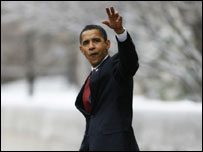
For many, for reasons of family, religion and tradition, Christmas is both a moment of reflection and celebration; a time to look back, take stock and to consider what might lie ahead. By any standard 2008, the year now passing, has been momentous not least for the way in which greed, worthless financial paper and the fraud-driven economic crisis that began in the United States, resulted in the near collapse of the global banking system and the disappearance of economic confidence; leaving a shocked world to cope with a sudden and deep recession. It was also the year in which the world saw oil, food, commodity and shipping prices soar as speculation drove markets ever higher until global economic contraction made clear their unsustainable nature. The first black President Despite this there were some signs of possible future hope: the US people elected their first black President on a platform of change and there was a broader recognition that climate change was real and threatening. For the Caribbean itself, 2008 was a year of controversy in which the acrimonious debate surrounding the signing of the Economic Partnership Agreement (EPA) between Cariforum with Europe became very public. It was also the year in which the regional integration process all but seized up with disintegration and a failure to progress becoming the norm; the people’s frustration began to show as they changed their governments in Barbados, Jamaica, Belize and Grenada; and one in which an ever rising tide of violence and crime touched everywhere. But what of 2009 and the years beyond given that the year past is in reality just a small part of an endless continuum of change. Endless continuum of change It will be the year in which the region and the hemisphere continues to redefine its geo-political place in the world. As the just completed Rio Group meeting showed, the old order is fading. Despite the heated and still far from resolved debate on the broader implications of the EPA, relations with Europe and with the US and Canada are becoming ever less relevant.
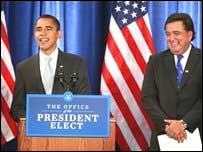
While trade and investment flows with all three remain important to most nation’s, the final steps towards preference erosion by Europe and movement in the WTO led multilateral trade liberalisation process in the coming year will confirm the longer-term significance of developing new thinking about south-south economic, political and maybe even in time security relationships. In this what seems to be happening is that Latin America and the Caribbean are slowly coming to re-define their longer term future in the Americas around Brazil as a southern pole enabling the global projection of a new economic and political culture and voices wholly independent of Washington. In this Brazil and others hemispheric rise may be spurred by what some respected international commentators see as start the slow decline of US influence as its huge levels of debt, its inward looking interests, its unregulated economic model result in a gradual diminution in its hemispheric footprint. More prosaically no one should expect too much of a President Obama as far as the region is concerned. That is to say of a new US administration in which the incoming President has no option but to be preoccupied with domestic economic issues and the high ground of foreign and strategic relationships (the Middle East, India-Pakistan, China; Afghanistan, Iraq, Iran and nuclear proliferation); so much so that he may choose to cede a higher than normal degree of authority to his new Secretary of State to develop relationships with regions such as Latin America and the Caribbean. US versus Cuba The one exception to this may be towards Cuba where it is possible that there may a new US policy. However, whether the 50th year of the Cuban revolution will be the year for a fundamental change of policy towards Havana remains uncertain. While existing restrictions on remittances and travel for Cuban Americans will be rapidly lifted and will probably mark the first cautious steps towards functional co-operation in areas such as scientific exchange and counter narcotics cooperation, anything more than this is likely to be slow, complex and incremental. Credit crunch burden The one forecast one can make with absolute certainty is that it will be a very difficult year economically for the Caribbean. Remittances, tourism arrivals, investment and government revenues will all fall. The consequence will be increased unemployment, governments struggling to finance recurrent expenditure and refinance debt and growing social and political tensions in those nations that cannot establish a consensus through social partnership.
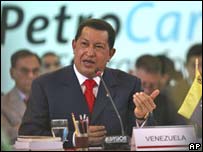
While Venezuela's PetroCaribe arrangement will continue, it is probable that Caracas will have to review its levels of assistance if as seems likely world oil prices remain resolutely below the US$60 per barrel budget that Caracas based its international development assistance programme on. As for trade agreements it is likely that as the year proceeds there will be mounting global support for movement in the Doha Round as a way to stimulate global economic recovery. Much will depend who President Obama appoints as the United States Trade Representative and his or her instructions. Other negotiations with Canada will proceed and the escalating inter Cariforum debate about EPA implementation will become more fraught as some Caricom Governments join the Dominican Republic in determining which is the best regional vehicle to ensure that the EPA is delivered and is not still born. The ‘known unknowns’ And then there is the inescapable. Nations across the region may well see crime and associated violence escalate as economies contract, unemployment increases and the narcotics and other traffickers see new opportunity. This may become more difficult to contain as developed nations facing huge budget deficits significantly retreat from the levels of development assistance provided other than in those nations and regions of the world determined as being strategically important. Finally and beyond all of this there remain the ‘known unknowns’, the unpredictable possibilities like hurricanes or a terrorist action against a cruise ship or tourist facility somewhere in the region. Economically the next few years seem set to be difficult. The outlook is not bright. But as a senior Cuban minister recently suggested to me it is also a moment of opportunity. No one is immune, he said, but the key was for developing countries to be prepared when the world economic situation improves to make the best of the opportunity. | LOCAL LINKS  In depth: An Obama presidency In depth: An Obama presidency29 October, 2008 | News The credit crunch: Caribbean impact19 September, 2008 | News The View from Europe29 July, 2008 | News | ||||||||||||||||||||||||||||||||||||||||||
| |||||||||||||||||||||||||||||||||||||||||||
 | |||||||||||||||||||||||||||||||||||||||||||