| | | | | | | |||||||||||||||||||||||||||||||||||||
| | ||||||||||||||||||||||||||||||||||||||||||
|
A budget-busting crisis | ||||||||||||||||||||||||||||||||||||||||||
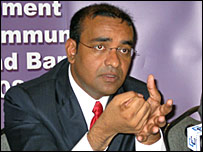
A common thread running through the budgets presented so far this year by Caribbean governments has been the impact of external financial circumstances. Early in the year it was the skyrocketing cost of fuel (close to US $150 a barrel at one point) which in turn sent the cost of food spiralling. The bottom fell out of the global financial sector just about the time that oil prices toppled by almost 50%. Caribbean governments have been struggling to cope with the ‘double-whammy’. The trend was expected to continue with budget presentations due mid-December in Grenada and St Kitts. Here’s a snapshot of how these global phenomena played out, or were otherwise referenced, in Caribbean budgets so far this year. Guyana In February, Guyana’s President Bharrat Jagdeo presented his government’s budget in the national parliament. The cost of food and fuel were uppermost on his mind then.
“Compounding the historic rise in oil prices, non-fuel commodity prices also surged during the year. “These increases were dominated by food prices which increased by 27.2 percent,” he reported. Mr Jagdeo also noted that “wheat, corn, and soybean recorded higher increases, reflecting demand for biofuel feedstock, low inventories of grain and shortages in capacity.” Among the coping measures he announced was: “an increase in the income tax threshold by 25 percent from $28,000 to $35,000 per month". The Guyana government also removed value added tax (VAT) from a number of items. Jamaica In April Jamaica Finance Minister Audley Shaw, presenting his second budget for the ruling Jamaica Labour Party, pointed out that : “during 2007/08 the economy was confronted with a number of challenges. “For the most part, the challenges were triggered by factors related to deteriorating global conditions and “The world witnessed,” he stated, “and continues to experience rapidly rising oil and agricultural commodity prices, a severe tightening of international credit markets and a sharp housing downturn in the United States.”
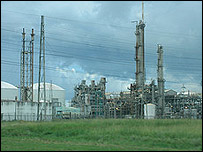
According to the Jamaica Finance Minister “the convergence of these three factors is unprecedented and resulted in a very challenging external environment.” He also said that Jamaica “was also faced with challenges arising from the passage of Hurricane Dean in August 2007” and its effect on agriculture. The result was a “significant increase in inflation, from 7.4% to an estimated 19%.” Trinidad and Tobago In mid November Trinidad and Tobago’s Prime Minister Patrick Manning announced major cuts in public spending as the government moved to contain the fall out from the global financial crisis. The Trinidad and Tobago government had ‘profited’ from high world oil prices – which reached $US147 a barrel earlier. But the changing global economic circumstances forced it into budgetary retreat.
A shortfall of one billion dollars is projected. The country, whose economy is largely based on energy, experienced a drop in revenues resulting from the dramatic fall in the price of oil. The finance minister, Karen Nunez-Tesheira, acknowledged that the drop and reduced revenues will adversely impact domestic investments. She told BBC Caribbean that the ministry would be prepared to take action if, more generally, the global financial turmoil impacted more heavily on Trinidad and Tobago: The Trinidad and Tobago government has also been told to plan for an even bigger financial black hole than it has forecast. Barbados In July, Barbados experienced above normal interest in the Budget debate, due mainly to the prevailing high international prices for fuel and basic food items. It was also the first budget by the country's Prime Minister David Thompson.
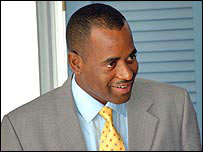
He singled out the poor for relief from the high cost of living, announced increases in welfare grants and pensions, a higher reverse tax credit for low-income workers, and free travel on the state-owned bus system for school pupils. But on the flipside there were steep increases in taxes on alcohol, tobacco, and lottery winnings, as well as road taxes. However the opposition Leader, Mia Mottley said the budget did little to relieve high food and fuel prices. In what's seen as a bold move, the Barbados government recently pledged to push ahead with spending programmes to try to prevent the economy going into meltdown. It’s not only the ‘big four’ in Caricom, who are feeling the pinch. Dominica When Dominica’s prime Minister Roosevelt Skerrit delivered his budget speech in July, the full extent of the global financial fall-out was still unclear. At that time high food and oil prices were the main issues of concern. The measures announced by Prime Minister Skerrit included increases in social benefits, exemption from hospital fees for young people and the elderly and removal of taxes on petroleum products and cooking gas. “Notwithstanding the commitment to (targets), this budget is being presented within the backdrop of escalating fuel and food prices,” he said. “Government must take some action to ensure that the people of this
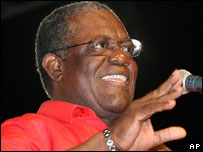
Mr Skerrit also explained that “the achievement of the targets set in this budget is highly dependent on the global environment …” Before world fuel prices started tumbling, the prime minister had this concern about local retail prices despite government efforts to contain them. “As the world price of fuel continues to increase, the excise tax as a percentage of the entire cost of fuel becomes smaller and less significant, and the impact of the excise tax reduction was quickly eroded.” St Lucia At St Lucia Budget Day in April, Prime Minister Stephenson King also referred to the effect then of the high cost of food and fuel, long before corrective measures had to be taken to cope with the global financial crisis. “All this seems to point to the realisation that the era of cheap food is all but over,” he declared. So how has this Government reacted in the face of this challenging situation? His question. The answer, also his: removal of import duties and consumption tax on selected items. But later on in the year the big issue for St Lucia was the impact of the fully-blown global financial crisis was having on its economy, especially the key tourism industry. Earlier this month the government said it was considering a range of measures to assist the hotel sector as the industry faces a downturn linked to the global economic crisis. St Vincent and the Grenadines In his December budget, St Vincent and the Grenadines prime minister Ralph Gonsalves reflected on the state of the global economy. “Never in living memory are the circumstances, internationally and regionally, as challenging in which to craft a Budget as at the present time,” he declared. “Never in the last eighty years since the Great Depression has there been such a period of profound financial turmoil and economic uncertainty, world-wide.”
He outlined plans to speed up tax reform, in part to deal with the reduction in customs duties expected from the introduction of free trade with Europe. Dr Gonsalves also announced a reduction of about 18 percent in spending on major infrastructural projects over the next year. He acknowledged that securing financing for public sector investment won't be easy because of the global economic crisis. “And, he cautioned, “there is no informed consensus as to how deep the recession is likely to be or when the turmoil will end.” Antigua and Barbuda December 1 was budget Day in Antigua and Barbuda. He also observed that: “the global financial crisis has also left its wounds and its scars.” “If ever there was any doubt as to how interwoven and interconnected High Street in St. John’s, Wall Street in Manhattan and Threadneedle Street in London are, all reservations in this regard should be laid to rest.” Mr Cort also said, “It is now more fully recognized that answers to many of the world’s economic and financial conundrums, are not to be found exclusively in a club of seven or eight countries." The Antigua and Barbuda finance minister announced several measures to try to alleviate the hardships being faced by residents. Bahamas In May the Bahamian prime minister Hubert Ingraham sounded the warning. “Present global economic uncertainty is giving rise to what appears to be unstoppable increases in the cost of living driven by the continued rise in energy and food prices internationally,” he said. “The growing cost of energy is already impacting the travel plans of many with direct consequences for our primary industry, tourism."
He said the budget was “crafted to take into account the international economic turbulence and uncertainty impacting so harshly on our own people and on the travel intentions of people wishing to vacation in The Bahamas.” Mr Ingraham said this situation “further disadvantages our people, especially those working in the tourism and hospitality sectors.” The government announced a series of relief measures aimed at reducing the cost of living. Later in the year – November - Mr Ingraham said his government would increase spending through borrowing as a way to cushion the impact of what had, by then, evolved into a global economic crisis. He also said the government would enhance aid programmes to poor families and aggressively promote tourism. The smaller countries and territories have not escaped. Nevis In its December 9 budget, the Nevis island administration announced that it had slashed spending on infrastructural projects by almost half for the next financial year. The government said the cuts were “a prudent response” to the global economic crisis. It said Nevis was expecting a reduction in visitors, remittances and foreign investment. Anguilla The same day, the Anguillan budget was presented by Finance Minister Victor Banks. Its provisions suggest that residents can expect to pay more for electricity and health services. The government wants to boost its revenue collection, and Mr Banks announced a hike in several user fees. The government said it was also putting in place measures to cushion the effects of the global financial crisis. British Virgin Islands The financial crisis is also forcing the government of the British Virgin Islands to consider spending cuts. Premier Ralph O' Neal has already warned of budget cuts and key construction projects being placed on hold to weather a global financial crisis. The BVI budget is expected between December and January Montserrat Lastly, Montserrat is not dealing only with the ravages of nature. Its unstable volcano, which has wrecked the small island’s economy, continues to erratically spew hot ash. In his Budget Speech in March, Chief Minister Lowell Lewis announced that “the effects of rising oil prices have reverberated throughout the economy." He said there had been a substantial rise in the price of building materials, utilities, foods, and other commodities. The result of this, Dr Lewis exoplained, was "an erosion of the disposable incomes of households that ultimately led to a decline in activity within the local economy." Similar themes are likely in upcoming December budgets from St Kitts and Grenada. | LOCAL LINKS  Global crisis hits Caribbean tourism Global crisis hits Caribbean tourism14 November, 2008 | News Impact of the financial crisis05 December, 2008 | News | ||||||||||||||||||||||||||||||||||||||||||
| |||||||||||||||||||||||||||||||||||||||||||
 | |||||||||||||||||||||||||||||||||||||||||||


 Significant increase in inflation