



 | | | | | | | |||||||||||||||||||||||||||||||||||||
| | ||||||||||||||||||||||||||||||||||||||||||
|
Caricom urges Obama on Cuba reform | ||||||||||||||||||||||||||||||||||||||||||
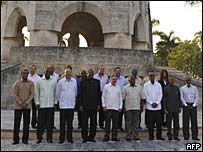
The leaders of 14 Caribbean nations have called on US President-elect, Barack Obama, to lift the decades-old American trade embargo against Cuba. The call came during a one-day summit on Monday between Cuba and the Caribbean regional trade bloc, Caricom. Current Caricom chairman, Antigua's Prime Minister Baldwin Spencer, said he hoped the US embargo would finally be "relegated to history." The Caribbean leaders were meeting to discuss the current economic crisis. "As we gather today in Cuba, the economic, commercial and financial embargo imposed by the United States of America is still in place," Mr Spencer told the gathering in Santiago de Cuba. "The Caribbean community hopes that the transformational change which is underway in the United States will finally relegate that measure to history."
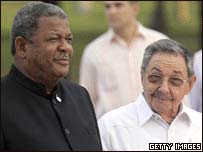
Mr Spencer said almost all United Nations member states wanted the embargo stopped. "The overwhelming call by most of the member states of the United Nations is for it to be lifted," he declared. Blockade The blockade is estimated to have cost Cuba about US $93 billion in lost revenue since its introduction in 1962. Cuba's President, Raul Castro, said his country has been devastated by a combination of the embargo, the financial crisis and three recent hurricanes. He also told the Caricom leaders that he is prepared to resist the American trade embargo for another half a century if necessary.
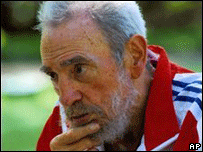
US President-elect, Barack Obama, has said that he would lift restrictions on family travel and remittances to Cuba, but maintain the US trade embargo to press for changes in the Communist-run country. This was the second Cuba-Caricom summit to be held in Cuba. Recognition In 1972, during the height of the Cold War, four newly independent Caribbean states; Jamaica, Trinidad, Barbados and Guyana, recognised communist Cuba. That helped end the island’s regional isolation. Jamaica’s Prime Minister, Bruce Golding, told the BBC that Caribbean countries have been net beneficiaries of assistance from Cuba. Of Cuba relations with the Caricom Mr Golding indicated that Cuba reaches out to Caricom “in its efforts to secure a regularisation of its place in the international forum.” “And we are quite happy to respond,” he added. The fact that so many Caricom heads of state attended indicates that Caribbean co-operation is increasingly crossing political boundaries, as everyone struggles to cope in the harsh economic times. Caricom Chairman, Baldwin Spencer, also called upon the United Nations to do more to help small countries cope. Crippling crisis In his opening speech, Cuba's President, Raul Castro, said that it was the world's poor who would bear the brunt of what he described as a reckless disaster. “In this crisis it is the most vulnerable who will bear the brunt." “This is a reckless disaster caused by speculation, individualism and greed that would damage our Caribbean economies,” he Cuban leader said. Caricom leaders also bestowed an honorary Order of Caricom award on Fidel Castro, making Cuba's ailing former-president the first non-member country official to receive the grouping's top honour.
Fidel Castro has not been seen in public since having emergency intestinal surgery in July 2006. The summit also discussed the global financial turmoil, rising food prices and climate change. Baldwin Spencer said the United Nations should do more to help countries shield themselves from major financial crises. The talks ended with a commitment for further cooperation. Cuba has promised to open new eye surgery clinics in Jamaica, St Lucia and Guyana, as well as 10 "health diagnostic" facilities in Haiti and one in St Vincent and the Grenadines. It also said it would offer 480 regional scholarships next year. | |||||||||||||||||||||||||||||||||||||||||||
| |||||||||||||||||||||||||||||||||||||||||||
 | |||||||||||||||||||||||||||||||||||||||||||


 Relegate that measure to history
 Archive