| | | | | | | |||||||||||||||||||||||||||||||||||||
| | ||||||||||||||||||||||||||||||||||||||||||
|
Opinion: One big step for Obama | ||||||||||||||||||||||||||||||||||||||||||
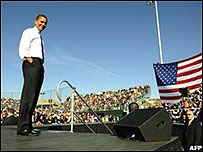
This commentary is being written before the US Presidential election on November 4th. In earlier commentaries while I clearly stated my personal wish to see Obama elected, I expressed grave reservations about the capacity the majority of white Americans to rise above their centuries-old racial prejudice to elect a black man to the White House. If, as now seems the case, the majority white people of America join with black people to elect Obama, he would have made a big step and America would have made a huge leap. Obama’s election will change not only how America is seen by other peoples of the world, but also how Americans see themselves. America's proudest moment The election of Obama will be America’s proudest moment to date. For, the American society will have cast aside that stain of race that has disgraced them through the centuries even as they made themselves the most powerful nation on earth. It has to be recalled that when the young nation of the United States of America was created in 1776, one hundred and fifty-six years after the first Africans arrived as slaves, the author of its Declaration of Independence, Thomas Jefferson, saw no place for blacks in American society. While he supported the notion of freeing slaves, hundreds of whom he himself owned, he advocated their deportation to Africa. Its independence constitution while proclaiming that “all men are created equal” counted a slave as 60 percent of a free American. And, slavery itself was not formally abolished until 1865 – thirty one years after it was abolished in the British Caribbean. Civil rights
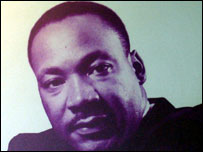
Not that the abolition of slavery did much more than formally release Blacks from ownership, for the heel of white America’s foot remained firmly placed on the neck of black America. As Lanny Davis, the Washington lawyer, Democrat and political commentator, put it: “The substitute for actual slavery was de facto economic and social slavery as white America looked the other way… blacks continued to suffer the humiliation of ‘Jim Crow’ laws in the South, the violence and lynchings of the Ku-Klux-Clan, and the deprivation of racial segregation in public schools, the workplace, public accommodations and even on the playing fields”. It took another 99 years before the Civil Rights Act of 1964 was passed to end segregation and discrimination officially. And, then only after the advocacy and rebellion of Martin Luther King Jnr, Malcolm X, Rosa Parks, and the black panther movement. By then, it had become clear to those who held the reins of power in the US that their society could not survive “half-free and half slave” as Republican Abraham Lincoln had put it in 1858 when he failed to be elected to the US Senate. The 44 years that have elapsed since the passage of the Civil Rights Act have been a period of gradual change in America’s race relations – a sea change in some parts of America, but not in all of it. But, at least enough change for the Democratic Party to put its support behind a black man, and for mainstream America to actually swallow what was an unpalatable pill. Black self-worth What Obama’s election will do more than anything else is to imbue in black Americans – and black people everywhere – a heightened sense of self-worth and pride in themselves.
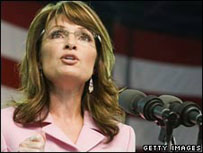
At last their equality in the family of mankind will be demonstrated, acknowledged and accepted. In America, they will walk with a new spring in their step and with their heads held higher than at any other time in their history. For that reason, America as a society will be stronger and more cohesive – no more a society where black people, whose contribution to its development is soaked in blood, sweat and tears, are denied access to the ultimate levers of power. This is the America that the rest of the world will see. It will be an America that has shown itself able to overcome its prejudices, to confront its own evils, and to triumph over them. It will be an America that the rest of the world can respect. The issue of race Of course, while overcoming the issue of race has been a major factor in this election, it has not been the only contributor to Barack Obama’s election. Eight disastrous years of the George W Bush Republican administration both at home and abroad, put the Democratic Party in a commanding position from the beginning. Seeing the back of the Republicans was an overwhelming desire for all but the card-carrying, die-hard supporters. John McCain shot himself in the foot and boosted Obama’s chances by choosing Sarah Palin as his running mate. Delicious on the male eye as she undoubtedly is, her extremist outlook and her obvious lack of intellectual capacity frightened all but the reddest of rednecks in America. The length and depth of the Democratic Party campaign for its nominee also helped, for it gave Obama prolonged and intense national exposure that allowed him to convince a large proportion of white America that he was not a threat to them; that he is as American as they are; that their way of life, their beliefs and their hopes would not be imperiled by his Presidency. This, incidentally, is something that the non-white peoples of the world, including those in the Caribbean, have to understand. American focus Barack Obama will not be the “black-American” President of the United States, he will simply be the “American” President. In all things, America will come first. That is why countries in the Caribbean who want Obama’s attention should recognize that they will not get it on the basis of race. He will be preoccupied with the problems of the US, not least an economy in recession that requires urgent fixing; getting out of Iraq; resolving Afghanistan and coming to an accommodation with a resurgent Russia. To get Obama’s attention, Caribbean governments require a mix of solid diplomatic work in Washington supported by well-placed lobbying groups. Responses to: ronaldsanders29@hotmail.com | LOCAL LINKS  US/Caribbean relations US/Caribbean relations 15 October, 2008 | News | ||||||||||||||||||||||||||||||||||||||||||
| |||||||||||||||||||||||||||||||||||||||||||
 | |||||||||||||||||||||||||||||||||||||||||||