



 | | | | | | | ||||||||||||||||||||||||||||||||||||||||||||||||||||||||||||||||||||||||||||||||||
| | |||||||||||||||||||||||||||||||||||||||||||||||||||||||||||||||||||||||||||||||||||||||
|
Where medalists are moulded | |||||||||||||||||||||||||||||||||||||||||||||||||||||||||||||||||||||||||||||||||||||||
It’s a Saturday afternoon in late March and Kingston’s 25,000 seat National Stadium is threatening to burst at the seams. Banners and school flags in a spectrum of colours flap in the light breeze, a drum rat-a-tat-tats away in the Grandstand and somewhere in the bleachers, a bugle sounds. The atmosphere is electric. It’s like this every year at Jamaica’s Boys & Girls Athletic Championships. And in the last 30 of its 80 year existence, the high school meet has earned the reputation of being the biggest in the English-speaking Caribbean
It highlights the culmination of a season beginning in January with at least one ‘developmental’ meet a week in the three months leading up to the Championships. Part of the success could lie in the fact that athletes have a chance to develop throughout their 5-7 years of high school, competing in classes against athletes in their age group. A springboard for medalists Some of Jamaica’s most prolific athletes rose to prominence here.
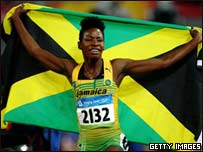
The championships have been used as a springboard by locals to earn scholarships to US colleges where they get the coaching needed to further their athletic careers. An educational grounding for life after athletics also helps. Results were good for some – Merlene Ottey, Seoul Olympics silver medallist Grace Jackson, and double Olympic silver medalist Juliet Cuthbert are success stories – but many also faltered and got lost in the system. Those stories encouraged Stephen Francis, Bruce James, and David Noel in 1999 to form the MVP Club to train athletes and keep them in Jamaica after high school. MVP’s biggest success before the 2008 Olympics was former 100m world record holder Asafa Powell, who incidentally, was not very successful in his high school years. “We wanted to give Jamaicans an option to stay here to pursue athletics at the highest level possible to show that we did not have to depend on the USA or its college system to develop our athletes,” said club president James. A former high school athlete who attended Florida State on scholarship, James said the experience worked for him but is not ideal for everyone and emphasised that though the club isn't anti-USA, it was borne of a need. He admits that some Jamaicans do better in the US than they would with a local coach. Keeping talents home One such local coach is Glen Mills who conditions 2003 world champion Kim Collins and Olympic 100m champion and world record holder Usain Bolt. Bolt was extremely successful at the high school championships setting several class records which still stand in the 200m and 400m. When, just shy of his 16th birthday, he became the youngest 200m World Junior Champion at the 2002 IAAF Championships in Kingston, the country’s government was determined that Bolt would not be lost to the US, prompting them to put the infrastructure in place to keep him in Jamaica. His and Shelly-Ann Fraser’s 100m gold medals at the Beijing Olympics could make a stronger case for Jamaican athletes to remain home after high school. Athletics’ world governing body IAAF has funded a High Performance Centre based in Kingston while the success of national coaches Francis and Mills has already attracted several other Caribbean athletes to set up their bases in Jamaica. |
| |||||||||||||||||||||||||||||||||||||||||||||||||||||||||||||||||||||||||||||||||||||||
| ||||||||||||||||||||||||||||||||||||||||||||||||||||||||||||||||||||||||||||||||||||||||
 | ||||||||||||||||||||||||||||||||||||||||||||||||||||||||||||||||||||||||||||||||||||||||


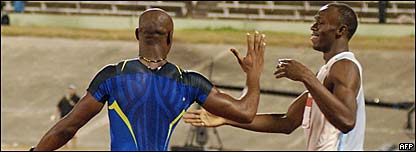
 We wanted to give Jamaicans an option to stay here to pursue athletics at the highest level possible...
 Dania Bogle speaks to Neil Nunes


 Archive