| | | | | | | |||||||||||||||||||||||||||||||||||||
| | ||||||||||||||||||||||||||||||||||||||||||
|
Going bananas over bananas | ||||||||||||||||||||||||||||||||||||||||||
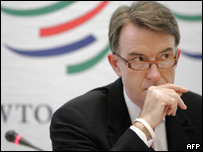
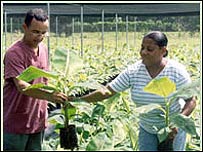
The tariff level on Caribbean, African, and Pacific bananas into Europe had always threatened to be a sticking point in the current World Trade Organisation (WTO) talks. And the decades-long row fulfilled its role in being one of the issues at the WTO talks in Geneva late Thursday into Friday. Latin American countries wanted more talks to seek a WTO compromise over European Union (EU) import tariffs on their banana exports to the EU. The EU has already offered major changes to its current preferential import deal for smaller scale producers in the African, Caribbean, and Pacific (ACP) grouping. Latin American nations argue that these changes do not go far enough. Important The talks are crucial on several fronts. They are seen as the final chance to hammer out a new deal on world trade before the presidential election in the United States sidelines the negotiations. This week's meeting is also the latest effort to complete the Doha round of negotiations. The talks were launched seven years ago with the aim of reducing barriers to trade and giving developing countries new commercial opportunities. The current WTO meeting is important to the Caribbean not only on the matter of opening up the region to global free trade - and some say unfair competition - but also on the issue of bananas. The ‘bananas' battle In fact the banana debate has become critical to any hoped-for success of the trade talks. In fact they are so important that European Trade Commissioner Peter Mandelson has warned that if there was no accord with banana producers on imports in Europe, then there could be no wider deal on global trade liberalisation.
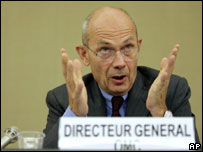
Mr Mandelson said a deal worked out by WTO head Pascal Lamy had to be accepted by both Latin American and African, Caribbean and Pacific producers. Mr Lamy's proposal is seen as a "take it or leave it" offer but and no one is completely satisfied with it. Take it or leave it His offer to the Latin Americans is a gradual reduction of the EU's tariff of 176 Euros per tonne to 116 Euros by 2015.
Caribbean banana producers had fought hard against even lowering the previous tariff to 176 Euros. But to further complicate matters the Latin Americans have rejected the new EU compromise offer. They want the tariff lowered further or preferably removed altogether. EU Trade Commissioner Mandelson says if there's no agreement on bananas, there would be no accord on trade in tropical agricultural products - and so no wider WTO accord. Unacceptabe threat Caribbean and other ACP countries have said that the proposed cuts in EU banana import tariffs were an "unacceptable" threat to their producers. The stance has long been maintained by the Windward Islands Banana Development and Exporting Company, WIBDECO. It has also criticised the recent Economic Partnership Agreement (EPA) between Caribbean countries and the EU, calling it a raw deal for the banana industry.
They are anxious to safeguard the preferential access to the European Union market that they have long enjoyed. Their main complaint is that any further cuts would only give "undue advantage to the Latin American producers. But the EU seems prepared to push ahead with further cuts in its banana import tariffs in order to end a long-running trade dispute with Latin American producers. Latin American banana producers have successfully challenged the EU's banana import regime before the World Trade Organisation on the grounds that it discriminates against them in favour of poor African, Caribbean and Pacific countries. Under Mr Lamy's proposals, Latin American countries would agree to a "peace clause," in effect promising not to reopen the case in return for the lower tariff. Other trade issues However, while the ACP representatives waited around in Geneva for a solution on these bread-and-butter issues, large countries argued over other issues. The first few days of the WTO talks had been dominated by disputes between the the United States and the EU and the emerging economies of India, Brazil and China. This left the smaller countries "kicking their heels" as one BBC correspondent in Geneva descibred it. The Kenyan Trade Minister described it as larger countries being "bogged down by issues that really largely have to do with themselves." The head of the World Trade Organisation, Pascal Lamy, warned that the global trade talks would fail unless countries could reach a compromise. "I'm afraid that the deal you all came here to do this week will not happen, with the attendant consequences; this is the blunt reality," Pascal told world trade ministers. And, as ministers continued to go bananas over their own trade issues, smaller nations such as those in the Caribbean looked on hoping their small scale agricultural industries would survive the global trade deadlock. |
LOCAL LINKS  WTO faces new banana bottleneck WTO faces new banana bottleneck 21 July, 2008 | News The View from Europe: WTO talks21 July, 2008 | News | ||||||||||||||||||||||||||||||||||||||||||
| |||||||||||||||||||||||||||||||||||||||||||
 | |||||||||||||||||||||||||||||||||||||||||||