



 | | | | | | | |||||||||||||||||||||||||||||||||||||
| | ||||||||||||||||||||||||||||||||||||||||||
|
Too accustomed to slow customs | ||||||||||||||||||||||||||||||||||||||||||
Several Caribbean ports have received a failing grade in a global survey on seaports and customs effectiveness called the Logistics Performance Index (LPI). The study was carried out by the World Bank and is contained in a report called titled "Connecting to Compete: Trade Logistics in the Global Economy." Of 150 participating countries, Guyana, Haiti and Jamaica ranked at 141, 123 and 118 respectively. The country with the highest ranking in the Caribbean was the Dominican Republic at 96. However, seaports in Trinidad and Tobago, Barbados, Bahamas, the Eastern Caribbean countries and the Dutch and French Caribbean were not included. The report also ranked countries based on other indicators such as efficiency of customs operations, infrastructure, logistics competence, tracking and tracing among and timeliness, among others. Again Caribbean countries in general were ranked very low. Lack of competitiveness The report highlights the fact that the region is failing in its efforts to develop a competitive supply chain framework.
In an analysis of the findings, Caribbean Central American Action noted that: "one of the most important reasons noted for the low performance of the region is the lack of efficient customs practices in the region." The organisation describes itself as a private, independent organization that promotes private sector-led economic development in the Caribbean basin and throughout the hemisphere Its Executive Director, Anton Edmunds told BBC Caribbean, "as it relates to logistics - the actual movement of goods in and out of the region - unfortunately, the Caribbean ranks relatively low." He said one of the areas of under performance was the (lack of) speed in which “goods are loaded, off-loaded and clear customs and get into the market-place. "It’s really where it shows the region is deficient," he pointed out. Days and documents According to another World Bank report: "Doing Business 2008" although Guyana has one of the lowest costs to import a 20-foot container, compared to other countries within and outside of the region, it still takes 35 days to clear customs and 11 documents were necessary to complete a transaction in 2007. In the same report, Jamaica has one of the highest costs to import a container of similar size despite the country’s recent upgrade in customs technology and developing its infrastructure.
Although the number of documents necessary for imports were almost half that of Guyana, it still took at least 22 days before the shipment can be released from Jamaica’s customs. More troubling it said was the amount of documents needed and the length of time it takes to export goods from the region. This is similar to that for imports, and in the case of Jamaica, it is more expensive to export goods than to import. Caribbean Central American Action says high costs and a slow clearing process have made the Caribbean's ports very uncompetitive. It adds that the delay is costly, as it forces businesses to hold larger than necessary stock as insurance against delays. According to the report, the general lack of uniformity in customs operations also indicates a lack of transparency. Importers are subjected to widely varied tariff rates, and side payments in order for the prompt release of goods. CCCA says the vulnerability of the tourism industry also makes it necessary for the region to continue to trade in goods with its global partners. It says it's therefore critical that customs operations become more efficient, to facilitate trade and reduce the costs of doing business in the Caribbean. | |||||||||||||||||||||||||||||||||||||||||||
| |||||||||||||||||||||||||||||||||||||||||||
 | |||||||||||||||||||||||||||||||||||||||||||


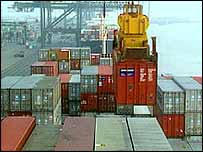
 (It takes too long for) goods to be loaded, off-loaded, clear customs and get into the market-place.
 Archive