



 | | | | | | | |||||||||||||||||||||||||||||||||||||
| | ||||||||||||||||||||||||||||||||||||||||||
|
The challenges of medical tourism | ||||||||||||||||||||||||||||||||||||||||||
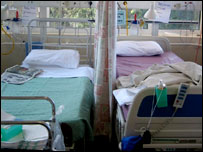
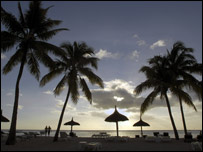
Sun, sea, sand and surgery could be the new brand of tourism in the Caribbean, as regional governments and private investors move to capitalise on medical tourism. There are billions of reasons, so to speak, for the Caribbean to invest in this niche market, which is valued globally at some US $40 billion per year. For decades the Caribbean has welcomed health and wellness travellers seeking out its warm climate, fresh air, soothing seas and mineral springs to prevent illness or aid in recovery. More recently, resort spas have become fashionable in the region. Now it’s the medical tourism market segment involving those seeking curative treatment – with a bit of holiday on the side – that’s exciting regional tourism stakeholders. Tapping in Caribbean tourism executives and medical services professionals met recently in Barbados to explore how CARIFORUM countries can tap into the growing international demand for medical tourism. The major driving force is a growing demand in the Caribbean’s traditional tourism markets of North America and Europe, where more and more people are opting to travel abroad for medical treatment sooner or cheaper than they can get it at home. Dr Juliet Skinner is a consultant gynaecologist who provides in vitro fertilisation services at an internationally-accredited private clinic in Barbados. She says that with the rising costs of health care services in developed countries, world-class medical treatment in the Caribbean at a significantly reduced cost is a highly attractive prospect. “For the patient in the USA, they’re probably going to save approximately US $3,500 by considering treatment at the Barbados Fertility Centre, and that includes a two week holiday.” Tourism Increasingly, too, patients are seeking treatment outside their home countries for reasons of privacy and to avoid the social stigma associated with their conditions. The Caribbean affords them anonymity.
“Many people coming in for alcohol and drug addiction treatment are concerned about other people (at home) finding out,” explained Kim Martin, a marketing executive with the Crossroads drug and alcohol treatment centre in Antigua. “They can come to Antigua and people aren’t going to know who they are.” Competition Despite these benefits, there are those who doubt whether the Caribbean can realistically compete with the more established medical tourism services offered in nearby Latin American countries like Costa Rica, Argentina and Colombia.
The Barbados Health Minister Dr. David Estwick says it’s possible, if the Caribbean emphasises its advantage of being an English-speaking destination, while at the same time working to improve the quality and range of medical services available. That range of potential services is indeed wide – from diagnostics to specialised dental, medical and surgical procedures. So what should be the Caribbean’s focus? Professor Henry Fraser, the Dean of Medical Sciences at the University of the West Indies, told BBC Caribbean the region could get high returns from emphasising orthopaedic treatment and joint replacement in its medical tourism product. Not only, he says, are these services highly sought after by North Americans, they’re also needed for locals in the Caribbean. Multiplier effect “(As) medical care takes people to a longer life they become incapacitated in their 50s, 60s and 70s with joints that are breaking down…It costs about five times as much for joint replacement in the USA as it does in India, and two or three times as much as it does in Costa Rica. (The Caribbean) can come in somewhere at the level of Costa Rica.” Stakeholders are understandably encouraged by the multiplier effect that medical tourism could have on related industries and services.
Although many hospitals will likely provide residential care to those on medical holidays, hoteliers say they, too, expect a boost if medical tourism takes off. The President of the Barbados Hotel and Tourism Association, Alvin Jemmott, told BBC Caribbean the accommodation sector will look to cater for friends and relatives accompanying patients to the Caribbean. He said hoteliers in Barbados are starting to focus on retrofitting their facilities so outpatients with disabilities and physical injuries can be easily accommodated. “If we don’t have the facilities in place for those travellers who have physical challenges then we’re missing out on a whole market niche,” he said. Challenges But amidst the opportunities there’s no escaping the many challenges. Strict government regulation of the sector is critical to ensure compliance with international best practices in quality assurance and safety. It’s a caution underscored by Dr. Jacob Thomas, a group medical adviser at a leading private medical centre in Malaysia. “Malaysia has been very strict … that we should only have evidence-based traditional and complementary medicine,” he explained. “Not (just) anyone who runs something called a hospital is allowed to take part.” Legal issues And with good reason. Medical tourism can also give rise to a minefield of legal and ethical issues that could do irreparable damage to a country’s reputation in tourism circles. There’s also the inevitable political dimension. Just as in other developing countries, there are concerns about potential inequities developing in access and the quality of healthcare available to tourists versus what is available to locals. Some foresee the private medical centres that cater mainly to travellers benefiting from the full range of incentives traditionally associated with tourism development, with the public health-care systems, on the other hand, being neglected. Richard Sealy, the Barbados Tourism Minister, who until a few months ago was the Shadow Minister of Health, is acutely aware of these concerns. Although supporting medical tourism in principle, he told stakeholders: “There are enough problems in just taking care of Barbadian citizens where our medical facilities are concerned that maybe we need to rectify those issues first before we move headlong into any push for medical tourism.” But, some argue, the two need not be mutually exclusive. Still, the region will have to undertake a careful balancing act if the development of medical tourism for ailing holidaymakers is to truly assist the larger goal of improving the quality of life of those for whom the Caribbean is home and not just a holiday destination. |
EXTERNAL LINKS The BBC is not responsible for the content of external internet sites | ||||||||||||||||||||||||||||||||||||||||||
| |||||||||||||||||||||||||||||||||||||||||||
 | |||||||||||||||||||||||||||||||||||||||||||


 We’re missing out on a whole market niche
 Listen to David Williams report
 Caribbean Tourism organisation