



 | | | | | | | |||||||||||||||||||||||||||||||||||||
| | ||||||||||||||||||||||||||||||||||||||||||
|
Literary return for Allfrey | ||||||||||||||||||||||||||||||||||||||||||
Dominican author and political activist Phyllis Shand Allfrey, who died in 1986, will be returning to the literary spotlight with the release of a book of short stories, It Falls Into Place. Allfrey, who was born in 1908 into a family of white colonial officials, is the author of the acclaimed novel, The Orchid House which was made into a movie for British television by Trinidadian film maker Horace Ove in 1991. She was also a political activist, and was famous for her role in the founding of Dominica’s first political party, the Dominica Labour Party in 1955. Her inspiration to form a political party in Dominica came after she returned home from London where she was a member of the Fabien Party. "When she returned there, there was a transformation," said Allfrey's biographer Lizabeth Paravisini-Gebert. "There were no political parties in Dominica. She saw the need for people's participation in politics. It was a very period in the history of party formation in the Caribbean and she essentially abandoned her writing career to go from town to town by foot. It was an amazing effort she made to try to put together a party along the Fabien-Socialist lines."
Lennox Honeychurch, Allfrey’s friend and literary executor, told the BBC that Allfrey’s involvement in politics was frowned upon by the White elites in Dominica. Political legacy "It was a peculiar situation; here is this white West Indian, a petit woman coming out among the working class people to launch this first political party in Dominica," he said. "This made her in the eyes of her class a traitor, and she was a traitor not only to the few white people who still existed, she was a traitor to the very powerful mulatto or coloured elite who felt she was actually turning against her class and helping to destroy their interests." Paravisini-Gebert said although Allfrey saw her involvement in Dominican politics as a way of contributing to the development of the nation, it was driven by her ambition to leave a legacy. "Phyllis always had a deep desire for recognition of one sort or another. She was ambitious but she also had a sense of destiny," Paravisini-Gebert said. "She talked about connections, she talked about the whole sense of 'noblesse oblige' and that it was her social role and obligation to work towards the benefit of the people. There was a sense in her perhaps of legacy. There was an ambition to leave a legacy, to leave something behind." Allfrey also served as Minister of Labour and Social Affairs for the West Indian Federation in Trinidad, but when the Federation came to an abrupt end in 1962, Allfrey returned to Dominica. On her return to Dominica, she was expelled from the party she had formed, and her involvement in politics was limited to running and editing a newspaper, The Star. Although Allfrey's novel was quite successful, her work never received the critical acclaim of her compatriot Jean Rhys, author of Wide Sargasso Sea. 'Delicate balance' The Orchid House tells the story of the return of three white sisters to their Caribbean birthplace, through the eyes of Lally, their Black nurse and chronicles the decline of a once-wealthy planter family. Critics have said The Orchid House also illustrates the growth of a truly Caribbean sensibility within that class, as personified by Allfrey's own life. With the publication of It Falls Into Place, a collection of short stories set in Dominica, New York and London, Allfrey is set to be discovered by a new generation of readers. Her biographer Lizabeth Paravisini-Gebert called the collection "a kind of mosaic of this life that she led" and shows the "delicate balance" she had to strike during her life. "The short stories are … a mixture of nostalgia for Dominica and what also comes through too is this sort of humour that she had. She enjoyed life even in its most depressing and perplexing moments," she said. "It's a reflection of life in Dominica and also of the balance that she as a white West Indian, like all white West Indians they had to find between the fact of being caught up with love for the islands and being reviled in a way because their white ancestry is associated with the plantations and slavery and yet (they were) passionate about the culture of the people." It Falls Into Place is published by Papillote Press. |
| ||||||||||||||||||||||||||||||||||||||||||
| |||||||||||||||||||||||||||||||||||||||||||
 | |||||||||||||||||||||||||||||||||||||||||||
 Email a friend
 Printable version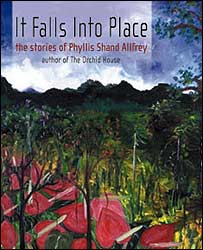
 The short stories are a mixture of nostalgia for Dominica and what also comes through too is this sort of humour that she had
