| | | | | | | |||||||||||||||||||||||||||||||||||||
| | ||||||||||||||||||||||||||||||||||||||||||
|
The Grenada Coup revisited | ||||||||||||||||||||||||||||||||||||||||||
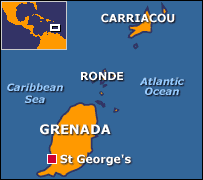
The first coup d'etat in the English-speaking Caribbean took place on March 13, 1979 when the New Jewel Movement, led by charismatic lawyer Maurice Bishop toppled the Eric Gairy government. Gairy, who had been in power since 1951, was a repressive leader who rigged elections and unleashed terror through his own army of thugs called the Mongoose Gang. The Bishop government, called the People's Revolutionary Government looked to Cuba as a model and tried to establish the first Marxist state in the English-speaking Caribbean. The PRG promised to provide jobs, food, housing, education and free elections. However, they suspended the constitution and put in its place a series of "people's laws", the most unpopular of which were those that curtailed individual freedoms and facilitated the detention of dissidents. An ideological struggle between Bishop and his deputy prime minister Bernard Coard, caused a revolt within the party. This led to the downfall of the PRG and the murder of Bishop and many others on October 19, 1983. In the midst of this bloody situation, a US-led invasion force that consisted of troops from Caribbean nations toppled People’s Revolutionary Government (PRG). One of those involved in the 1979 coup was attorney Lloyd Noel. He became attorney general in the PRG but was later imprisoned without trial after falling out with his colleagues. Noel spoke briefly with BBC Caribbean Service's Rosie Hayes about the coup. Rosie Hayes: Did the coup come as a shock to Grenadians at the time? RH: It was at the time of the Cold War, and with a leftist government in Cuba, life was never going to be easy for you with the Americans breathing down your neck? RH: The Prime Minister at the time, Eric Gairy was regarded as oppressive, and a manipulator of elections. If the circumstances were the same today, would you be prepared to back another coup? RH: They say one coup can lead to another and the PRG regime imploded. Is the lesson from taking power by the gun that you can also fall by the gun? |
| ||||||||||||||||||||||||||||||||||||||||||
| |||||||||||||||||||||||||||||||||||||||||||
 | |||||||||||||||||||||||||||||||||||||||||||
 Email a friend
 Printable version