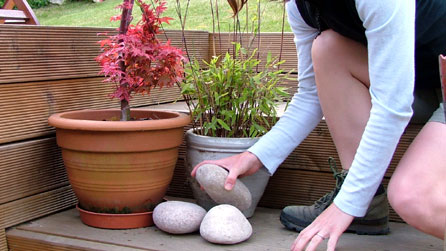
Make the most of hard landscaping

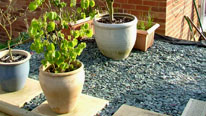
plants pots and stones on decking

Make the most of hard landscaping

Hard surfaces don’t make an obvious place for nature to thrive. But your garden doesn’t have to be completely barren just because it’s decked or paved. Keep nature in mind when you source your materials and either leave some earth for planting or use container planting to add some valuable greenery.

Gravel
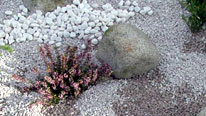
gravel garden with rocks
  • Whatever hard landscaping you’ve used, leave generous borders for planting. You can grow plants up walls and fences and even grow some through the gravel.
  • Plastic under gravel is a nature no-no. If you need a membrane, choose a permeable one to let the air and water through as there will be hundreds of insects living just beneath the surface.
  • You don’t have to use a membrane and it’s not the most practical option if you’re planting through the gravel. Instead, stamp the earth down well before you lay the gravel.
  • If you want to provide some greenery but you don’t really fancy doing the gardening, plant a small tree like a native crab apple or a cherry. Birds and insects love them and you can enjoy the spring blossom and autumn fruit too.

Decking

  • Small mammals love to hide and forage under decking, so leave a gap for them. Frogs and toads like dark and damp places too.
  • Insects and other animals welcome rocks and old wood left for them underneath decking.
  • When you’re sourcing wood, look for the FSC (Forest Stewardship Council) logo and rest assured it's come from a sustainable source. It’s even more important if you're using hardwood as it takes much longer to grow.
  • Leave earth around the edge for borders or use containers to encourage insects and birds.
  • Paving

    paving with pot plants
  • It’s amazing how much life can exist between your paving stones. Cracks and crevices make excellent homes for insects and of course you’ll find lots of larger animals come to eat them.
  • Thrushes, blackbirds and others love snails – and a paved area without cover makes easy pickings for them.
  • If your paved area is quiet and sunny, you might be lucky enough to find reptiles sunbathing on the warm stone. Make an informal rockery with plenty of planting around the edges so they have some shelter to hide in.
  • You can stand large pots on the patio for wildlife. Or even plant between slabs.
  • There are some types of stone that might be fine for your garden, but it can be harmful to take them away from their natural environment. You should avoid buying water-worn limestone, which is also called Irish limestone, Cumbrian stone or weathered limestone. It supports many rare plants and a huge variety of wildlife where it comes from which will die without it. Substitute with deep-quarried limestone, York stone or sandstone.
  • Success Stories

    quarry and lake

    West Kilbride Green Centre

    The transformation of a disused quarry into a thriving nature haven.

    children pond dippingSt Johns Primary School, Jersey

    Creating an amazing wildlife area in the schools grounds.

    Elsewhere on Breathing Places

    Scarce 7-spot ladybird, courtesy Ken DolbearWildlife surveys

    Help science and make Britain an observation nation

  • Ladybird Survey
  • More surveys you can do any time

    Elsewhere on the web

    Forest Stewardship Council - sourcing sustainable woodRSPB - make the most of your patio

    More from Breathing Places

  • Home
  • Places to go
  • Nature activities
  • SchoolsDownloadsAbout usPartners