Where to put a pond
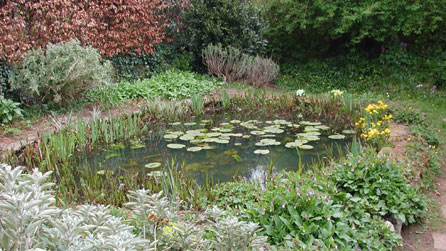
- Find a sunny position for your pond in order to attract the greatest variety of wildlife.
- It's best to dig your pond away from trees and shrubs so the leaves don't swamp the water.
- Amphibians love to head straight for the cover of long grass after a swim, so let it grow nearby. You could even make a
wood pile or an
amphibian home so they have somewhere damp to hibernate.
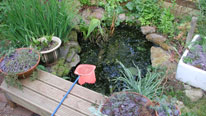
- If you don't have space for a pond, don't despair – make a mini container pond instead.
How to build a pond
It might sound obvious, but start by digging a hole. Make sure at least one edge slopes gently so that animals can get in and out easily - you don't want to drown the local wildlife. It's a good idea to have shelved sections.Create a deeper section of the pond in the middle, at least 60cm deep, so that it doesn't freeze solid in winter. This will help hibernating wildlife.Line the hole with butyl or polythene pond liner for speed or choose the traditional method of lining with clay. Rainwater is by far the best water for your pond. It doesn't have as many nutrients as tap water so it won't get so swamped with blanketweed. If you do use tap water, let it stand for a few days first so that additives evaporate.Choose oxygenating, floating, emergent and marginal plants as they each serve a purpose for wildlife. As always, natives are best, and include: marsh marigold, yellow flag, hornwort, water violet and frogbit. To find out what's really local to your area, use the Postcode plants database.Goldfish might look pretty but they'll eat watersnails and tadpoles so it won't be much of a wildlife pond. Have a separate pond for fish.Although it's tempting, it's best not to introduce pond life yourself as you could spread disease or introduce invasive species by mistake. Dragonflies and damselflies will probably arrive first and other species will follow.How to maintain a pond
Keep the water relatively clear and clean out some vegetation during the early autumn. Blanket weed can be a pest. Avoid using chemicals to get rid of it, as you'll kill more than the weed. Take it out by hand and leave it on the edge of the pond so that any creatures can crawl back in the water.Prevent your pond from icing over completely in winter by floating a tennis ball on the surface. Remove it to leave an air hole in ice that does form. Avoid breaking the ice as the reverberations can disturb pond life.Great crested newts are rare in the UK and protected. It's illegal to catch, possess or handle them without a licence, or to disturb their habitat. Count yourself lucky if you should find some in your pond.Related downloads
 Download the "Wade Into Water" Pocket Guide - 396KB
Download the "Pond Bingo" Activity Sheet - 84KB More things to do in a weekend