Why help bees?
Pollination is the number one reason. As they move from flower to flower, they transfer pollen around and play a vital role in enabling plants to set seed and fruit.
You'll be helping Britain's bumblebees to survive if you put out a home for them.
Different homes for different bees
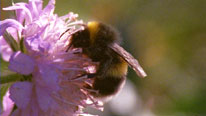
Bumblebees need a box the same size as a small bird box. It should have two rooms: one filled with wood shavings for the queen to breed in, the other an empty compartment where the rest of the bees live.
Bumblebees may also nest in tussocks of grass or moss. If you can, leave a grassy bank at the edge of your garden and let the grass grow. Plant clover and catmint to encourage them into your garden.
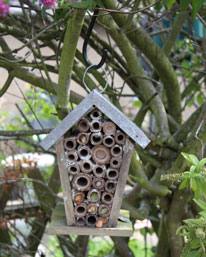
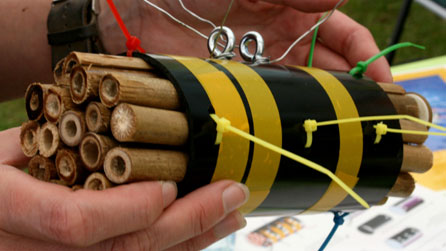
Red mason bees need a box filled with hollow pipes, such as cut lengths of bamboo. They lay their eggs one at a time with a supply of pollen or nectar and a plug of mud between them.
Mason bees use holes in old wood or thick stems for nesting, so hogweed and brambles make good homes for them.
A wood pile will make a safe home for various bees and other invertebrates. Find out how to make a wood pile.
Some bees and other insects might make themselves comfortable in your garden shed for the winter while they hibernate.
Siting your bee home or café