| Esholt: A suitable case for treatment! | |
| | | Take a trip back in time! |
| | In the first of a series in which West Yorkshire people look back at the county's hidden history, we report on research by Bradford College student Breedge Garnett who has been proving the truth of the old Yorkshire saying: "Where there's muck, there's brass!" |
| | | Where there's people there's sewage, and Bradford was no exception, but muck was eventually to provide the city's council with some surprising by-products and a very healthy profit. The city's population grew from 13,500 in 1801 to over 103,000 by 1851. Immigrants were attracted to Bradford by the expanding textile industry but economic prosperity brought its own problems. 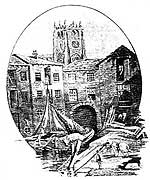 | Bradford Canal Basin in Victorian times |
People, particularly in the poorer districts, lived nowhere near as long as we do today. There was little or no control over what could be built and no public provision of sewerage or piped, clean water. Consequently infant mortality rates were incredibly high - one in five children could not expect to live beyond their first birthday.
Diseases such as typhus, scarlet fever and smallpox were endemic. Water-borne infections such as typhoid and cholera also claimed lives. The main source of the problem was the absence of a decent drainage system. Most human waste, as well as that from the booming mills, was dumped into Bradford Beck where it drained into the canal basin, and ultimately the River Aire.
| | | |
|
|








 Music listings