
“Soap operas are rubbish. Anyone can write them.”
People are often saying things like this. However, viewing figures for soaps and medical dramas - as some should actually be called - are regularly far higher than anything else on TV. Many of the people who claim to hate soaps seem to know a surprising amount about what’s happening in them. And those who proudly refuse to ‘waste’ their time watching them are often happy to spend it explaining why, at length – for instance, on a recent Guardian blog about EastEnders. Someone, somewhere, is clearly doing something right.
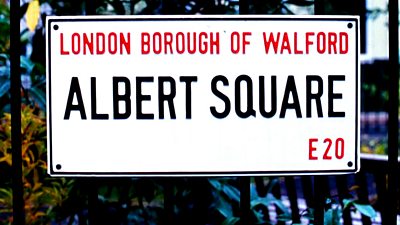
Viewers watch soaps for different reasons as this interesting report by Ofcom shows. Whether you love soaps, love to hate soaps or just catch them every now and again, pretty much everyone has, at some point, tuned in for one. But does this mean anyone with a laptop and a spare half hour can write an episode? As a script reader for BBC Continuing Drama – which makes Casualty, Doctors, EastEnders and Holby City – I’d say, probably not. Along with my fellow readers, I went on a trip to BBC Elstree Centre to catch up with some of the people working on the shows and find out what they were looking for.
“Comedy!” says Doctors Script Editor Neil Irvine. “The series needs more of this.” He’s also hoping to find “compelling human interest stories that surprise us” and “writers who have something to say.” Simon Harper, Series Producer on Holby City and former Script Producer, agrees: he is looking for “high stakes emotional drama” and “fresh, authentic writing with both warmth and a contemporary spark.” However, he also says: “The best scripts are infused, where appropriate, with humour, playfulness and witty banter…Being funny is vital!” Casualty’s Story Producer Roxanne Harvey enjoys scripts with a “strong emotional impact” as well as “humour and wit.” EastEnders Script Editor Manpreet Dosanjh likes the work of writers who can create “big characters” in a “strong and believable way” and are “able to juggle both comic and gritty storylines.”
Humour is something that many writers mistakenly think doesn’t apply to Continuing Drama, but some of the best episodes and characters have elements of comedy. With soaps there’s a misconception that every scene has to revolve around relationship break-ups, deaths and/ or angry shouting but this isn’t true. For instance, EastEndershas a long tradition of comedy double-acts. Dot helping Ethel to die wouldn’t have been half as powerful if it hadn’t been for all of the entertaining and amusing times they shared together prior to this.
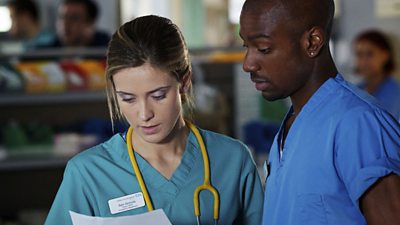
Another thing you might not be expecting Continuing Drama to be looking for is writers who have their own unique take on things: “an individual and original voice,” as Neil puts it. You may think writing for soaps or medical dramas means sacrificing your ‘voice’ in order to mimic someone else’s. However, talking about EastEnders, Manpreet says: “If writers can create their own distinctive original dramas, they are more likely to be successful on the show.” The rest of the group agree. It’s one of the reasons why Continuing Drama prefers to initially read original film, TV, radio and theatre scripts from writers they haven’t worked with before, rather than sample episodes that use pre-existing characters and scenarios.
Other things the teams are looking for include, “economic, sharp dialogue that’s naturalistic and compelling,” “clear multi-strand storytelling” and, perhaps unsurprisingly, people who genuinely want to work for them. Continuing Drama sometimes seems to attract writers who see it as a way of making money and little else. Did you last watch a soap in 1987? Are you struggling to get your trilogy of novels published? Have you accumulated lots of bills printing, posting and copyrighting them? If you’ve answered yes to all of these questions, I’d suggest there are better ways of earning cash without spending hours of your life trying to achieve something you have no real interest in.
Roxanne explains: “Sometimes writers don’t display a passion for the show and its characters, and their scripts read as if they want to be writing something else. If Casualty doesn’t float your boat, don’t apply to work on it. You’ve got to have a love of the show.” Manpreet has similar experiences: “People often think that they know [EastEnders] when they don’t watch it and so write their own heightened, clichéd and over-the-top version of the characters,” she says. Writers getting mixed up with what the shows are and aren’t about can be a problem. Neil says: “There is a preconception that Doctors is primarily a medical drama, when it actually tells human interest stories.” In contrast, Simon says that while Holby City is a medical drama, it is often mistakenly seen as a soap.
As with all kinds of writing, there is a limited amount of people who can write soaps and medical dramas exceptionally well. The fact so many episodes are produced means that, inevitably, some are more successful than others. That’s the nature of television production. However, everyone working on them aspires to make every episode great. It’s only with talented writers – ones who share their belief in the shows’ potential – that they’re able to achieve this and create the kind of big, memorable moments in television that Continuing Drama, at its best, does brilliantly.
To read full versions of these interviews, including more information on what each of the shows is looking for, visit Sally’s blog. Follow Sally on Twitter: @sallystott
If you’d like to write for EastEnders, Doctors, Holby City or Casualty (and you watch and enjoy them), you can either send an original script to the Script Room when it is open for submissions or, if you’ve had work already produced for stage or screen, directly to BBC Continuing Drama.
Find out more about the BBC Writers Academy and shadow schemes for writers on Continuing Drama shows.
