
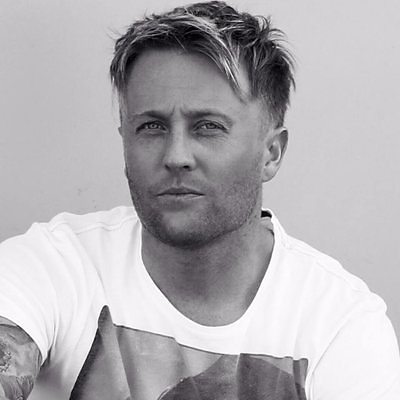
Hi, I’m Stephen Large, I’m 36 and I’m from Belfast. Sorry. When you read that back I sound like a contestant on Blind Date.
I was one of the dirty dozen selected from all the applicants across the UK to participate in the BBC’s Comedy Room 2017. It’s been an amazing experience which I feel genuinely privileged to have been a part of over the past six months.
So, if Comedy Room 2018 is something you want to be involved in but feel it’s unattainable, allow me to explain how I managed to get myself selected. Trust me, I know it’s an old cliché but if I can do it, anyone can.
I don’t know what your preconceptions might be about the type of person the Comedy Room is looking for but I’ll try to dispel them anyway.
At the time of submitting my application I did not have a host of writing credits to my name. I wouldn’t have considered myself to be a ‘real’ writer at all. I didn’t have any writing qualifications or go to film school. In fact, I only started writing comedy four years ago.
After swapping a social life for parenting, I noticed I had some spare time in the evenings when the kids went to sleep (eventually). So I decided to put the time to better use than staring at my phone or watching boxsets and started writing comedy.
I’m married with three young daughters and a mortgage. My wife and I both work. I do days; she does nights and weekends. So I knew if I was going to pursue this ‘writing dream’ then it would have to be done in my free time (whenever the f**k that was).
I stalked a few local Irish comedians on social media and bombarded them with questions about who I should speak to in Northern Ireland about reading my stuff. Fortunately, the comics were lovely people who passed me the details of some other poor unsuspecting souls who I could harass instead.
Unfortunately, no one was interested in what I had written at the time and I’m not surprised because it was sh*t. This leads me to my first ever attempt at an inspirational quote:
1. Don’t be afraid to be sh*t
You will learn absolutely nothing about your writing until you put it in front of someone and allow it to be judged. If it’s your first attempt or one of your first, the chances are it’s riddled with mistakes. If you’re fortunate enough to get feedback, then make sure you take it on board.
Try not to take the criticism to heart. The person is trying to help improve both the piece of writing you submitted and you as a writer. If the criticism is constructive and fair then you have to take it on board, otherwise you’ll never improve.
In those early days I found myself trapped in a Catch-22 scenario. Whenever I approached anyone they wanted to know what I had done, what credits I had etc. When I said ‘nothing’ they’d refer to me as a ‘newbie’. I suppose the infuriating thing for any new writer is that they’ll forever be a ‘newbie’ unless someone takes a punt on them and gives them their first opportunity.
I felt like I was getting nowhere fast so I decided to take matters into my own hands. I created a Facebook page and started posting some short stories on it. That was two years ago and now the page has over 33,000 followers. This leads me onto my second inspirational quote:
2. Get your stuff out there
We are fortunate to be a part of a generation which has access to so many social media platforms that allow us to share stuff with hundreds of people at the click of a button. Yes, it can be a daunting prospect to have your writing judged by a group of your peers in a public forum. However, if you’re hoping that one day a commissioner will just happen to walk by your window at the precise moment you’re reading your sitcom script aloud and offer you a three series deal, then you’re sadly deluded. However, if that does happen, I hate you.
I tried to capitalise on the momentum of the Facebook page and contacted a local book publisher about going to press with my short stories. We had a meeting, during which I got some good vibes and I truly believed it would happen.
Then a couple of months later I was standing in a chip shop when I got an email to say they wouldn’t be pursuing the project. I was gutted. This leads me to my third inspirational quote:
3. Use rejection as motivation
If you can’t handle rejection, then maybe writing isn’t for you. Don’t get me wrong, it’s a terrible feeling and I can be an insufferable prick to be around in the 24 hour period after a knock back. But you have to face the reality that in this game you are going to be told no a lot more than you’re told yes. I lick my wounds for a day; contemplate packing it in for another; then dry my eyes and use the rejection as motivation to prove those people wrong.
However, and this is very important, my fourth inspirational quote is:
4. Don’t be a d*ckhead
This is something I struggle with because generally I am a d*ckhead. I think it’s genetic. The comedy industry is a very close knit little community. Everyone seems to know everyone. So if you’ve gone all Oliver Reed on someone, chances are they’ve told a colleague and so on.
I decided to press ahead and get my book self-published via Amazon. Now I know a lot of people within the publishing industry curl their lip at the very mention of this and in many ways I can understand why. Just because your mum bought you a guitar for Christmas doesn’t mean you’re ready to play a gig at Wembley Stadium.
However, I can honestly say it was one of the best decisions I’ve made because the book reached the #1 spot in the Kindle Comedy Chart within a week of its release. How did this happen? Launching it off a Facebook page with tens of thousands of loyal followers really helped. More importantly, for the first time, people within comedy started coming to me.

I was approached by Keith Martin a freelance comedy Producer who now works for BBC Writersroom to contribute towards a new online project they were working on called ‘Tight Shorts’. It was going to follow the fortunes of both Irish football teams during the 2016 European Championships.
This was my first writing credit with the BBC, so I really tried to make a good impression. I wrote four short videos which amassed 4 million views. As a result of this, BBC NI invited me to work on other projects across various platforms.
To date my online content with BBC has racked up 10 million views. I was asked to contribute some material towards a sketch show titled, Late Licence on BBC Two NI. I was commissioned to write a short comedy-horror film for their iPlayer series ‘Fright Shorts’. I’ve also written a sitcom pilot for BBC Radio Ulster & BBC Radio Scotland which was recorded in January. Taking into consideration I had zero credits to my name less than two years ago, I owe the BBC and BBC Writersroom a great deal of gratitude.
And so this leads onto my fifth and final inspirational quote:
5. Don’t give up
I know I’m not the smartest; funniest or cleverest writer out there. But I doubt there are many as hardworking; driven and determined to succeed as I am.
Don’t allow rejection or circumstances to deter you from your objective. If you have a little talent but a lot of determination, you’re more likely to succeed than someone with lots of talent but who is a lazy bastard. How much you succeed depends on how much work you put in.
So you can blame whatever is convenient for your failures. I’ve worked on sitcom scripts for years that don’t get made. I thought up all sorts of excuses; I don’t live in London; I have a full-time job etc but when you take a step back and look at things objectively, they just weren't good enough.
That’s another good one actually. Don’t blame where you’re from. BBC Writersroom is all over the UK and Ireland now and they want to find your work and develop you and if your work is good enough so do BBC Commissioning. So no chips on your shoulder based on Geography.

I was encouraged to apply for BBC Comedy Room 2017 by Keith Martin. Keith has been developing me as a writer for a few years now and he explained how beneficial the scheme could be for me. Given that the previous year’s Comedy Room had around 3,000 applicants, I genuinely wasn’t expecting to make it through the selection process.
I remember getting the email to say I’d been successful because my two-year-old daughter had just peed on me, near the front of a very long queue in Disney World which I then had to leave. So, the email cheered me up a bit!
Now more than ever it feels as though there’s a place for Northern Irish writers in BBC Comedy. I can’t really speak for anyone else or say what it was like before, I wasn’t involved then. But you do get the impression that before the invention of the internet and social media, it was much less accessible to anyone outside London.
When I was invited to Media City in Salford last year for a Comedy Room session, you could see what the BBC was trying to achieve by relocating to Manchester. It feels like the BBC belongs to the whole of the UK now. Because of my circumstances at home, relocating to the mainland is just not an option for me. So, these sessions have proved invaluable in terms of networking and making myself known to numerous people across various departments.
I’ve been fortunate that a couple of my online videos for BBC NI have done well enough to be picked up by BBC Comedy and launched off their social media pages too. The humour and content has translated from a regional to a mainland audience which is very encouraging. I think platforms such as YouTube, Twitter and Facebook have opened people’s minds on the mainland to comedy from outside the usual sources.
Over the course of the six months we were invited to meet various departments within the BBC such as Comedy, Radio, CBBC, Cbeebies, as well as the heads of those departments and lots of others who are involved in generating content across the numerous platforms they use.
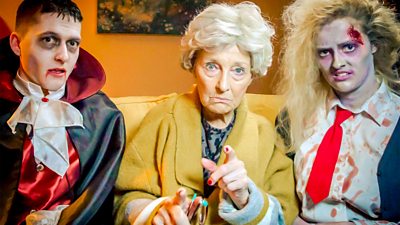
We listened to and spoke to numerous people involved at just about every level you can think of; from commissioners to writers. During one session in Media City we also got to hear from people who were a part of last year’s Comedy Room and are now writing for BBC shows. That was really encouraging.
Probably the most enjoyable session to attend was for CBBC/CBeebies. Despite having three children of my own, writing content for children’s programmes wasn’t something I had really considered. But it was interesting to hear how many established writers cut their teeth writing for kid’s shows and it was very encouraging to hear that of all the departments most willing to take a punt on a new writer, CBBC/CBeebies was top of that list.
Already a couple of opportunities have arisen from attending the sessions. After meeting BBC Radio Execs, they were interested to hear the radio sitcom pilot I got commissioned and asked me to forward the script to them which they wanted to read. In an open submission for all Comedy Room participants, I managed to get an idea for an online Valentine’s Day sketch picked up. And now they’re helping us develop our own sitcom scripts which we’ll submit to the BBC in May.
I would encourage anyone who is reading this and who has an interest in comedy writing to apply for Comedy Room 2018. You have nothing to lose and absolutely everything to gain. If anyone has any questions, please don’t hesitate to write them below and I will try to answer them as best I can.
Good luck and don’t give up!
