
"We came up with the London Voices writers group as an opportunity to bring together ten writers whose original voices reflected the dynamic mixture of people in the city of London. These were writers whose work we had come across through readings and unsolicited scripts. They were mostly quite early in their careers and keen to work across all mediums. The course was designed to expose them to writing for as many of these mediums as possible and give some very clear tools to write for them. We hope they will all thrive with this useful information."
Abigail Gonda, Development Producer for BBC Writersroom
The group members are:
- Rena Annobil
- Sabo Kpade
- Max Katz
- Diana Atuona
- Ece Ozdemiroglu
- Stephen Hoo
- Amber Hsu
- Isaac Ssebandeke
- Theresa Ikoko
- Somalia Seaton
We spoke to two members of the London Voices scheme, Max Katz and Stephen Hoo, about how they got on the scheme, their experience and what they will take away from it.
What has been your writing journey so far?
Max: My journey so far as a writer has led me to staged and rehearsed readings including the Royal Court, Soho, Young Vic and Edinburgh Fringe and informal attachments with Clean Break Theatre and the Royal Court. These theatre connections have been strengthened through relationships with Talawa Theatre, Islington Community Theatre, and Theatre503.
I have been short-listed for the Alfred Fagon Award and Verity Bargate Award and the Brockley Jack Theatre, shortlisted and presented a staged reading of my play ‘Box Chicken’ this year.
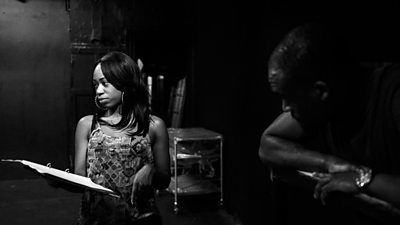
Stephen: I’ve always been interested in the complexity of human decision making and how society defines itself and the individual. Growing up I was drawn to films about characters in isolation and that feeling of detachment from the mainstream. Boys Don’t Cry, Chungking Express, I Shot Andy Warhol, My Own Private Idaho, Mysterious Skin and the like. I loved loners. In my twenties through working as an usher I discovered the beauty of theatre and plays. I realised I had a leaning towards the dark stuff. Philip Ridley, Hideki Noda, Sarah Kane, Mark Ravenhill etc. I started writing for fun, then out of need to purge my ideas out. My first full length play Naked Eyes was a darkly comic look at the London gay scene and its need to racially box people into certain roles socially and sexually. It was performed at The Tristan Bates. The satisfaction of being able to present an issue I was passionate about to a room full of people was totally inspiring.
How did you get involved with the London Voices scheme run by BBC Writersroom?
Max: Abigail Gonda, Development Producer at the BBC Writersroom (and fearless new writing champion), came to the Brockley Jack staged reading of 'Box Chicken' and not too long after, invited me to be part of London Voices.
Stephen: I wrote a play called Jamaica Boy for the Angelic Tales festival headed by Rikki Beadle-Blair at Theatre Royal Stratford East. This was developed over the space of a few months with the aim of helping to dramaturg, advance and hone a writer's skills.
We had a staged reading and a BBC reader came to see it and recommended it to Abigail Gonda, Development Producer at BBC Writersroom. I was then invited for a meeting and a chat and then asked to join London Voices. I was chuffed no end!
What was the content of the London Voices scheme?
Max: On the London Voices Scheme I have gained inside access to the workings of writing for the BBC! As a scheme member I have received tuition from producers and writers within Continuing Drama (script and documentation for Holby City and Casualty) short film, crime drama, and radio drama. I have also been able to learn what it means to write using ‘industry structure’.
Stephen:
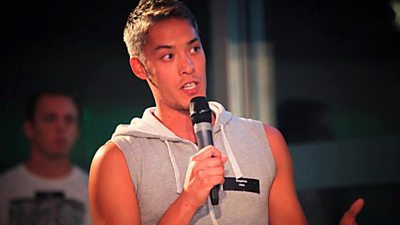
Over the past ten weeks we have all met so many people. People who are involved in radio drama, short film, Continuing Drama Series, plays and crime shows and sitcoms. We heard the ins and outs and how the cogs turn within the BBC machine. How people got their passions off the ground. Meeting the faces behind successful shows and what their processes were. How they started out. What blocks they faced and what they did about it.
We were able to questions and probe these people. Questions that at times may have seemed impertinent - contracts, money, diverse casting (lack of), bad experiences and how they were overcome.
Which part of the scheme was most valuable for you?
Max: Despite my shortlists and theatre work, a full production of my writing has eluded me. As a new writer I often receive feedback about the strength of my voice, authenticity of dialogue, characterisation and creation of new and believable worlds. The stumbling block however appears to be structure and also ‘hitting the right beats’. When I’ve asked about structure in the past, the response has been “all you need is a beginning, a middle and an end”. I have learnt on London Voices that structure is a whole lot more than this, and some.
Structure is the ability to captivate an audience in the first ten pages and to keep them on the edge of their seats to the last plot twist. I used to think, “first ten pages, surely that’s not enough to witness brilliance. Why not read the whole thing and wait for the story to grab you”. The thing is, as with anything else, if you don’t grab the audience, almost immediately, you lose them altogether. This is sad but true. But there’s a technique to holding an audience, it’s like knowing the structure of the scene's DNA. London Voices has helped to teach me that structure.
Stephen: Demystifying the whole idea of the BBC as some huge conglomerate impenetrable blob.
What are some of the techniques you've learnt?
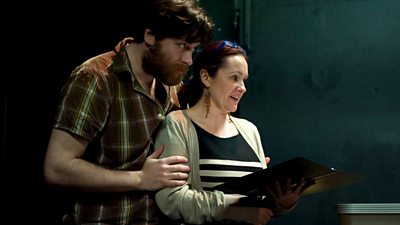
Max: These are just some of the basics, there’s so much more involved than just ‘beginning, middle and end’.
• Having the protagonist (main character) help someone in the first scene (builds empathy).
• Giving any antagonist an endearing feature, a frailty, or if not a frailty, then a pet! (Think about the ‘baddy’ in James Bond, stroking a cat).
• In the opening scenes you need to make the audience ask questions (igniting audience curiosity).
• You need to make all relationships clear.
• You also have to make it clear what your protagonist wants.
• You have to inject all scenes with obstacles (big insurmountable obstacles, which appear impossible to overcome). You need to think however that small things, can also represent big obstacle, if they have meaning for the protagonist.
• You have to let your protagonist overcome each obstacle, in the most imaginative way possible (the more imaginative, the more empathy from the audience).
• And, each scene should have a cliff hanger (which again ignites the audience's craving to know more).
• The plot must have inciting incidents (turning points).
• There must be a point in the story where the protagonist feels like giving up. All is lost, but somehow they pull through and have renewed vigour for their journey. Or adopt a new path.
What will you take away from the London Voices scheme?
Max: Membership of the scheme has proved to be a turning point in the way I view writing. Not just seeing writing as a creative art form, but as a skilled profession, with ‘defined’ techniques, tools and modes of operation. Knowing the ‘nuts and bolts’ has helped me to focus my creativity within a professional context, rather than constraining my writing to a ‘painting by numbers exercise’. I have been able to learn a skilled craft from skilled practitioners. Priceless.
Stephen: Passion seemed to be a word that came up again and again. One must have passion for their project. Remain passionate for your work. Drive it and push it and work it.
My plan for 2015 is to get my three short films off the ground. Set up my own company for film and theatre and to write a sitcom pilot.
More opportunities from BBC Writersroom and across the industry
Latest blog posts
More blog postsSearch by Tag:
- Tagged with BlogBlog
- Tagged with London VoicesLondon Voices
- Tagged with 20142014
