Blue Lights
Blue Lights is a new Belfast-set drama which focuses on the challenges faced by three very different probationers in the Police Service of Northern Ireland. We spoke to the series creators, Adam Patterson and Declan Lawn.


Blue Lights is a new Belfast-set drama which focuses on the challenges faced by three very different probationers in the Police Service of Northern Ireland. We spoke to the series creators, Adam Patterson and Declan Lawn, who describe the show's origin, the responsibilities of writing about a place they know so well and why they feel that this is the closest that they've come to creating something in their own voice. They also describe their background in documentary making, how they broke through into drama and share some advice and top tips.
Blue Lights begins on BBC One and BBC iPlayer on Monday 27th March 2023 with all episode available as a Day One Drop.
Is Blue Lights your first original story for the screen?
Adam: For TV yes. Rough was an original short that we wrote that won some awards, an Irish IFTA, but for TV yes.
Declan: The Salisbury Poisonings (watch now on BBC iPlayer) was a Factual Drama for TV based on real events. Then last summer we had a film on Netflix, again fictionalised but based on real events, Rogue Agent starring James Norton and Gemma Arterton. Blue Lights is our first television foray into pure fiction. We have tried to make it as authentic as possible. We spoke to upwards of thirty serving and retired police officers and we spent two years researching it. But when it comes down to it the characters and the scenarios are fictional.
How did you settle on your choice of characters to tell the story? On the probationers?
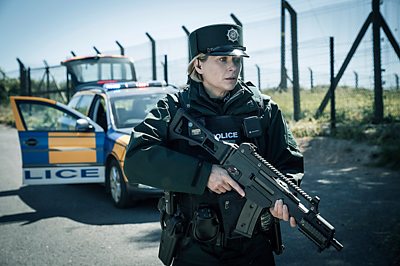
Declan: Grace (played by Sian Brooke) came first. Louise Gallagher, the producer, approached us with the idea of telling the story of someone who joins the police in Northern Ireland a little bit later in life. So Grace is forty-one when she joins. That is not as unusual as you might think. Quite a few people tend to join the PSNI after having had a separate career. People join in their thirties, forties, even their fifties. We were intrigued at that time by this idea of an early middle-aged person leaving behind everything they had ever known, the career that they thought they were always going to have and doing something completely different. Partly, maybe subconsciously, we were intrigued by it because that is what we had just done ourselves! We had just left the BBC, I had left my staff job to finish The Salisbury Poisonings. That was a huge gamble and a risk for me so when Louise talked about this scenario there was a commonality that I felt with that character.
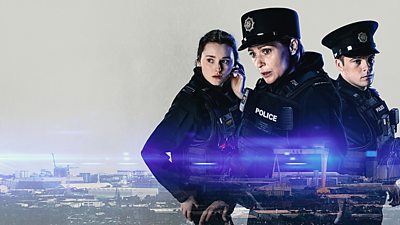
Adam: I would also add that Grace is coming from a social work background so it’s an interesting perspective when someone is coming in with huge amounts of idealism, where they’ve done a job where they felt like they could change things and then coming into a job where you feel like you can expand that idealism even further. Then she is met with the pragmatism of everyday policing. Also, through her narrative journey she shakes the people around her and makes them think that there might be a different way to do this job at times. That’s why her character is so valuable in terms of storytelling and narrative development.
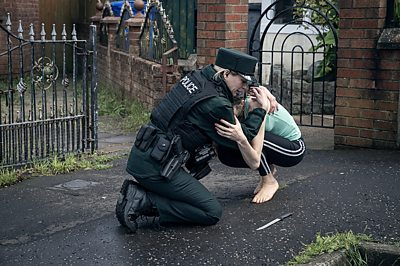
We also thought that rather than just having one central protagonist (and I think this is also how Dec and I tend to write - in a more ensemble way) we thought, let’s put a couple more probationers in there who have different approaches. So, you’ve got Annie (Katherine Devlin), she’s from up in the north, the Glens of Antrim, from an area where people ordinarily would not join the police, historically for religious reasons. In doing so she is forced, through the series, to make sacrifices with her family, with her team, with her camogie team. She has to give things up because she’s worried about the threats it might impose upon them because she is a police officer. This reflects what police officers in Northern Ireland go through every day, this continual threat. This threat is very real.
Probationers are trained in a police college but there’s no transition period. You finish college and then you’re on the street, and here you’re on the street with a gun. It just fascinated us as to how people adapt to that. They are just humans like us. How do you remember all the legislation when there’s a guy shouting in your face?
Declan: All of the characters emerge from research. That doesn’t mean that they are based on particular people, but they are composites of people who we met and things that we heard and second-hand stories that we were told about types of police officers, and so when you get a little hook like that in your brain you think for example “oh that’s interesting, what if you had a cop who is a coward?” Jen (Hannah McClean) in the show is a physical coward, she shouldn’t be doing the job, she’s scared. At one point we heard a story about people who join the job and realise that it’s not for them. They didn’t know it in training college, but actually they are scared of physical confrontation, and those people don’t last very long. That was the genesis of Jen.
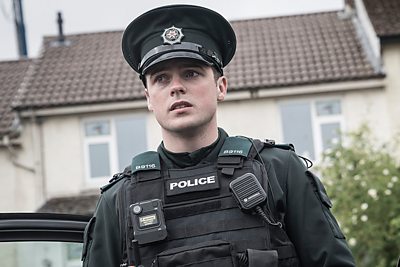
The genesis of Tommy (Nathan Braniff) came from hearing a story about someone who had led a very sheltered upper-middle class upbringing. He was astonished at what he saw on the street and couldn’t believe the things that he was seeing. Once you have that one-sentence character trait then Adam and I together, and then in the writers’ room, built out his whole character.
Why did you decide to use a writers’ room in developing the show and how does that process work?
Declan: We had three different writers’ rooms for this series. One of them was on Zoom because the pandemic had settled in but the other two were in Belfast. We did it because we have been part of some writers’ rooms ourselves. We’d been part of a couple that had kind of worked and also a couple that had been really special. We also thought it would be a really good opportunity to bring in other Irish writers because it’s such a contemporary story with a big ensemble cast.
Adam: Part of the concept of Blue Lights was to bring people in and give them the chance of a script, maybe one or two people per season. Our approach was that we would write episodes 1 and 2, 5 and 6 and we’d bring in one or two people and give them the chance of a script. People need a break. Maybe they’d written a script that hadn’t been produced or they had really inspired us when we’d met them. Our show benefits from them and their energy and their talent.
You can end up in places that you wouldn’t if it was just Dec and me. We were inspired by the writers’ rooms of the great shows of America but it’s a very different system there. They run for months and months and months. When you run a writers’ room here it has to be done in a certain way, people have to be given a clear mandate at the start of the week to understand what you are trying to do. In the first writers’ room for Blue Lights we literally talked only about character for the first week. We’d been in rooms where you start chasing plot around and then get to Thursday and people don’t really know how a character will respond in that moment – that’s a room that’s in a bad place. So, we’ve learnt when it works well and when it doesn’t. We tried to make it character focussed. When you know your characters well enough then you can put them anywhere and the plot will revolve around them.
Declan: We also wanted, for example, a female perspective into life. We had Claire Allan in the room who is a crime novelist from Derry who is wonderful. Fran Harris actually ended up writing episode 3 and sharing a credit with us on episode 4. Again, she’s a fantastic writer with brilliant insights. Fran is also from the south of Ireland – Dublin – so there’s an extent to which she was an outsider in Northern Ireland which was extraordinarily helpful to us because the things that she didn’t understand we realised we needed to drill down into. I feel looking back on it that the writers’ room process is very valuable because the more people you can surround yourself with who are different from you then it challenges your writing.
Would you describe Belfast as a character in the show?
Declan: We always say it’s not about Belfast it’s from Belfast! There is a very important difference there. It feels like we’re telling our story about our place and the BBC has allowed us to do that. I believe that probably no other broadcaster would just say “Go and tell your story about your place in your own voice”. They really didn’t mess with it too much. I think there’s something about the BBC that only the Beeb would do that.
Adam: There’s no greater pressure than writing about your hometown. Not least because we have to live here after it goes out! But the truth is that through our entire lives personally and journalistically we have always attempted to make a creative comment about the place that is home and that we love. This is the reason that we’ve transitioned to drama. We felt that was the most fruitful place in which to make that comment. And only then because the BBC allowed us to do it can we make it. It comes with massive responsibility, but Belfast is a place that we know on a very visceral level. We feel very confident in our voice in this place. It’s also a place that is very complicated so there is also a lot of tight-rope walking. You want to speak about the big issues, but you have to be sensitive. It’s a constant balance of “can we push that issue? Is that too on the nose?” So the scripts were very nuanced in that sense.
There are two things that radiate throughout the entire show we hope; one is that we love Belfast very much even though it’s complex and the second is that one unifying thing that ties the show together, that ties this nation together, and that is humour. An acerbic, dark wit that allowed people to live through the dark times of The Troubles and helps a society progress away from that to this day. That’s something that was very important to the show.
When did you make the decision on the tone of the show and the elements of comedy it contains?
Declan: That tone is closest to our actual writing style. If you were to go back and look at our original short film Rough it has a very similar tone of dark comedy. That’s because in the years we spent as journalists that’s how journalists talk to each other about horrific things. They would make dark jokes in sometimes the direst circumstances as a coping mechanism. And then we were surprised when we started talking to cops for our research that they do exactly the same thing. The police were pretty nice about allowing us access and going on ride-alongs in the back of cars and the cops were exactly the same, using dark humour, a certain wry cynicism. It was never malicious or disrespectful but a constant kind of sarcasm to keep them going and to cope. As soon as we heard them talking we thought how much it reminded us of what we were like as journalists so it seemed like the natural tone.
How are food and music important in the show?
Declan: The food thing came about from research. When you’re a cop the food on the job and on the run is terrible. You’re eating sandwich at a filling station but there was a cop we heard about who brought in really good food because he just couldn’t take it anymore. He couldn’t handle the bad diet. He would spend hours at home crafting really nice food – it was a morale thing too; he would give it out to his colleagues. That was a basic research thing where we thought “we’re having that in the show”. For Stevie (Martin McCann) I think food is key. Stevie’s back story is quite tragic and he’s a solitary man. He’s got time on his hands outside of the job and he puts a lot of that time into making something nice that he’s going to enjoy – and that’s food.
When it comes to the music there are a few shows that we’re inspired by that use diegetic music (in the scene). We wanted to do that. And cops listen to loads of music when they’re driving round.
Adam: As Dec says that’s not our idea. The police would argue over who gets to play the song next. Depending which car you’re in, you might have thrash metal or you might have some Country. And we thought that was a great way to represent people’s personalities but also what a wonderful mini-antagonist thing to do to throw people in together and they’ve got these different tastes. When you’re in the car together and you’ve got eight or nine hours of the day of course these little power struggles play out. It’s a beautiful way to illustrate characterisation but also to introduce tonality at different times and little bits of antagonism, which is a great device dramatically.
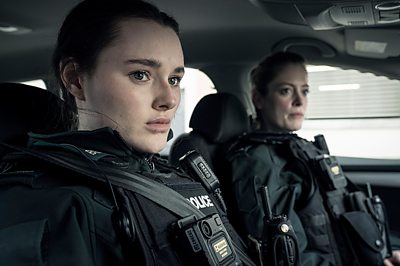
Declan: The car is their office, it’s their precinct. It’s a little room that they’re in together for nine, ten hours straight. And so how that car is really important to them. The kind of music they play, the food they’re eating, the coffee. These little things are super important when you’re jumping out of the car to face things that sometimes are deeply, deeply traumatic. When you’re dealing with horrific events, you’re going to take every little comfort that you can.
Adam: You also need to come back from that craziness into routine. Routine is – put a song on, get a cup of coffee. It’s not that you’re trying to forget what you’ve just seen but you’re trying to re-calibrate your emotional psyche because you need to go on and do the next call so you can’t have the hangover. You need the way to switch out of it. I think the music helps them just jump out of it.
It feels quite shocking to see the police routinely carrying guns as we’re not used to seeing that in most UK cop shows.
Declan: It’s a huge difference between their colleagues in Great Britain and the south. Every officer in Northern Ireland is issued with a firearm. And not only do they carry it on duty, but they take it home with them. It serves as a personal protection weapon both when you’re working but also because of the nature of the threat here.
What has your writing journey been to this point? Did you always want to write fiction for the screen?
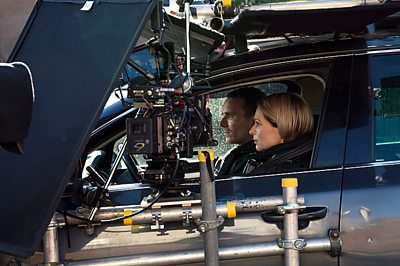
Adam: Declan and I met around 2009/10 working on BBC Panorama. Before that I had a career as a photo-journalist and made my way into documentary film-making and Declan was a reporter for BBC Spotlight and then Panorama. We made a few films together, and then we realised that we had this ‘want’ in us to do something different creatively. We loved documentaries and the opportunities they gave us, which gave us a really interesting insight into the world (and sent us around the world), but we felt that we would often meet characters within that journey who we didn’t really have the time to get to know properly. We would meet them, interview them and then have to move on. We were left often thinking about the people who we had met during the documentary process, so we, naively probably, thought that we would start writing scripts about some of these characters who had remained in our heads.
Declan: It was a gradual process of coming to realise that we wanted to expand how we told stories. The parameters of Current Affairs documentaries are relatively strict. You are there to hold power to account. It’s an extremely valid and valuable thing in society, but you can’t really explore characters, you can’t really delve into the human psyche and some of those bigger questions. There was one particular night when we were watching some short films in Adam’s apartment in Belfast when we kind of made a commitment to try and write, develop and produce a short film, a fiction, which is the first thing that either of us had ever done in fiction. That was in the summer of 2013 and we finally shot that film, Rough, in 2019.
Adam: Our idea was for a short film. We sent the short film script to a friend of Declan’s in New York, and he said “actually there’s so much going on here, so many characters that this would work better as a pilot”. So that grew into a pilot script which then became our calling-card. A friend in the BBC gave us notes and helped to develop that script unofficially and then after about a year and half she said “I don’t think we can improve this any more but we can’t take this into development here at the BBC, you need to get an agent, you need to play the game”.
Declan: And we knew hardly anybody. The world of drama is very, very separate from the world of journalism. We didn’t know anybody in the world of television drama to send it to apart from one person, and that was Peter Kosminsky, the writer/director who has done The Undeclared War and The State and all sorts of amazing shows. Several years previously he’d been doing a little bit of research in Northern Ireland, and he was looking for a local journalist to guide him in the right direction and help him out. I got to know Peter a little bit. Once my work for him was done we went our separate ways. Once we finally had our pilot script in our hand it had been about four years since I’d had any contact with Peter and Adam persuaded me that we should send him the script. I was kind of uncomfortable doing that because I didn’t want to impose on him, but we literally didn’t have a single other name or anybody else to send it to. Peter, thank God, read it and sent it to United Agents so we just got very, very lucky.
Every time we’re speaking to upcoming screenwriters, of all ages, we just say to them that you have to leverage and exploit any possible in that you have to the industry, whether it’s an uncle’s cousin’s friend, or whatever distant connection.
Adam: There are two sides to this. Obviously, you have to have a certain amount of talent and you have to have a certain ability to be able to land on a prescient issue that might work well within the creative world of drama, but the other, equally important side is that you need to have a hunger and determination. I think the benefit of the two of us is that if one of us is lacking in one thing then the other one steps up and you kind of drive each other forward and do things that you probably wouldn’t do if it was just you. It’s a hard, and it can be a long and very lonely road. You can wait for weeks and months before you get feedback on anything and in that time, you can get drawn back into the wider world and fall away from the world of drama. So, I think in those times (and those times were plenty) in those early years, Declan and I made each other keep going. It is a business, and you have to approach it as such, but that isn’t always easy for someone with a creative mindset.
What would be your Desert Island box sets?
Declan: It changes and is updated for me constantly. Recently things like The Bear, the show about the restaurant in Chicago, and I just finished The Last of Us which I absolutely loved. I think that Craig Mazin’s writing is so unexpected, I love it. The thing that Adam and I always come back to, our gold standard for television writing is The Wire. We talk to each other about it all the time because it’s so clever and insightful. I went to see David Simon speak in Belfast ten or twelve years ago, long before I was a writer and he said “this place reminds me of Baltimore, it’s a post-industrial city that’s seen better days. It’s had its problems and issues with politics and it’s an incredibly divided city. You could probably write The Wire here and it would work just as well”.
Adam: I’ve just binged both seasons of The White Lotus. In terms of character writing, I was just glued to every single character. I was living with every moment. That can only come from amazing characterisation, which is something we always aim for. Also, to circle back to The Wire, David Simon’s training ground was also in journalism, and I think that radiates through that show. I can see those characters walking around in that city of Baltimore that I’ve never even been to, but I think I know. I think if you can do that with a TV Drama, I think that’s pretty impactful. That’s something that we always aspire to – impactful, character driven drama.
Any top tips?
Adam: Don’t give up. Persistence, persistence, persistence. Write it down three times and recite it to yourself. It’s so easy to give up because the world is tough. Money is a massive driver for all of us. Certainly, in my early years I watched as friends bought houses and cars and I never did. But the idea of creating something was more intoxicating for me so I was able to focus on that.
Declan: A little bit of practical advice is to read the book Into the Woods by John Yorke which was the book that unlocked a great deal for us in the early days about structure and storytelling. I think that book probably changed our lives. We give out copies – John Yorke should probably give me a commission!
If you can find your own unique writing voice, then that’s the golden ticket. I think we’re probably starting to get there now with Blue Lights. A vernacular that we’re so happy with. Just try and find the thing that you can do that is different from what everyone else is doing.
What’s coming up next?
Adam: We’ve got something in development with NBC and we’d love to do more Blue Lights. We’ve also started a production company and have a couple of projects in development there.
Declan: We’re also keeping an eye out for other people’s work to develop and have been speaking to some really exciting writer/directors that we’re hoping to work with.
Blue Lights begins on BBC One on Monday 27th March 2023 at 9pm. All episodes will be available on BBC iPlayer that evening.
How we made The Salisbury Poisonings - read a blog post from Declan Lawn
The Salisbury Poisonings - read the scripts in the BBC Writersroom Script Library
Latest blog posts
More blog postsSearch by Tag:
- Tagged with BlogBlog
- Tagged with BBC OneBBC One
- Tagged with DramaDrama
- Tagged with Adam PattersonAdam Patterson
- Tagged with Declan LawnDeclan Lawn
- Tagged with 20232023
