
I’ve been reading scripts for schemes, competitions and all sorts on and off for over a decade, and from when I first dipped my toe into script reading, I learned about how highly regarded the BBC Writers Open Call was. It’s one of the biggest opportunities for scriptwriters in the country, with no threshold on how experienced you had to be, no entry fees and few parameters on the story you could submit. None of that matters because Open Call’s aim is to find promising writers from across the UK that the BBC can help develop.
However, with great accessibility comes great competition. In the latest Open Call there were nearly 5000 submissions for around 15 or so positions on the Scripted scheme and circa 70 for the Voices programme. Those are tough odds, but that should not deter anyone at all. It’s understood industry-wide how hard it is to get accepted through the Open Call opportunity and it’s known that every stage a writer gets through in the process is a success – the end is not the only goal. Each stage a writer gets through is a fact they can put on their CV, on cover letters and in applications for other opportunities. It’s a sign of how far they have come and, potentially, how far they will go.
This was my first year reading for the BBC Open Call and I worked alongside some seasoned readers. They were shrewd and knowledgeable about writing talent from across the country, of trends that have occurred from year to year and were scarily good at pinpointing where, how and why a script might not be working. By reading a wide array of scripts and working with this astute and clever team, I was able to put together some tips that might help those planning to submit to Open Call in the future.
1. Keep your name off the script
The information about Open Call clearly states that the writer’s name needs to be kept off the script, but it seems not everyone gets the memo. The title page is the first thing a reader sees of a submission and if they notice that you have your name on it, it shows that you haven’t paid attention. What’s even more frustrating is seeing writers with their agent's name or other competitions and schemes they have been part of included as well.
A reader goes into each submission like they’re on the show Blind Date, they are not looking at the names, accolades, or successes of the writer, simply at the quality of their storytelling. Readers are looking for evidence of the writer’s prospects in their work to see if they’d be suitable for the scheme, we don’t need or look for other information. So let the work stand for itself as it’s the best representation of a writer available.
2. Don’t try to sneak in a comedy
The line between comedy/drama and comedy is a hazy one, but it’s clear to readers when a comedy script has been submitted under the guise of a comedy/drama. Comedies are not accepted into Open Call as there are other schemes and opportunities available for comedy writers at the BBC run by the Comedy Commissioning team.
A writer who tries to stealthily submit a comedy is only going to frustrate readers and organisers alike. Please don’t be that person. It became surprisingly clear to me how keen an awareness the Open Call team has for previous submissions and their writers. Don’t make them remember you for being “that guy” who tried to sneak in a comedy.
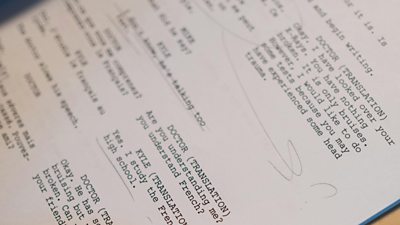
2A. How do I know if my script’s a comedy/drama or not?
That’s a fair question. Comedy/drama has become more prevalent in recent years and can come in many different forms. My personal litmus test for judging a script’s comedy/drama credentials is to ask ‘What is the engine of the story?’ There are a myriad of ways a comedy can present itself, but a comedy/drama needs that essential element – drama.
If the dramatic elements are the main driver of the story but with a funny way of presenting itself, then I’d consider that a comedy/drama. If there’s drama present but the main drive is jokes and gags, I’d consider that a comedy. Of course, the balance of comedy/drama exists on a spectrum, the nuances of which can be argued until the sun engulfs the earth, but this is my main method in getting to the heart of the topic and gauging it from there.
What is Comedy Drama? Check out this blog post
3. Treat the first 10 pages like a taster
Open Call operates similarly to many schemes in how submissions progress. Firstly, we read ten pages; if that seems promising, we read 30; and if that stands out, we read the full submission. As every submission will at least have the first ten pages read, they need to stand out to go any further.
These first pages should give a sense of the full story in terms of character, motivation and plot, and raise questions that make the reader want to read on. Ideally it should act as taster of the meal that you’re hoping to present to the reader. Give us a taste and make us want more. Scripts that don’t set up their story this way can feel like a bait-and-switch, and might not reflect as well on the writer as they may have hoped.
4. Submit a complete story
Beginning, middle, end; that’s how almost all stories are told. A conflict arises in the beginning of the story, is worked through and some sort of resolution is reached by the end. A beginning, middle and end are expected by audiences in what they watch, and are required from submissions. If a script doesn’t conclude the story it sets out, that reflects on the writer and their ability.
It doesn’t need to be neat or conclusive, but a resolve of some kind should be reached by the last page. If you haven’t got a complete script, then don’t submit; 30 pages of a feature or a combination of short film scripts can’t be considered for the scheme and will not endear you to the Open Call team. We need to be sure you can finish the story you start because otherwise how do we know you can tell a story?
5. Minimise mistakes
It’s easy for typos, spelling mistakes and all sorts of errors to pass you by, especially when working towards a tight deadline. Knowing my luck there are probably a few here that I haven’t noticed. Mistakes can be forgiven if they don’t get in the way of the story when reading a script. However, when names get mixed up, scene headers are inconsistent or character actions are misattributed, then it can cause problems. It makes the reader wonder whether the problem is their reading or the writer's writing.
The ideal scenario when reading a script is that the reader forgets about all the technical aspects of the writing and just sees the story in its purest form. As a writer, you need to do everything in your power to make sure reading your script is as close to that ideal as possible. Make sure the right person is saying the right dialogue and that a scene that takes place during the day, states that it’s during the day. Make it easy to go on the journey, not get lost in it.
6. Show us what makes you write
This is perhaps the biggest bit of advice I could give to anyone submitting to Open Call. This is a scheme that’s predicated on developing the writer, not the script. What you submit needs to reflect who you are as a writer and how you express yourself, as that’s essentially what we readers are looking for. Your submission should show us what type of stories interest you, what you want to say and how you want to say it.
Don’t follow trends, topics or zeitgeisty issues if they don’t compel you to tell a story you want to tell. Submit what you would want to make if you had all the money and creative control possible, as that shows us who you are as a writer the most. You don’t need years of experience or studies to do this, skill level and craft is just one factor in how we decide who goes through, it’s about your voice and how well you use it. That’s what we want to see the most.
Editor's note: We're planning to update everyone who submitted a script to the latest Open Call by the end of next week. Please keep an eye on your email inbox and also your junk folder as our emails can be delivered there in error.
