
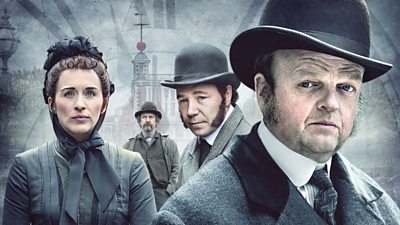
The Secret Agent was a gripping, evocative drama based on Conrad’s dark novel, first published in 1907. The series finished its 3-part run in late July, 2016 and is available on BBC iPlayer until 16 August.
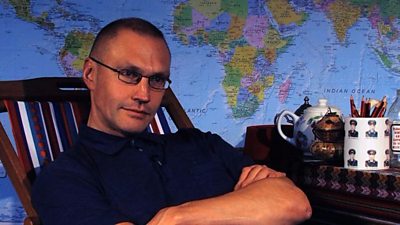
It was adapted by the BAFTA award-winning writer, Tony Marchant. As the show’s producer, Priscilla Parish, noted, ‘We approached Tony because of his track record of period adaptation and his skill at writing social realist pieces. Tony had coincidentally recently read the novel, and was keen on the idea of adapting The Secret Agent in the vein of a contemporary thriller.’ In the following interview, Tony talks about writing the screenplay, the relationships within the narrative and why The Secret Agent remains so relevant today…
Q: What appealed to you about adapting this classic novel?
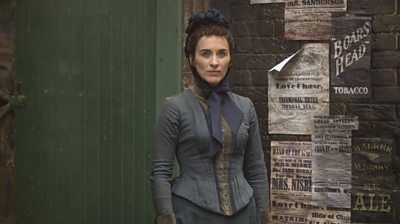
TM: The contemporaneity of the book was its obvious appeal and Conrad’s almost prophetic view of a world in political ferment, assailed by terrorism and the geopolitical manoeuvring of Governments. At its heart and what really convinced me to go ahead was the fact that it’s a domestic tragedy - the heart-breaking story of a family caught up in terrorism, in bigger events they do not understand. Winnie is a tragic, working class heroine whose only fault is that she’s so hopeful. So that made it irresistible.
Q: How easy was it to adapt?
TM: The book was very difficult to adapt because it has a non-linear approach, with important events reported not seen and with many character ‘points of view’. Also the tone of the book (through the narrator) verges towards the ironic and the knowing. The challenge was to embrace the thriller element of the novel, to give the narrative a kinetic forward going energy and to make sure that the conflicts and the tensions were fully felt.
Q: How much dramatic license have you taken?
TM: In the book there are no scenes between Verloc and the Professor. The one encounter is reported to a third party. The main point was to create as much opportunity as possible for Verloc’s terrible predicament and to make itself felt i.e. that he needed a bomb. I’ve also made the encounters between the Professor and Chief Inspector Heat much more heightened, with the jeopardy much more apparent. Dare I say it; I’ve attempted to sharpen the characterisations!
Q: Winnie and Stevie are the emotional heart of the story. Tell us about their relationship?
TM: Winnie is Stevie’s sister. Stevie has learning difficulties and was previously bullied and abused by their father which has made Winnie incredibly protective of him - also because their mother absents herself from the family home. Stevie is ingenuous, innocent, and desperate for approval (especially from males as his father never showed him any love). This makes him susceptible to ‘grooming’ by Verloc who takes advantage of Stevie and manipulates his earnestness for his own ends. The Winnie/Stevie relationship is almost a mother/son bond. Winnie is desperate for Verloc to ‘adopt’ Stevie, to become closer to him and that hope too is exploited.
Q: Are you a fan of the spy genre?
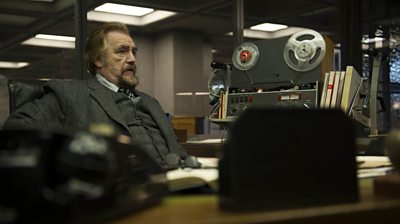
TM: I admire some of [John] le Carré's work. I also thought ‘The Game’ which was shown on BBC Two earlier this year was particularly good.
Q: How do you feel the story is relevant to audiences today?
TM: Suicide bombers, terrorist cells, spies, security and intelligence services trying to thwart bomb attacks, Russia trying to flex its muscles around the world! It’s SO relevant!
Want more? Dip into our video archive and watch a BBC Writersroom interview with Tony Marchant in which he talks about how important it is to write a first scene that excites you, and how getting the same seat in the library can make or break his writing day…
