
How did you get involved with The Assassination of Gianni Versace - American Crime Story?
It was never called that at the beginning. The producers Brad Simpson and Nina Jacobson sent me the book which the series is based on by Vanity Fair journalist Maureen Orth, called Vulgar Favors. They said they were thinking about doing a mini-series based on it. Both Brad and Nina knew my writing from my novel CHILD 44, and the scripts for LONDON SPY. And that was how it began.
What was it about the project that attracted you?
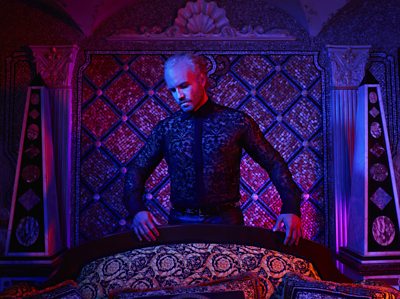
The material was challenging, the main character - Andrew Cunanan - is intriguing and human in his early years, but gradually descends into addiction and murderous madness, so the challenge was how to structure the story because once Cunanan starts killing he can't be the centre of the episodes.
Was the fashion world one you were already familiar with?
I knew a little, I guess. I read everything that had ever been written on Versace. I was surprised by how little attention and scrutiny he'd been given, considering he was such an amazing man.
How did you carry out research?
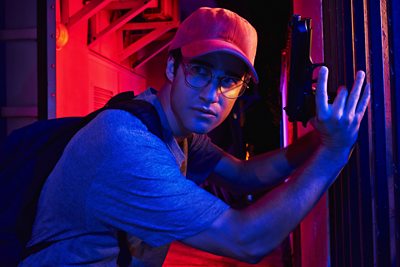
Maureen Orth is the journalist, so she provided the bulk of the research, I also read through all the FBI files, and as I said, everything that been written about Versace. I also travelled to San Diego and went to all the most important places in Andrew Cunanan's life, just to get a feel for them.
During the writing of the drama did you warm to the principal characters, as you found out more about them? Did your preconceptions change?
The most unusual aspect of this show is that the victims are the central characters, they are the heart and soul of the piece. I have to admit, before I read the book all I knew of the case was that Versace had been shot on the steps of his Miami mansion, it's remarkable to me that the entire story was in shadow. Those other victims were extraordinary people, their stories deserved to be told.
How different did it feel writing your first true crime story? How much did you have to fill in the gaps of existing material or ‘dramatise’ events?
There are gaps, but any dramatisation was only ever done to support the larger truths. We all knew that David Madson had nothing to do with the murder of Jeff Trail, we all felt that very strongly, so we needed to figure out how to convey that innocence to the audience, to show why David left with Andrew.
Do you think the title of the show represents what it is really about?
I actually didn't choose the title so I can't address that question but I don't think the title of the non fiction source material would have been right.
We understand the Versace family are not happy with the show. Has this been very disappointing and how have you dealt with this?
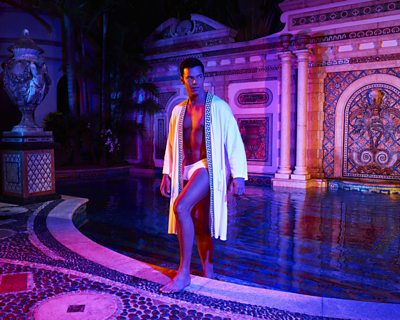
Their position is the same as they had with the source material - their statement is very similar. In the end, this is a celebration of an amazing man, it was a tragedy that Versace was taken from the world, both from his family, and from a creative perspective. We set out to contrast why one man was so great, and one man became so despicable.
Do you think your background as a novelist helps or hinders screenwriting?
Both! There are advantages and disadvantages, but mostly advantages I think. This series plays a long game, the lie that Andrew tells Versace in Episode One, seems like a piece of nonsense, but we reveal how much truth there is in it, how much sadness, in Episode Eight.
Is it very different working as a screenwriter in the USA from the UK? Are there key differences?
At the moment writers are considered more central to the process in the US than in the UK, but the UK model is in the process of changing.
What have you got coming up next?
A new show for BBC Two, called MotherFatherSon, an eight part original show.
Read an interview with Tom Rob Smith about his writing career and the drama London Spy
Read the script for Episode 1 of London Spy
Listen to an interview with Tom Rob Smith on Radio 4's Front Row
Listen to a Radio Documentary about the murder of Gianni Versace
