
Miles Sloman was one of 17 writers who were part of our year-long Cornish Voices development scheme which recently concluded. He sums up the experience and what it meant for him below. Cornish Voices was run in partnership with Screen Cornwall.
I started in this industry as an actor but over the years I grew frustrated at the lack of agency I had and sought different ways to express that creative urge. To put it simply, I became more interested in actually creating the stories, rather than just trying to be in them. That all sounds well and good butwhere to start?
I knew I had the compulsion to show the side of Cornwall which I don’t feel has been represented on screen yet - a county of contrasts and frankly, another planet from the sun-soaked beaches and tourist hot spots that have graced our screens in recent years. I’ve always felt strongly that you can have the breathtaking scenery but that there are more reflective and interesting stories there. This led me on to my first project, which is in development with Phillippa Giles’ production company Bandit Cornwall. I read that script back now and shudder, but despite it being my first attempt at screenwriting, I can identify the clarity of the idea, however it’s clear that I lacked experience and in essence, training. That’s the best thing about the BBC Writersroom's Voices groups in my opinion - the demystification of the process and the opportunity to hone your technique with a group of fellow writers.
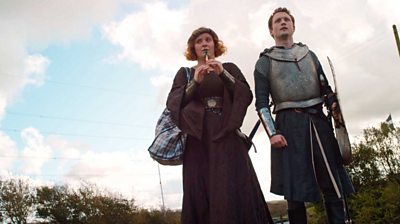
At that point, my involvement with The BBC had been through The BBC New Creatives scheme where I was commissioned to create the short film Anoraks (watch on BBC iPlayer). And aside from the near mental breakdown that gave me, my only other experience of The BBC was limited to the annual BBC Writersroom thank you, but no thank you, email. Beyond that old chestnut which we all know too well, I have always found it to be a unique hub of useful material. There’s a whole script library with new additions constantly being added, brilliant guest articles (I apologise now if you’ve come here for that) and a list of free-to-enter writing opportunities which have been collated by the BBC Writersroom team.
Having had to workout the nuts and bolts of screenwriting without formal training, this resource has been a great touchstone over the years and so I was thrilled to be selected for the inaugural group of Cornish Voices after being put forward by Screen Cornwall. The chance to have a year-long training programme especially in these wildest of times has been a brilliant tonic, not to mention the chance to create a network of writers from all over Cornwall and so in October 2020, we embarked on our development journey with Cornish Voices together.
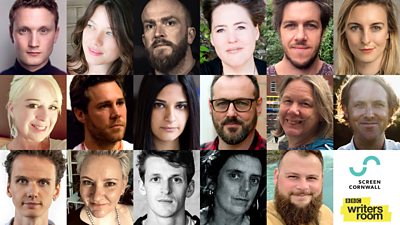
Each monthly session helped to develop a different aspect of our craft. We had sessions with John Yorke and Philip Shelley on story structure and pitch writing respectively. Production companies were brought in to speak to us including the writers Emma Frost and Matthew Graham who have set up Watford & Essex, Luke Fresle from BBC Studios and Tommy Winchester from Bandit Cornwall. And an array of guest speakers such as Giles Smart from United Agents, writers Simon J Ashford & Colin Bytheway, BBC Drama commissioner Manda Levin, and sessions with BBC Children’s, BBC Audio Drama & Continuing Drama. This is all with the objective of writing a spec' script by the end of the programme.
The words spec script, despite being frankly triggering at this point, means an example of your writing work which acts as your calling card as a writer and gives an agent/production company or potential employer a flavour of “your voice” and style. I say “your voice” because this is a major focus of the development programme and although it’s a phrase we hear bandied around A LOT - it becomes clear early on that it is vital to hone those instincts and find your own writing style. I appreciate that this sounds prescriptive and in truth, I’m finding the only way over this obstacle is through it and seemingly with each script written, it comes through bit by bit.
Luckily, I was paired with a fantastic script editor, Toby Rushton, who would support me (on a technical and emotional level) as I wrote my spec script under the guidance of the BBC Writersroom team - headed up first by Anne Edyvean & Alice Ramsey and latterly by Beth Grant. Toby’s guidance was invaluable - dispensing little nuggets of golden wisdom as we went along - and draft by draft he helped shape what is now a script I feel confident sharing with those industry gatekeepers.
Throughout the year, the BBC Writersroom team also send out opportunities which you can pitch for and I ended up being selected to write an audio drama for BBC Radio 3’s The Verb.
Writing for audio was something I’d never tried before and the chance to work with Lorna Newman and the BBC Audio Drama North team was such a rewarding experience. Lorna really encouraged me to lean into the language and the poetic nature of the piece - something I’d not explored in my writing to date and we even cast fellow Cornish Voices member Ed Rowe who was brilliant as George the grieving Fisherman.
The opportunity to have a peer network in this industry is hugely valuable - I’m excited to see what our cohort of Cornish Voices will go on to next and I’m confident that we’ll keep supporting & cheering each other on long after the programme is over. As for me, I’m currently working on a new BFI Young Audiences Content Fund commission for which I ran a writers' room at the end of last year and continuing to reach out to agents in my search for literary representation (gulp).
Looking to the future, It feels hopeful that despite the hardships of the last two years, the adaptations we have had to make will present new opportunities on the horizon. Screen Cornwall have worked hard to foster a creative network to support productions and creatives in the county - making moving production and opportunities out of London and the South East more feasible. And with remote working & zoom meetings becoming commonplace, this will hopefully translate to more regional content made by those who inhabit the worlds they’re trying to represent.
Cornwall may be the land of pasties and Poldark in the mind's eye of many, but behind the postcard is a far more complex and captivating world - dip your toe in, the water’s lovely.
Find our more about our writer development groups across the UK
We run five annual Voices groups (Wales, Scotland, Northern Ireland, North, London) with writers selected via our Open Call submissions, We also run groups in other parts of the country, for example Cornish Voices, North East Voices and Coventry Voices. Look out for more news of these coming up soon.
