
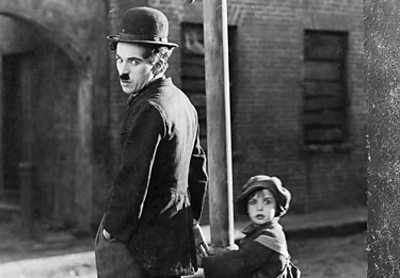
Charlie Chaplin was one of the most successful and enduring screenwriters that Britain ever produced, yet this side of his artistry is often overlooked.
Gavin Collinson of BBC Writersroom caught up with Bryony Dixon, Curator of Silent Film at the British Film Institute’s National Archive to find out more about this aspect of Chaplin’s work. As one of the UK’s leading experts on silent cinema and author of ‘100 Silent Films’, who better to ask about one of the movie’s most iconic stars?
Writersroom: It tends to be forgotten these days but Chaplin was a huge global phenomenon. Could you articulate just how big he was in his pomp?
Bryony Dixon: Quite literally the most famous man in the world – his popularity was unprecedented – he rose to stardom at a very particular moment when the phenomenon we know as Hollywood was just being established, marketing was hitting its stride and distribution to Cinemas all over the world had just hit a critical mass. His fame was further circulated during the First World War. This enabled him to take full control of his work and career – and he never looked back.
WR: What made him special as a writer? And how influential was Chaplin as a writer?
BD: In as much as anything Chaplin did was news, he was influential but not really as a literary figure. He did write his autobiography which was extremely widely read – so the story of his life is well known and he wrote a novella that only just came to light but otherwise his writing was as a screenwriter – very different skill.
He didn’t have much formal education due to poverty in childhood – he was more or less self-taught, had atrocious spelling and always had a dictionary to hand. In the earlier parts of career he wrote nothing down. This is deliberate - it’s how comedians worked – you would have a rough scenario – what the situation and characters in the film were, then you would rehearse your comic ‘business’ but never write it down so no other comedian could steal it and the film studio couldn’t bring in another performer to do your part. Your performance and characters were your trade secrets.
WR: Chaplin wrote and starred in most of his films. If you were to compare him to any movie-maker around today, who would it be?
BD: I’m struggling to think of anyone – Chaplin was unique and lived at a very specific moment which enabled him to do the things he did – aside from being a unique talent. But filmmaking has changed considerably since then – it is much more elaborate – a feature film might take 2 years to make with a staff as big as the population of a large town. In 1916 when Chaplin hit the big time he made one film every month.
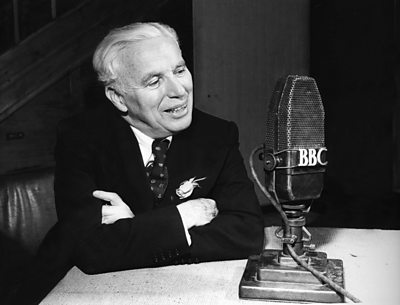
WR: Monsieur Verdoux - Chaplin's 1947 movie in which he plays a serial killer. Trainwreck or overlooked masterpiece?
BD: It’s a very genre piece so it depends if you like that kind of Grand Guignol story, but you have to know that there was a massive political campaign to discredit Chaplin at the time, by the McCarthyites in the USA. So neither.
WR: Many of Chaplin's films are available online... Which of them would you recommend to someone who hasn't seen any of his stuff?
BD: Oh, the early stuff for sure. My favourites are the Mutual comedies – made in 1917-1919 - films like The Pawnbroker or Easy Street. He is a physical performer – he moves like a dancer – so to see him in his youth is fabulous.
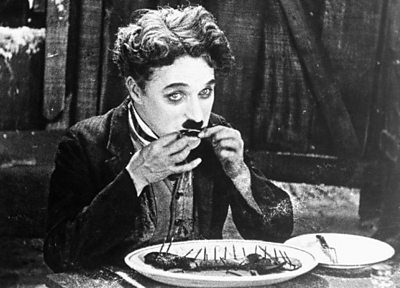
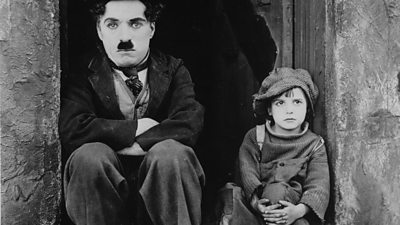
For longer films – start with The Kid which is very modern and semi-autobiographical or The Gold Rush which contains the most ambitious set pieces and the famous dance of the rolls which is hilarious and very moving.
Big thanks to Bryony Dixon and you can find out more about Chaplin and watch some of his films via BBC America’s Anglophenia site.
