
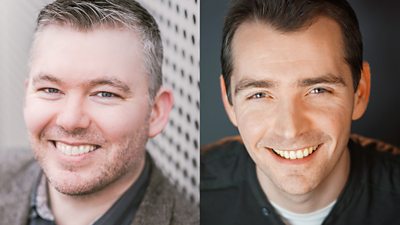
Dominic and John Reynolds are two comedy-writing brothers who were previously part of our Comedy Room writer development group. We spoke to Dom about creating the pilot for their new sitcom, Daly Grind, which launches on BBC One Scotland and BBC Scotland next week.
Dom, you write together with your brother John, how did that happen?
Our dad used to write sketches for shows like Scotch & Wry and Spitting Image back in the 1980’s. He never made it full time, but we got our interest in scriptwriting from his influence. By the time we were teenagers we ended up studying the same film and TV course at University, then an opportunity to submit sketches to a small show on BBC Radio Scotland came up and we decided to give it a go. John and I have always had the same taste and sensibilities so working together seemed an obvious thing to do.
How did you get started with taking writing seriously, as something you could consider doing professionally? Do you remember the first time you got paid for writing?
Yes! We managed to get a twenty second gag on that radio show. Think we made about twelve quid each. Around that time, John read an autobiography called ‘Which Lie Did I Tell?‘ that was written by the famous screenwriter William Goldman. He gave the book to me and I remember rattling through it in a day then going back almost immediately to read it again. Something clicked and I made the decision that scriptwriting was what I wanted to do. John felt the same way.
What’s your process for developing work together? Do you have specific roles in the writing process?
I do the typing but we’re always in the room together when the pages are written. If we’re not writing a script we’re coming up with new ideas, trying to create strong one-pagers that we can use to pitch to our contacts.
What are some of the projects that you’ve worked on before? Were any particularly important in your development as writers?
We worked for years on a radio sketch show called Watson’s Wind Up then a TV sketch show called Only An Excuse. Thereafter we moved away from sketch work and started making our own radio comedy and drama programmes for the BBC. That was great because it finally gave us the opportunity to start telling longer form stories which was ultimately where we wanted to be.
It’s hard to pick one project in particular. We learned and developed by working on all of them. That being said, I do remember working on a pilot script for So Television a few years back and our script editor (a very talented woman called Barunka O'Shaughnessy) gave us a bit of advice that’s always stuck with me. I was lamenting the fact we had to cut – what I felt – was a very funny scene in order to service the story structure and she said, “so what, if you think you’re a good writer then throw it away and write a better scene”.
That was good advice. Do what’s right for the story first and foremost.
How did you find out about BBC Writersroom in Scotland and get involved with our Comedy Room group?
We were working with Angela Galvin at CBBC in Glasgow, then she moved departments to start BBC Writersroom Scotland and asked us to keep in touch. Overall it’s been a great experience. BBC Writersroom has widened our network and it has helped to cement relationships with some great people.
How did you come up with the idea for Daly Grind? How would you describe it?
In early 2018 we had a meeting with Steve Canny (who’s an exec at BBC Studios) to talk about ideas. The new BBC Scotland channel was launching and they were looking for sitcom concepts. After we left the meeting, John and I brainstormed the central premise for the show in the car journey back home. I think we sent a pitch to Steve later that day and he immediately liked it (which doesn’t happen very often!).
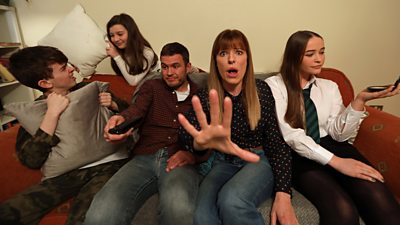
How would we describe Daly Grind? Think The Royle Family meets Malcolm in the Middle! It’s a comedy that takes place entirely in the home of the Daly family. It focuses on the morning rush to school, work, etc, then picks up in the evening when everyone comes home. It’s a family sitcom that you can watch with your kids and we’d like to think it’s warm and portrays the Scottish people in a positive way.
What was the pitching and development process?
It began with the Steve Canny meeting. He gave us a brief for what they were looking for (at that time it was content for the new BBC Scotland channel) and we put something together which he immediately liked. We wrote a one page pitch then we were asked to write a longer outline. After that we were asked to write some sample pages and eventually a full pilot script.
Owen Bell came on board as development producer in the early days then when he had to leave to work on a project in Wales, Jacqui Sinclair took over. We loved working with Owen and we’d worked with Jacqui on a few projects in the past so there was a very smooth transition. Daly Grind is the first project we’ve managed to get over the line with Jacqui so that’s been very satisfying. Maybe it was fate.
This is a pilot episode, has it changed much from your original pitch? What’s the function of a pilot?
The core premise and central characters haven’t changed but we went back and forth on the title a good few times. Originally, the father character wasn’t meant to be in the show. We saw him more like Maris Crane from Frasier, someone who’s never in the show but is always referenced. We were asked early on if we could include him and I’m glad we did. It’s a much better show with Joe Daly (Jordan Young) onscreen.
The function of a pilot is to test the water really. Find out what the audience liked, what they maybe didn’t like, and take that feedback into the series (if we’re lucky enough to get one).
What are your ambitions for the show?
First and foremost we want people to enjoy it. We really hope our audience find it funny, relatable and make a connection with the characters. There’s a great deal of polarisation in the world right now and we hope Daly Grind is the kind of show that has something for everyone. As I say, we’ve always wanted to write a comedy that portrays Scottish families in a positive way. Hopefully we have.
What other things have you got going on? Is it important to have lots of ‘irons in the fire’?
We’re making a comedy series for CBBC called School Bus and have a few scripts which are about to go to market. We’ve also recently adapted a famous book for an independent production company (but we’re not allowed to say much more than that right now!). Having irons in the fire is extremely important. The failure rate in this industry is extremely high, even for the most successful people. The more plates you have spinning, the less disappointed you feel when one of them comes crashing down.
From the day we first pitched Daly Grind to the day the pilot is to be broadcast will be two years and nine days (and that’s considered a reasonably quick development period). You can’t just have one thing on the go. You need to have as many as possible.
What are the most important things you’ve learnt during the process of seeing Daly Grind make it to the screen?
Simply that it’s a process. A very long one. It can be frustrating and tiring but that’s the job. You’re under pressure and getting pulled in every direction but you’re not the only one. Producers, Directors, Execs, etc, they all have frustrations to deal with as well. If you have a good team around you who value and respect each other's contribution that’s half the battle.
There was one moment where we were asked to scrap the entire central plotline and start from scratch after we had already completed a few drafts. It’s easy to go into your shell at that point but John and I took the attitude that we just needed to dust ourselves off and go again. Ultimately, that request was coming from a good place and from an experienced mind. Looking back, we’re glad we did it because it’s made the show better.
Do you have any advice for writers who are thinking of writing a comedy script?
Push yourself. Write the best draft you possibly can. Before you send it to anyone, give your script to people who aren’t afraid to tell you what they really think. Mum will always say it’s good. What you need are savages. Readers who will leave you gasping at their critique. That’s good for you. Nobody gets better by surrounding themselves with people that are only going to tell them what they want to hear.
Be different. Fleabag was massive, and it was recent, so don’t write something that feels like Fleabag. New writers can fall into the trap of trying to script their own version of the current hit. Whatever’s in vogue, write the opposite.
Ask yourself, what haven’t we seen in comedy before or what haven’t we seen for a very long time? That will increase your chances of scripting something that’s fresh and different.
