
Some stories are really difficult for BBC Children in Need to broadcast in documentary form because, in order to safeguard the people involved, those children and young people have to remain anonymous. So recently, through BBC Writersroom Wales, together with another four writers, I was paired with BBC Children in Need funded projects to see if we could translate such stories – that rarely get told – into fiction.
One of the groups I was paired with was the Roots Foundation. Based in Swansea, Roots aims to support young people in care, carers, and care leavers as they make the transition into living independently. I was immediately drawn to this charity because, being an adoptive father myself, my children also spent some of their early life in foster care. At their beautiful centre I met their team of volunteers, a generous tribe of kinship carers – grandparents, who now parent their grand-children – and an inspiring group of young people.
I knew BBC Wales were looking for short form pieces to be broadcast as part of the Children in Need Big Welsh Show. Because I'm a composer, I immediately thought how a four-minute film would be the perfect vehicle for a song. This felt fitting, because one of the girls I met at Roots absolutely loved watching a sequence of EastEnders musical montages – broadcast annually as part of Children in Need – on YouTube. Wouldn't it be great to pay homage to her love of music? But then, as I tried to think of the story I wanted to tell, I immediately began to struggle. How could I possibly do justice to their experiences in short form? Would essentialising their stories into a one three-minute piece do a huge disservice to what I had heard there? I felt a weight of responsibility, because although Kinship care is becoming increasingly common in the UK, little is known about it to the wider public. Many of the carers and young people I spoke to felt that they are often misunderstood and misrepresented. As one said to me: we've all got reputations...
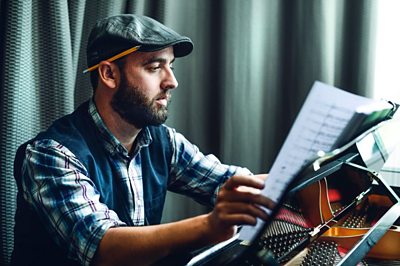
But whilst talking my anxieties through with Helen Perry at the BBC Writersroom, I recounted the story a young girl had told me. We'll call her Ella. She'd once hidden underneath a table when a community officer had turned up at the centre, because the last time she'd seen a policeman up close like that, he'd taken her mam away from her. Gradually, however, this community officer regained her trust through weekly visits and leading a variety of workshops. He now plays a significant role in her life and she thinks of him completely differently. It seems 'reputations' works both ways. Isn't that your story? Helen asked. As is often the case, it's those simple stories that stay with us, which have the potential to illuminate something far greater.
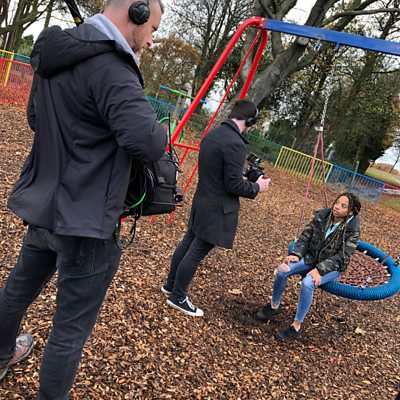
I wrote the lyrics first. Many are verbatim. It's mostly Ella's story but also combined with other things I'd heard whilst at the centre. Because I was telling their stories, I wanted to create lyrics from their words. It was absolutely crucial to me that the song represented them authentically. Having done several drafts to make sure the storytelling was clear, I shared the lyrics with the young people at Roots. Anything that didn't ring true, I wanted them to let me know. Perhaps, the most rewarding part of the process was when I was told that on hearing the piece, Ella had grinned from ear to ear. We had their blessing.
But when I went to compose the piece, something didn't feel right. Initially, it was all sung, but the music felt too saccharine, it distracted from the lyrics and put a glossy 'sheen' on the narrative. It was then Helen and I came up with the idea that perhaps the piece should be mostly spoken-word; and perhaps only those things that were hard for Ella to say should be sung. I was a little out of my comfort zone here, but the marriage between spoken-word, song and short-form also felt closer to the tastes of the young people I'd met there. So I gave it a go...
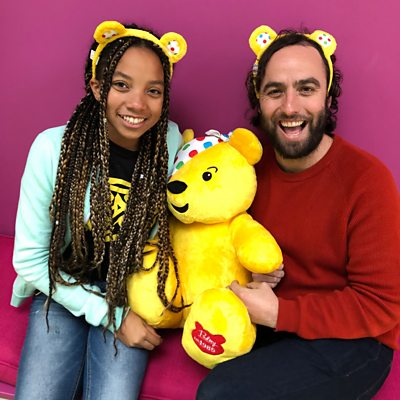
The final result is Reputations (watch above), realised by a fantastic creative team, especially young actress Tia-Zakura Camilleri. This film reflects only a small part of the stories I heard at Roots, but my time there has had an enormous impact on me, and the stories I want to tell. As a writer, it's easy to get stuck up your own backside. It's so important to resist getting trapped in a creative mirror, which narrowly reflects your own field of lived-experience. To have direct access to the generosity and openness of everyone at Roots, therefore, was a real privilege. The people I met there, the relationships I forged there and the connections I made are now part of my lived-experience. I think they've transformed me as a writer. I'm also hoping that this short-film might inspire incredible young people, like those at Roots, to tell those important stories themselves.
Search #CareDay19 on social media for more information
