
What made you become a writer?
I've just always wanted to write. I studied English at university, then set up my own theatre company and began writing plays. My first play got me an agent. My most recent one, 'Dogs Barking', has received productions world-wide but theatre work doesn't pay the bills so the move into screenwriting was driven by necessity as well as desire.
How did you get your first break?
My break into TV was through EastEnders. A producer read one of my plays which got me onto the EastEnders shadow scheme and after I passed that hurdle I got an episode to write for real. That went well and I wrote a few more episodes then got asked to write on a lawyer show called This Life which became quite iconic so that really helped too.
What did you learn from your time writing for EastEnders? Is writing for continuing drama something every TV writer should do?
It's not essential but volume shows like soaps provide a lot more opportunities for writers who are keen to break into TV. Plus it's a great training/testing ground. If you get commissioned to write for a theatre the delivery date is very flexible - if you need more time, no problem. But in TV deadlines matter - particularly on a soap where there's an on-going production schedule which stops for no-one so you have to deliver on time and to a certain standard or you're out. It's very ruthless and doesn't suit everyone. But if you can cut it on a top rated soap then you're armoured up and ready for pretty much anything else the business can throw at you.
One other thing I'd add is that if you do work on a soap it's invaluable to do your homework. Be up to speed with everything. Read the story documents you're given and watch the programme - it will make the process a helluva lot easier for you. Sounds like common sense but you'd be amazed at how many writers don't.
You wrote several episodes of iconic 90s drama 'This Life' and Internet start-up drama 'Attachments'. Is it important to write about the Zeitgeist or is that impossible to predict?
Predicting the Zeitgeist is as hard as defining it. The media jostle constantly about these things but mostly settle on a consensus only in hindsight.
I wrote two episodes on the first series of 'This Life' then became the lead writer/showrunner for series 2 - I storylined all 21 episodes solo and wrote the opening and closing eps. On Attachments I was part of a writing team who collectively storylined each series so they were very different beasts. But what these two shows had in common was that they both suffered truly atrocious reviews when they were first launched. So much for the Zeitgeist.
'Attachments' in particular was a show that happened too early. It was the brainchild of Tony Garnett who conceived it as an interactive multi-platform programme that demanded an audience's familiarity and participation in the world of the internet. Things that happened in the drama on screen only got paid off if you went onto the website and watched additional content on-line etc... However not everyone had computers back then. People still mainly watched TV just on their TV. I only went on-line for the first time myself when I started writing on that show and I had to buy a new computer to do so. I think the same show launched just a few years later would have been much more successful because by then the audience were much more familiar with accessing that multi-media world. Every show today has its own website with extra features but back then it was a more exclusive and revolutionary concept.
Tony was ahead of the Zeitgeist in that regard and the show never took off as intended but it was a bold commission nonetheless by the BBC.
How did you get involved with Tatau? Did you have the original idea and what was the development process?
I got a call one day from a producer friend Kath Mattock who said she needed an idea about backpackers in the Cook Islands - half a page, something grabby - and that she needed it by tomorrow. I sent her a quick pitch about two lads snorkelling and one finding a girl tied up dead underwater but when he comes back with the police she's gone. I think my tag line was 'Gap years don't get any more exciting than this - or as dangerous'. Kath liked it and said she wanted a half hour scene by scene prose breakdown of that scenario fleshed out - and that she needed it by tomorrow. And so I basically just kept developing the idea from there.
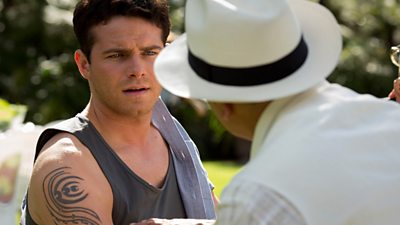
It wasn't even a supernatural story at first. Kyle didn't have a tattoo. My original thinking was that someone had taken the girl's corpse from the water while the boys had gone to get the police. But then I thought, no hang on, what if....and then it all just kept spiralling out into ever weirder territory which was a lot more fun.
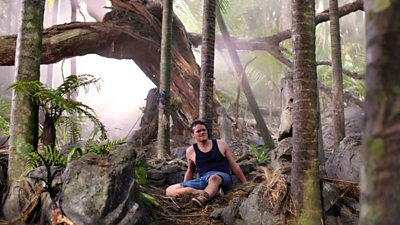
The reason for the urgency was that the production company Kath worked for had a film crew out in the Cook Islands making a reality show (Shipwrecked for Channel 4) and they wanted to use the same crew to shoot a half hour improvised drama from a storyline constructed by a writer. The crew were only going to be there for another few months so speed was everything. To cut a long story short we shot an improvised pilot from my storyline and showed it to Ben Stephenson at the BBC who liked it but wanted it properly scripted and developed into a fuller length version. This gave me time to properly research the concept, the Maori culture etc... and I ended up creating the eight x 40 minute drama series which became Tatau.
Does Tatau reflect any of your own experiences? Have you been travelling?
I don't have a tattoo but I love travelling and have been lucky enough to see a lot of the world. I think travelling really changes you - the different people and cultures you encounter are endlessly fascinating, enriching and challenging - and consequently there's a 'rites of passage' metaphor lurking underneath the show's 'cracking yarn' exterior. The 18-25 age span is a very formative time in terms of your personality - how you think about the world and yourself, what you believe in which really cements the way you're going to live your life. Discovering how to 'fulfil your potential' - that's the challenge for us all.
Did you have to write it to appeal to an international audience?
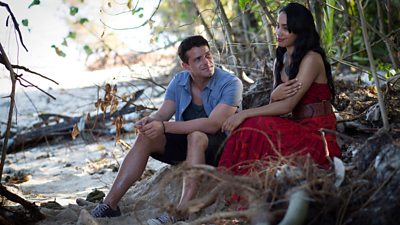
Not especially although the nature of the show invites a more international cast and flavour. 'Tatau' is my first foray into the supernatural and I wanted to do something different from the more traditional tropes of the genre so the old Maori myths and legends proved a terrific inspiration - there's certainly stuff in there you won't have seen before no matter where you come from.
Were there particular challenges in including non-western culture and Cook Islands Maori?
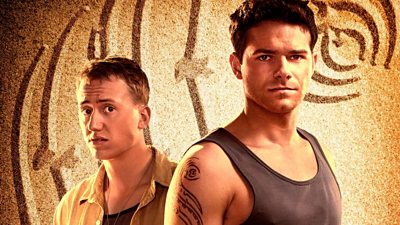
Obviously you're concerned to get things right and not be offensive so we had specialist cultural advisers on board plus the mainly Maori cast were also extremely helpful and supportive throughout the process. The design of Kyle's tattoo was guided by Maori ta'ungas (tattoo masters) so I believe the symbols are all accurate.
Do you have any advice you could share with other writers or that has stayed with you?
In the end you have to follow your own path and stay true to your nature but, for what it's worth, these would be my top tips:
It's not just about talent. Luck is a huge factor too - being in the right place at the right time - so perseverance and tenacity are equally important. Remember, it's a marathon not a sprint. Hang on in there and hopefully you'll win one eventually.
There are so many factors in getting a show made, let alone recommissioned, most of which are totally outside your control. I've had several development scripts praised by all parties involved, even one where the director (Peter Kosminsky, no less) was scouting locations and sending me pictures of where he was going to shoot my scenes but then, crushingly, the coveted green-light somehow failed to materalise. I also wrote on the prison drama Buried which won a BAFTA for best drama series and gained widespread critical acclaim. Channel 4 cancelled it. Go figure.
Stay philosophical about any setbacks and keep the faith in yourself and your work. There is a constant shift of personnel within the industry and while these kind of regime changes often damage a show's prospects they may also offer up new opportunities to others - Life On Mars was rejected for years by all the channels before finally being resurrected, Lazarus-like, to become a major success. So don't ever accept a rejection as definitive. It's just one person's opinion in the end.
Always do your best. Don't ever think you can coast on a gig. This can be particularly tempting in a show you've been on a while but it's a warning sign you should heed. If you're no longer feeling motivated then leave that show (before you're fired) and write something else that will inspire you anew.
Trust your instincts and be passionate in your convictions BUT remember to respect and consider other people's viewpoints too. You are not always right - hard to accept but true, I'm afraid, and by listening to others your work may well be improved.
Working in as many different genres as possible (docs, cops, lawyers, modern, period etc...) can help you avoid being pigeon-holed and improve your future employment prospects. Despite everyone's good intentions and desires it's actually a very risk adverse industry so having previous experience in a genre helps reassure people you're a safe pair of hands.
Don't put all your eggs in one basket - the more projects you have the more chances you create for a door to open - and the less damaged you'll be when one, inevitably, closes in your face.
Above all, it's about the journey so enjoy whatever road you decide to travel on - and treasure the friends you make along the way.
What do you think is the future of drama in the digital age?
I would hope the same as in the pre-digital one - great stories, brilliantly told.
What are you working on next?
Tatau 2, of course - I've got a great premise for what happens next - in fact a whole 5 season arc that feels really exciting - but whether I'll be allowed to tell it is not my decision. I'm also working on a show for Red Planet/Sky that I've co-created with a group of other writers. Plus I've got a film in development and a play for the Royal Court that's been sitting at second draft stage for way too long. Plenty of eggs. Here's hoping I don't drop them all.
