BBC BLOGS - Writersroom Blog

Archives for December 2010

Interview with Heidi Thomas

Fiona Mahon|21:50 UK time, Sunday, 26 December 2010

Blog comments are currently unavailable. Find out more.

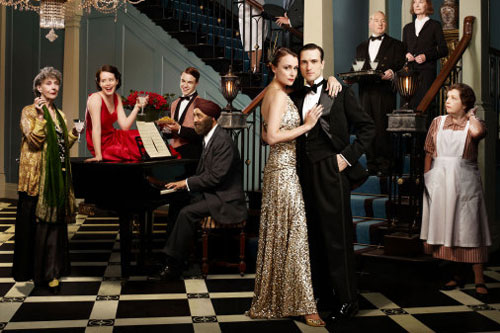
The legendary TV series Upstairs Downstairs has been brought back to life on BBC One, in a three part series written by the award-winning Heidi Thomas (Cranford, Madame Bovary, Ballet Shoes).

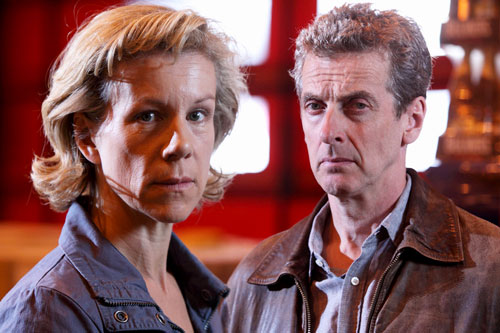
Image from BBC One's Upstairs Downstairs.

In October this year, Kate Rowland, the BBC's Creative Director of New Writing, led a Q&A session with Heidi as part of the Manchester Literature Festival. You can now read the transcript from this session on the writersroom website.

The Nativity

Tony JordanTony Jordan|10:00 UK time, Monday, 20 December 2010

Blog comments are currently unavailable. Find out more.

How do you tell a story where everyone knows the characters, the sequence of events and the ending, yet still make it fresh? Hell of a brief for a screenwriter.

The Nativity was a project that had me running round in circles for a while; I knew that I didn't want to be clever or contentious, just in order to be clever or contentious, by setting it in contemporary Britain on a housing estate in Birmingham with single Mum Mary.

The real challenge was to tell the traditional story, but in a way that could still move, even surprise a modern audience. As always, a screenwriters first tool is research and I spent the first month or so reading everything I could on the subject, talking to historians and theologians and watching everyone else's version.

A scene from Tony Jordan's 'The Nativity'.

The first thing that struck me was that they all approached the story in virtually the same way, all building the story to the moment of the birth then the arrival of the shepherds and the wise men. For me, this broke most of the dramatic principles I'd ever learnt, with the possible exception of Mary, we had no real idea who all these people were and why they found themselves in the stable in the first place. They may be iconic, but they were also one dimensional.

This gave me a structure of taking three strands, Mary and Joseph obviously, but then the wise men or "magi" and finally the shepherds to follow each story from the earliest relevant point to the convergence on the barn. The hope being that by the time we got there, the audience knew them as characters and understood why they were there.

This theme of "filling in the gaps" then went on to inform everything else I did. The star of Bethlehem for example, this too was one dimensional, there was no real sense of what it was. So we went into deep space, using CGI to see "star" forming, feeling its power, signifying the epic scale of what was about to take place.

As for the story itself, there are many inconsistencies; it is only mentioned in the gospels of Luke and Matthew and they contradict each other. Historians are more than happy to point out that our villain of the piece, King Herod, actually died four years before the birth of Christ and that Quirinius the governor of Syria who ordered the census which took Joseph and Mary to Bethlehem, wasn't actually appointed as governor until six year after the birth. I knew that how I dealt with these inconsistencies was important and I struggled with them for a while, until I realised that around the time of the Nativity, no-one wrote anything down, there was an oral tradition of telling stories, the gospels were written over a hundred years later. So just as in the nature of Chinese whispers, exact dates and detail can be lost or distorted after being passed around the campfires for a century or more. Therefore the thing that mattered wasn't the detail, but the spirit of the story, the reason it was told in the first place, it was this realisation that set me free to take the basic building blocks of the story and to mould them into my own interpretation. To simply take what I'd heard and to create my own camp fire story.

Tony Jordan's The Nativity is a four part drama broadcasting on BBC One at 8pm, from Monday 20th December until Thursday 23rd December.

Miranda

Post categories:

Richard HurstRichard Hurst|11:30 UK time, Wednesday, 15 December 2010

Blog comments are currently unavailable. Find out more.

The writing process for Miranda begins with a vast amount of material: Miranda comes up with scenes, jokes, themes and ideas for plots, and writes them all on flip chart paper which is pinned up on the walls of an office. Then the first cohort of her writing team - me and James Cary - spend several weeks drawing those elements together into coherent plots, and then fitting the plots together into detailed plans for episodes. It's a demanding, technical process that involves us going, 'hey, would it be funny if x happened?' and then laughing a lot at our own jokes before spending half an hour discussing lunch.

Episode five was always going to be different: it's our little experiment. It started out as an idea for a single scene: a psychiatrist's appointment that's not an appointment. In series one we'd talked about doing a single set real-time episode and we quickly realised that this was the idea that could make that happen.

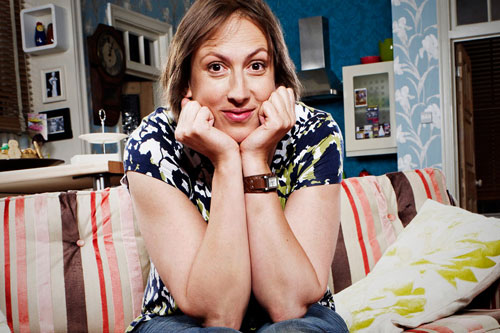
Writer and actress, Miranda Hart.

Writing with a performer is different to co-writing with another writer. You can never forget that the person sitting in the room with you has (and has to have) an absolute veto on anything you come up with. There's no way that they're going to get in front of a camera and say something that they're not convinced is funny. And in Miranda that's doubly true: within the show we see the world through her character's eyes: she's in every scene and almost nothing happens that she doesn't witness. We also tend to pack episodes with as much story as possible at this initial stage, but an episode like this will always be pretty light on plot. So, when James and I said 'this scene could fill a whole episode', we had to convince Miranda (and ourselves!) that we had enough material to fill it.

We transferred everything that felt like it could go into Psychiatrist (as we cleverly named it) onto post-it notes and stuck them to a big board. 'Sending text to wrong person', for example, was something that could have gone anywhere but found a home here. We liked the idea that the psychiatrist didn't speak for ages, so that became a sort of anchor point around a third of the way through, and the movement from Miranda and Penny working together to them working against each other to them uniting against Anthony gave us a structure that we could then drop jokes into. The post-its got picked, attached, moved around, removed, discussed and returned into position until they felt like they progressed logically, and off it went for a first draft. After some lunch.

In order to see this content you need to have both Javascript enabled and Flash installed. Visit BBC Webwise for full instructions. If you're reading via RSS, you'll need to visit the blog to access this content.


Miranda usually uses flashbacks and cutaways for jokes, but instinctively we felt that this would slow the pace of the episode. They got written just in case, but when heard the script for the first time at the readthrough we all realised that we didn't need them: the fantasy sequences with Gary keep the tone of the show consistent without taking us outside our set. So James and I spent an enjoyable couple of days giving the script a bit of a polish - more jokes and a bit of reordering - based on what we'd heard, before handing it back to Miranda for another draft before rehearsals.

I'm writing this before seeing the finished show: only when it goes out will the audience will be able to decide whether our little experiment has worked.

Watch Miranda: Series 2, Episode 5 back on BBC iPlayer.

Read an earlier interview from BBC writersroom with Miranda Hart.

Accused: Kenny's Story

Post categories:

Esther WilsonEsther Wilson|15:12 UK time, Tuesday, 14 December 2010

Blog comments are currently unavailable. Find out more.

The idea for Kenny's Story came from a real incident. A flasher in the park. When I spoke to Jimmy McGovern about it he said it was a story that had always interested him so, after talking it through with Sita Williams and Roxy Spencer, the story grew from there.


Having Kenny work in a crematorium was both a gift and a curse when writing the first draft. Jimmy & I spent an afternoon behind the scenes at a crematorium watching the procedure and taking in the atmosphere. What struck us was the camaraderie between the working men. They had managed to find the balance between keeping the atmosphere light and jokey (they were constantly winding each other up) yet entirely respectful. It made me realise the importance of rituals, the way we deal with our dead and the superstitions that exist around them. We wanted Kenny's job to be philosophically intrinsic to the story so it could be at the heart of a modern day morality tale.

In order to see this content you need to have both Javascript enabled and Flash installed. Visit BBC Webwise for full instructions. If you're reading via RSS, you'll need to visit the blog to access this content.


But his job also got in the way. In the first draft Kenny's typical working day - in great detail -overshadowed the story (cracks appearing in the relationship between three men after they have committed a murder) the cremation ritual seemed vulgar and sensationalistic. There 'just for the sake of it' type thing. We couldn't understand why. We knew it could work and that it could be moving -it had moved us when we'd witnessed it-and we knew it had the power to highlight the drama but it was doing none of those things. In a second draft I tried to concentrate on seeing less of the crematorium but that felt wrong too. It didn't matter where he worked his job was immaterial. It was really frustrating for me at that stage because I knew there was something in his job impacting on the story but I was struggling hard to find it. Nor could I articulate what I was looking for.

In a TV interview with Mark Lawson Jimmy likened finding the story to the way a sculptor works with a block of stone...'chip and chip away until you reveal what you already know is there' (forgive the misquote)...that's a brilliant way to describe it because when it eventually appears, it feels familiar and obvious...it's the chipping away that's the killer.

We left that problem alone for a while and concentrated on others (there were many).

The crime...which happens very early on in the drama with the viewer in no doubt as to who commits it...allows for dramatic ambiguity because it is an emotive, complex moral dilemma. Which is worse murder or child molestation? But whenever we asked that question (despite the fact that it inspired a few lively debates) the majority of people seemed to think the murder less of a crime. We wanted to reflect that too, but it seemed too simplistic. Even when we made it a 'wrong guy' situation to up the ante in terms of whether or not one of them would confess....the story still felt too 'provincial'

The breakthrough came over the summer when Primark and M & S were in the news over selling padded bikini tops for children. It was clear that the sexualisation of children, for commercial purposes, is endemic in Western society. Our main characters do not exist in a bubble so we were able to look beyond the framework of our story.

Young girls dancing provocatively to Beyonce at a Holy Communion 'do'. The themes merged perfectly.

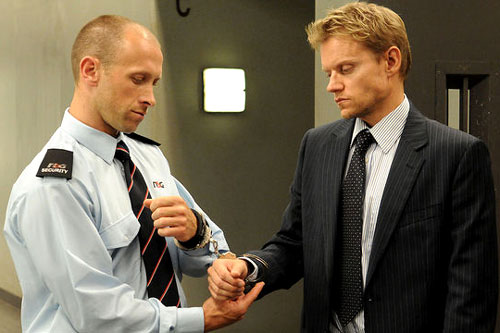
An image from BBC One Drama, Accused, Kenny's Story.

But individuals have their own moral compasses. Kenny's character has to be informed by the work he does. That led us onto cracking the problem of the cremation ritual.

If Kenny had to cremate the man he had helped to murder it would have a huge effect on him...and could be the catalyst for his confession. It seems an obvious thing now but placing the cremation ritual, in detail, in that point in the story shows it for the moving ritual that it is.

Before it had seemed gratuitous and vulgar now it offered Kenny the possibility of redemption.

Of course all of the above is purely reflective and also informed by time and the finished product and I did have Jimmy McGovern as my co-writer but...for all the re-drafting and hair tearing it's a piece of work I am very proud of.

Read the script for Accused: Kenny's Story in the BBC writersroom script archive.

Watch Kenny's Story back on BBC iplayer

Writersroom 10

Paul Ashton|13:07 UK time, Tuesday, 14 December 2010

Blog comments are currently unavailable. Find out more.

We've launched a new programme - the Writersroom 10 - for emerging writers working with theatres. Writersroom has always run industry-wide partnerships to help find and develop talent - and new writing theatre remains a place where many many writers begin to (and continue to) develop and express their voice. So we are delighted to be inviting theatres to champion writers at a formative stage in their career.

If you are a professional theatre company with a talented writer you'd like to nominate and work with, or if you are an emerging writer who hasn't yet had a full production but who is in contact with a professional theatre company, then take a look at the info and our FAQs and see if it's something you might be eligible to apply for...

Laughing Stock 2011

Post categories:

Simon NyeSimon Nye|14:34 UK time, Monday, 13 December 2010

Blog comments are currently unavailable. Find out more.

It's the last thing I need - new writers coming in, lots of them really young, being funny, showing us grouchy old hacks how to do it. I've got a family to feed, a fat mortgage to pay and a high maintenance dog.

But I remember when I started writing, trying to focus on the work yet knowing that when it lands on somebody's desk or in their inbox there is an inbuilt resistance to new writers, an assumption that you'll be a bit rubbish. That's if your work gets through the door at all - lots of agents, production companies and publishers won't accept submissions from what is referred to damningly as "the public".

So God bless the BBC, firstly for having an ever-open door to unproduced writers' work, and now for organising a comedy beauty contest: Laughing Stock 2011. Submit a script and win a bit of attention.

I'll be one of the judges, and believe me I am rooting for you, because I watch TV too and there's nothing better than hilarious new writing to remind us all why we struggle away at the comedy coal face rather than getting a proper job.

BBC Writersroom and BBC Comedy Commissioning have just launched Laughing Stock 2011, a nationwide competition to find new comedy gold.

For further details, and to find out how to enter, visit the Laughing Stock opportunities page.

All Mixed-Up - End of part one

Micheal Jacob|15:23 UK time, Tuesday, 7 December 2010

Blog comments are currently unavailable. Find out more.

A packed and steamy Soho Theatre Studio saw the final of the All Mixed-Up competition at a showcase on Saturday night. An enthusiastic audience was joined by judges Freema Agyeman, Philip Hedley CBE, and Susan Nickson to see extracts from the six final scripts performed by a hard-working and talented cast of ten versatile actors.

The first script of the evening - Champs by Ben Syder and Jonathan Wright - was the winner, with Ben and Jonny receiving a £1000 option fee for further development of their script, a show about two friends from Yorkshire getting to grips with life in London.

The final script, Human, Right? by Tom Glover was the runner-up, with Tom winning a £500 option fee. The show is set in a small, under-funded human rights charity with a reputation for colourful stunts.

Although the plan was to make two awards, the judges decided to make a special award to Sophie Petzal for her script The God Committee, about a pregnant teenage girl and the four potential fathers. The emotion of the situation shone through.

The judges deliberated for an hour, and there was some lively discussion before the winners were chosen and the results were announced.

For the three writers who missed out - Dan Brierly, Wally Jiagoo and Nimer Rashed - there was both sympathy and admiration. The quality of all the work was extremely high, and the judging process difficult. Trying genuinely to say that everyone who made it to the last was a winner, and that we want to stay in touch, doesn't really make it easier.

A collaboration between the BBC College of Comedy and TriForce Promotions, the competition sought scripts which reflected the diversity of life in Britain. There were just over 300 entries. The short-listed writers had to submit complete scripts for a workshop in October, and then rewrote the opening pages - some quite radically - to provide a maximum of 15 minutes for the performance.

The next stage is to develop the winning scripts to the point where they can be put into the commissioning process and compete with other projects for a pilot or a series commission. Winning the competition is the first step on a rocky road, but we'll do our best to heave as many rocks out of the way as possible.

Accused: Helen's Story

Post categories:

Alice NutterAlice Nutter|11:17 UK time, Wednesday, 1 December 2010

Blog comments are currently unavailable. Find out more.

Helen's Story is part of Jimmy McGovern's series the Accused, each episode stands alone and starts with a character in the dock, the ensuing hour tells how they got there.

I co-wrote Helen's Story with Jimmy McGovern, normally when I'm writing there are two nagging questions at the back of my mind: What am I trying to do and what's the point? With Helen's Story, those questions never arose because we weren't just writing a story with plot devices, we were showing that when it comes to deaths in the workplace there's very little justice on offer... Helen's Story is the journey of a bereaved woman who is repeatedly let down by the law.

In order to see this content you need to have both Javascript enabled and Flash installed. Visit BBC Webwise for full instructions. If you're reading via RSS, you'll need to visit the blog to access this content.


We couldn't have written this drama accurately if families who've lost relatives hadn't shared their experiences. I particularly want to thank Anne Jones - whose son Simon was killed on his first day as a casual worker at Shoreham Docks - difficult though it was for her, Anne Jones took me through what happened in the hours and months following Simon's death and the almost callous way she was treated by the authorities and in the courts.

Linda Whelan - whose son Craig died in 2002 when a chimney he was working in exploded because the company were too cheap to institute proper safety procedures - also gave generously of her time and recounted her son's death and the company cover-up. The problem in Helen's Story wasn't a lack of research material, if anything there was way too much, FACK, Families Against Corporate Killing (who campaign for prosecutions against negligent employers) had a wealth of stories about companies cutting corners and deaths that never should have happened.

An image from Accused, episode 3 - Helen's Story.

Early on in the script meetings between myself, Jimmy McGovern and producers Sita Williams and Roxy Spencer, we all agreed that Helen's Story was a work of fiction and nota docudrama. After putting the audience through the death of a child, the lack of justice and the effect that has on the parents' relationship, it wouldn't have been fair to go out on a downer. In real life a woman who admits committing arson is unlikely to be found Not Guilty but in this case we wanted the Jury to reflect the audience's feelings, and we were pretty sure that most people watching would understand, even support, a grieving Mother's actions.

Read the script for Accused: Helen's Story in the BBC writersroom script archive.

Watch Helen's Story back on BBC iPlayer.