

How computers can help you to stargaze

I was around 10 when I first started stargazing, and back then it was all about pointing telescopes manually, looking at the stellar sights and maybe drawing or photographing on film what you could see if you wanted to record it. We relied on using star charts to find your way around the sky too - a real skill - but these days there's a whole range of computerised gadgets and gizmos available to help you out.
For starters, if you own a smartphone then you can download special astronomy applications that will help you learn your way around the night sky. Because they use GPS and other features to know where on the Earth they are and the direction they are pointing, these "apps" are an invaluable tool to help navigate the sky.
Once downloaded, your phone's screen is just held up to the sky, and it shows what can be seen in that direction. We will have a guide to the best ones on Stargazing LIVE this year.
I have also recorded some audio guides, which you can download as MP3 files. Take them outside on a portable music player, and my voice will help guide you around the skies of 2012. It's like having a mini version of me in your pocket, all thanks to computer technology!
For even more advanced searching, you can get telescopes that hold vast databases of celestial treats. Once set up properly, these 'Go To' telescopes will point at any cosmic object you choose - from nearby planets to distant galaxies. They will even tell you which ones are visible from your location.
But the real advantage gained from technology these days is in the world of imaging - i.e. actually taking the pictures. Starting with the development of the specialist astronomer's CCD camera in the 80s, and followed by the digital SLR camera in the late 90s, they heralded a revolution in astronomical imaging.
For the first time, amateur astronomers could produce stunning, high quality images of the universe with relative ease - not like the days of messing around with film that I remember! Now you can simply hold up your phone's camera up to a telescope eyepiece to get some pretty impressive results, or hook up a basic webcam to get stunning planetary close-ups.
If clouds fill the night sky, then there are still plenty of websites to pass the time with. There's a vast array of information on the internet: from the latest planetary images from NASA, to aurora forecasts, and meteor shower predictions, there really is something for everyone online when there's nothing to see up above.
And it's not just direct stargazing that technology helps with - the way in which astronomy is communicated has also changed significantly. Where the space sciences once used to be the domain of obscure magazines and newsletters, it's now social media - through chat groups, Facebook, Twitter and other services - which really get the message across. Now important news can spread worldwide, in just 140 characters and even fewer seconds.
It feels incredible when I think about how the tools of the astronomer have changed over the years - and certainly computers have been a huge part of that. The beauty of the night sky is one of nature's real treats, and if technology means that more and more people can access it then that can only be a great thing.
You can find out more about Stargazing LIVE on the website and watch on BBC One on 16, 17 and 18 January 2012.
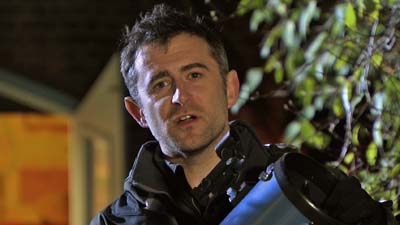
Mark Thompson is a keen amateur astronomer, and has reported on astronomy for the BBC on the One Show, The Sky at Night, The Culture Show, and last year's Stargazing LIVE. He is the president of the Norwich Astronomical Society, and sits on the council of the Royal Astronomical Society as its only amateur.


Comments Post your comment