Renaissance Revolution: Applying cutting edge techniques to art

Adam Barker
Acting Controller BBC Two
Tagged with:
When Renaissance Revolution was pitched to me, I was intrigued by the idea from the production company Blakeway Productions of using cutting edge graphic techniques to present classic artworks on television. Other television genres such as science and history programmes have made excellent use of graphic techniques to enhance the storytelling, whereas arts programmes have tended to be more conservative.
I was also slightly nervous about doing anything which might interfere with the visual qualities of the original paintings - which are, after all, among the masterpieces of Western civilisation - and we have tried to avoid that where possible.
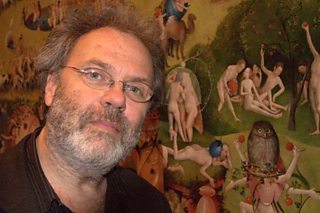
In recent years a lot of innovative work has been produced in the field of high resolution image mapping using the latest digital technology. While online users have had access to large scale zoom capabilities, allowing them to focus in on specific areas of interest, rarely have these techniques been employed in producing broadcast television sequences.
The result is no ordinary art series. It pioneers techniques for how we view art on screen, allowing for a thrilling full high definition wide shot of a famous old master painting, and zooming to two centimetres of its exquisite details.
In terms of resolution these are the highest quality images ever made of complete paintings, the production team were able record at an amazing 65,000,000 pixels in one image. It is a credit to graphics maestro Paul Tierney and producers Paul Tilzey and Randall Wright that they managed to make this technology work.
The scary thing about working with graphics in this way is that you only see them right at the end of the edit. But some of the techniques used in the series are able to achieve astounding visual effects - a zoom in to a level of detail which would have been unachievable by any other means, movements across widely dispersed area of a painting faster than the eye could manage, and the simple pleasure of seeing such high definition renderings of these extraordinary paintings.
There is something weirdly appropriate to do this with Renaissance masterpieces like Piero Della Francesca'sBaptism Of Christ, Raphael'sMadonna Of The Meadow, and Bosch'sGarden Of Earthly Delights.
Looking at their beguilingly beautiful constituent parts and putting them back together with modern technology is very much what Renaissance painters did, pulling apart classical and medieval art traditions and updating them with perspective optical tricks, and new oil paint.
The presenter Matthew Collings is one of our most original and creative art critics, and the inspiration for this series came partly from a previous film he made for BBC Two called What is Beauty? Directed by Neil Crombie, this film combined images, music and commentary in a highly original and thought-provoking format.
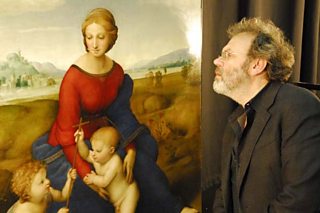
The challenge with Renaissance Revolution was to see whether a similar approach could work with the high art of the Renaissance. Having spent a lifetime immersed in the practice and study of art, Matthew Collings gets the chance to put this new technology to powerful use, helping him deconstruct and pore over these paintings in greater depth than he has been able to do before.
The result is a fresh and exciting vision of the Renaissance and a new way of seeing and understanding the secrets of technique, imagery and imagination that lie behind all great paintings
The main point of the series is to show how paintings which we now regard as part of the classic canon of Western art were the modern art of their own time. Our aim was to recapture the experimental and pioneering quality of Renaissance painting and show how these techniques evolved.
We must never forget that these images which we are now accustomed to seeing in grand museums were once blank canvases and pieces of wood in a young artist's studio. Renaissance Revolution gives a general audience access to the intricacies of technique and delicate details that are normally only seen by conservation experts, or the artists themselves.
I think this is a series which will divide opinion. Traditionalists may find it a step too far in its adventurous contemporary writing, film making and use of music. Those of you who are interested in arts programming that pushes the boundaries will, I hope, find it inspiring. After all, it's part of our job in the BBC arts department to be constantly challenging ourselves and our audience to find new ways of seeing art on TV.
Adam Barker is the commissioning executive for BBC Knowledge.
Renaissance Revolution is on BBC Two and BBC HD at 8.15pm on Saturday, 23 October. Episode one is available on iPlayer until 8pm on Saturday 6 November.
To find out details of future programme times please visit the upcoming episodes page.


