
We were lucky to have a year to film Protecting Our Parents.
It didn’t always feel it during the long winter months, late nights and early mornings my team from BBC Bristol’s documentary department spent in the busy elderly care wards of Heartlands Hospital Birmingham.
But we came to realise that time is a precious commodity across an elderly care system swelled by our nation’s rapidly ageing population.
Protecting Our Parents is a documentary series about all of us: our parents, grandparents and the many health and social care professionals that look after them as they get older, and will care for us in our old age too.
Before filming could even begin it had taken an additional 18 months to put in place permission to film.
The hospital elderly care team, community and hospital social workers and the scores of health and care professionals were needed to enable us to try to make sense of a system that, for the older people at its heart, is often bewildering.
Doctors, social workers and husband Leonard try to decide what's best for Kathleen
Being able to view the system from the perspective of the professionals, older people and their families gave us a privileged position from which to follow cases.
Hospital-based social workers and doctors rarely have the chance to see their clients or patients in the community, but we were able observe what many of the professionals can’t.
We filmed contributors leave hospital for home with social care packages that had been carefully designed over weeks, sometimes months on the ward - only to be readmitted within weeks, sometimes days.
On occasions, we’d know before the community social work team, the GP or the hospital consultants that our contributors were back in A&E or on a ward, because we’d have the information quicker from carers and families.
This isn’t because individual medics and social workers aren’t hardworking and caring.
It’s because what we saw is symptomatic of the fault lines of the elderly care system, between health and social care, hospital and community.
From our time on the hospital wards and in the community, we came to realise that the system is often measured, officially at least, against the ticking clock.
There are the hospital waiting time targets of A&E; there is pressure to free-up acute beds on wards for the next admission; there are the council-hired carers trying to meet their clients’ often complex care needs in 20 minute sessions.
Most of the many dedicated professionals we followed managed to find the extra minutes to spend with their patients or clients, regardless of the pressures of their workload.
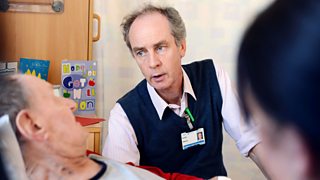
Dr Peter Wallis at Birmingham Heartlands hospital during a consultation with a patient
But we were able to spend hours with our elderly contributors, not just to film, but to sit and talk, make a cup of tea, fetch a paper, watch the football on the TV together.
Building up trust and understanding over not just weeks, but months, was essential to filming with often frail, vulnerable people and their families as they went through what for many was the most difficult episode of their lives.
It also meant we had the time to learn about their lives and not just the current crisis they were going through.
They were all hard working people, who’ve led rich, full and colourful lives – like our own.
'I never expected to age so quickly, and I didn't feel that I aged so quickly'
Inevitably, the series has had a lasting impact on all of my team who filmed, edited and produced it.
For me, having put off thinking about old age for as long as possible, I’ve started to have the conversations with my own parents about their futures and have dared to contemplate what elderly care might look like for my generation.
Above all, that is what we want this series to achieve: a national discussion about how we treat older people and what we want from old age care.
With the system already struggling to cope and the number of pensioners set to grow by half in the next 20 years, it’s an urgent conversation to be had.
Alice Perman is the series producer on Protecting Our Parents.
Protecting Our Parents continues on Thursday 1 May at 9pm on BBC Two and BBC Two HD. For further programme times please see the episode guide.
If you, or someone you know, is affected by the issues raised in this programme, please see the information and support page for details of organisations which can help (available until Tuesday, 10 June).
More on Protecting Our Parents
Comments made by writers on the BBC TV blog are their own opinions and not necessarily those of the BBC.
