Love You To Death: What domestic violence does to a family

Vanessa Engle
Producer/Director
Tagged with:
The statistics about domestic homicide are shocking. On average, seven women a month in Britain are killed by their male partner or ex-partner. My idea for Love You To Death: A Year of Domestic Violence, was to make a film that would name all the women killed by their partners in one calendar year, to dignify all them with a name and an identity so they would be more than just a Home Office statistic.
We approached all 86 families of the women killed in 2013 to explain that the project would name their relative with a view to raising awareness of the issue of domestic violence – a terrifyingly common occurrence that people often shy away from discussing.
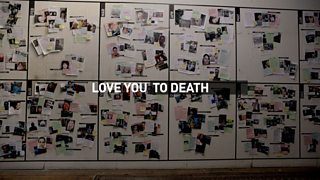
A board of photos and clippings marks out the 86 deaths as part of the documentary
There are so many assumptions about domestic violence, but the striking thing was that the women were from all over the country and had died in such widely differing circumstances. They were from very different cultural backgrounds. Some were teenagers, others in their 80s. And the length of their relationships with the perpetrators varied from just a few weeks to over 40 years.
Some were relationships with a history of violence, but – perhaps surprisingly - in many instances, the murder was the first act of violence ever to occur. The thing that shocked me most was how extreme the violence was in many of the cases – a beheading, a man who cut his wife’s heart out, women brutally murdered in front of their children.
The film features the stories of several of the women in more detail, remembering who they were and trying to piece together what led to their deaths. Their stories are told in the film by their families, friends and neighbours, so it quickly became apparent that the film would also explore the traumatic impact of domestic violence on those left behind.
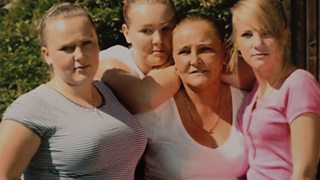
Assia Newton's murder caused a rift between her three daughters
The effect on all the families we talked to in the course of our research was overwhelming and enduring. Many were suffering post-traumatic stress and are still in need of counselling or medication. As well as shock at the sudden and violent loss of someone they loved, people often described feelings of guilt. Why did they not know more about what was happening behind closed doors? Could they have done more to intervene?
Others reported feelings of anger that their warnings and advice were ignored and that they are now left to live with the consequences - a never-ending legacy of grief, helplessness and anguish. One young woman in the film describes how her friend’s murder has damaged her trust and has made it much harder for her to form a relationship with a man. Another woman whose sister had been killed explained to me (off-camera) that she panics when she sees her husband picking up a hammer, even though she knows he’s just doing a spot of DIY.

The primary reason these seven families took part in the film was because they did not want their loved one to have died in vain. I hope we have done them justice and that the film will have the impact they are hoping for. Many of them said to me that if even one woman who is in a bad situation reaches out for help as a result of this programme, that would make their involvement in the filming worthwhile.
Vanessa Engle produced and directed Love You to Death: A Year of Domestic Violence.
Love You to Death: A Year of Domestic Violenceis broadcast on Wednesday, 16 December at 9pm on BBC Two.
If you, or someone you know, is affected by the issues raised in this programme, please see the information and support page (available until 25 January, 2016) for details of organisations which can help.
Comments made by writers on the BBC TV blog are their own opinions and not necessarily those of the BBC.
