
We were all watching with horror at what unfolded on the news when five women in Ipswich were murdered back in December 2006. As the women started to go missing, I was one of those mums sitting on the sofa, looking on with fear.
Then Paula Clennell gave an interview where she was asked why she was still working as a prostitute after her friend, Gemma Adams, had gone missing. Paula said she was frightened but needed the money and there's no other way of getting it.
And it struck me that this story was about drug addiction, not prostitution. Obviously the women were putting themselves in a vulnerable position. Even after their friends had gone missing. Even after Gemma Adams' body was the first to be discovered and they knew there was a murderer, they were still getting into cars because they needed the money to buy drugs.
Then Paula, who had given that interview, went missing herself. We'd watched her explain why they were still working the streets and then her body was discovered.
That was where we all became involved in a different way. And something changed in me - I desperately wanted to find out more about these young women's lives.
Apart from a few broadsheets, which went into the background of why these women were on the streets, most of the media were simplistic, characterising the women as two-dimensional prostitutes.
The BBC had complaints about it and I felt that public empathy was changing. Rather than seeing them as prostitutes and therefore somehow deserving of what happened to them, people like me were seeing these women as real people and were terrified for them.
It kept nagging at me, long after the situation was finished and the murderer, Steve Wright, had been arrested.
Five months on, I decided I would like to start researching. I was supported by BBC Drama Productions who thought there was an important story to tell.
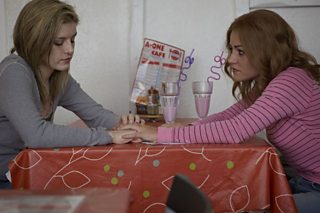
First, we went to Suffolk Police because they were the holders of the story. They'd been inundated with requests from makers of documentaries and factual dramas. They found all the requests difficult to cope with but, eventually, the police press officer agreed to meet us and he was impressed with the way we wanted to tell the story.
We wanted to focus on the young women and reclaim aspects of their lives. They weren't only prostitutes - they were ordinary young people with hopes and dreams and ambitions, just like anybody else. They were like my kids, anybody's kids.
It's too cosy to say that this kind of horror happens over there to someone else on an estate somewhere. Because it's absolutely not true.
Then we met Chief Superintendant Stewart Gull, who led the investigation. If you look at the press coverage, he gave a lot of interviews and never once referred to the victims as prostitutes.
He always called them by their names, or collectively as young women. He showed an immense amount of respect. The families deeply appreciated that. He treated them with a lot of care.
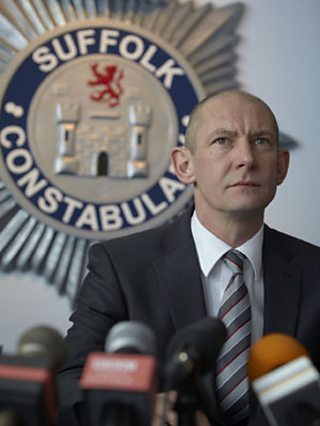
Stewart wanted to help us and so director Philippa Lowthorpe approached the relatives through their family liaison officers.
Three of the families wanted to be involved - those of Anneli Alderton, Annette Nicholls and Paula Clennell. So Philippa, producer Simon Lewis and scriptwriter Stephen Butchard spent time talking with the three families about their lost sisters and daughters.
Gemma Adams' family didn't want to be involved but had no objection to us making the drama. And there's minimal representation of Tania Nicol in the drama, in line with what her family wanted.
I didn't meet the relatives because my responsibility as executive producer is to step back and take an overview of the drama. You can get close to people and feel responsible for telling their stories when you're doing this kind of work. It's emotional. Someone has to stay objective, outside the process and make sure the drama works as a piece of drama.
Some people asked why we haven't gone into more detail about how the women first got into drugs.
It can be the simplest of reasons, and sometimes there isn't a reason at all. You take a wrong turn, and then another wrong turn. It can be experimentation or it can be because you've just got the wrong boyfriend. It can be lots of reasons but once you're hooked, getting off heroin is extremely tough.
I certainly had no idea how hard it is to get off heroin and crack until I did this programme. Those women really, really tried. And their mothers tried hard to help them. I had thought you do a bit of cold turkey and you just need to be disciplined. But it's not like that, it grips you.
We didn't set out with an agenda, but now that it's done, I would like this drama to be shown in schools. I think it shows how easy it is to get into drugs and how unbelievably difficult it is to get off them.
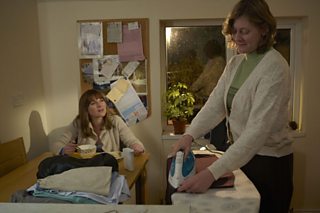
The drama hangs on how the police worked the investigation. The families told us how impressed they were with Suffolk Police's support. They trusted them and how they had handled the case.
The detail was important and we got that absolutely right. It was researched with Stewart and other officers, like WPC Janet Humphreys.
Janet knew the women well. Her onscreen involvement with the local drugs project, Iceni, is absolutely accurate.
The performances from everyone are fantastic and yet I don't think I want to highlight a moment or an actor standing out, because honestly the whole production has to speak for itself. It unfolds in three parts and each plank of the storytelling is important.
You'll notice it's not shot like a traditional crime drama. It's much more muted and real. We did that on purpose.
What we really, really did not want to do and absolutely all areas of production were so aware of this - costume, make up, lighting - we would never be salacious, ever. We were never going to go for the cheap shot. It's about real people and their lives. That's the tragedy.
Stephen set out to capture the poetry in these young women's lives and their tragic loss. And I think that he and Philippa have achieved that.
Susan Hogg is the executive producer of Five Daughters. The first episode can be watched on iPlayer, episodes two and three are on BBC1 tonight (26 April) and tomorrow (27 April) at 9pm.
