BBC TV blog - BBC TV blog

Archives for November 2011

Love On The Transplant List: Filming with Kirstie

Blog comments are currently unavailable. Find out more.

Post categories:

Mel BeerMel Beer|11:30 UK time, Monday, 28 November 2011

Love On The Transplant List is really a love story about two extraordinary young people but it just so happens that one of them, 21-year-old Kirstie, has Cystic Fibrosis.

At Special Edition Films, we got in touch with Kirstie after seeing her blog 2ndchance@life to approach her about making the documentary for BBC Three about her experience.

As the producer, Kirstie made it very clear to me from the start that she wanted people to see what it was really like to be on the transplant waiting list.

She hoped that by showing the reality of her situation it would encourage more to sign up to the donor list.

In May 2011, when I first met her at home in East Devon, Kirstie had seriously bad, end stage lung disease where a transplant was her only chance of survival.

In order to see this content you need to have both Javascript enabled and Flash installed. Visit BBC Webwise for full instructions

Kirstie tries on her wedding dress

Kirstie was already on the transplant waiting list and had been told that she only had six months to live.

The documentary starts with Kirstie and her fiancé Stuart three weeks before their wedding day and although Kirstie was living at home at the time, she was on oxygen machines 24 hours a day to help her breathe, confined to a wheelchair and having constant IV's and pain medication.

She was barely able to stand for a couple of minutes let alone plan a wedding.

Our whole crew consisted of an assistant producer and me - during the ten weeks of filming, this amazing young couple battled everything to live their life to the full.

We followed Kirstie being hospitalised and fighting for her life two days before her wedding, even checking herself out of hospital early to make it down the aisle.

A couple of weeks after the wedding you'll see how Kirstie was still so thrilled to finally be married before the sudden shock of having to be taken by air ambulance to the transplant hospital in London, knowing that if she didn't get there right then, she would never survive the journey.

It was an extremely emotional time in this couple's life that as a filmmaker I couldn't help but be affected by.

Each time I filmed with Kirstie I was acutely aware that this could be the last time I would ever see her alive again.

Watching Stu talk about how it felt to be in a situation where the person you love is dying and there is nothing you can do to save them, is something I'll never forget.

In order to see this content you need to have both Javascript enabled and Flash installed. Visit BBC Webwise for full instructions

Kirstie's husband Stuart waits for news

Filming with Kirstie and her family when they were going through such a painful and highly emotional time put me in an unusual situation but I was very privileged to be able to follow their journey and they were extremely supportive.

Her drive and determination made it much easier to talk openly about difficult issues such as death and living with illness.

Choosing the music for the film was always going to be an extremely important element for me to help add a layer of emotion and try to reflect what everyone was feeling.

Throughout filming, I was constantly listening to albums and almost creating a soundtrack in my head as I saw the events unfold in front of me.

In the edit I found that if a track made me completely re-live the moment then that was the right one to use.

I quite often wouldn't listen out for relevant lyrics but literally watched through footage with headphones permanently attached and when a track had absolutely the right feel to it I would play it back and realise that actually the lyrics added to the scene.

Some of the tracks used in the film were personal to Kirstie and Stu, in particular the Take That track which was played as Kirstie walked down the aisle and I'm Coming Home by Diddy Dirty Money feat. Skylar Grey which Stu played to Kirstie when he was finally able to take her home from the hospital.

Mel Beer is the producer and director of Love On The Transplant List.

Love On The Transplant List is on BBC Three on Monday, 28 November at 9pm.

To read a post by Kirstie, please see the BBC Three blog.

For further programme times, please visit the upcoming episodes page.

Comments made by writers on the BBC TV blog are their own opinions and not necessarily those of the BBC.


Frontline Medicine: Camp Bastion's battlefield hospital

Blog comments are currently unavailable. Find out more.

Post categories:

Michael MosleyMichael Mosley|17:12 UK time, Tuesday, 22 November 2011

I watched a young soldier lying in the mud under a sweltering Afghan sky as his friend, with fumbling hands, desperately tried to get a tourniquet round his naked leg.

The screaming was incessant until finally the tourniquet was in place and fiercely tightened.

What I was watching was a training exercise at Camp Bastion, with most of the screaming coming from instructor, Sergeant Lee Melvin.

His job is to prepare new troops in Afghanistan for what they may encounter out on the battlefield and he makes it as realistic as possible.

In order to see this content you need to have both Javascript enabled and Flash installed. Visit BBC Webwise for full instructions

Soldiers are instructed on using a tourniquet

War has always driven innovation in medicine and science, and the reason I was out in Afghanistan was because we were filming the documentary Frontline Medicine, which I'm presenting for BBC Two, to find out what has been learnt from recent conflicts.

Jane Aldous, the series executive producer, has made numerous series with the military, including the Bafta-winning Wounded and The Bomb Squad - so I thought her excellent contacts would mean making this series would be straightforward - but I quickly learned it was far more complicated than I had realised.

There were issues to be ironed out about filming patients who were critically injured or unconscious and who weren't able to give informed consent.

An added complication was the fact that Camp Bastion Hospital, although run by the British, had medical staff and patients from a variety of other countries.

Protracted negotiations followed with the Ministry of Defence, the Pentagon and the American Navy to name just a few, before we even started filming.

There were safety briefings and hostile environment courses to be got through, but finally in May 2011 we took off on an ageing airplane from Brize Norton in Oxfordshire for Afghanistan.

We were only allocated four seats, which meant the assistant producer, Blythe, also had to cover the job of a sound recordist.

Fortunately she's experienced, because trying to record decent sound in a busy battlefield hospital is a real challenge.

We were also fortunate to have cameraman, Andrew Thompson, who as well as a great sense of humour has plenty of experience of Afghanistan, having been out there filming with Ross Kemp.

The hospital we filmed in is in Camp Bastion, where they treat injured troops of all nationalities from all over southern Afghanistan.

They deal with some of the most extreme injuries you'll see anywhere.

Despite this they manage to save the lives of up to 90% of the wounded, the highest success rate in the history of warfare.

One reason for this is that they are incredibly well set up.

I was there for a couple of weeks and in that time watched dozens and dozens of badly wounded people (and a couple of bomb sniffer dogs) being treated.

Gunshot wounds, soldiers cut to pieces by shrapnel, burns and numerous amputations caused by improvised explosive devices (IEDs) were a regular occurrence.

In order to see this content you need to have both Javascript enabled and Flash installed. Visit BBC Webwise for full instructions

Camp Bastion medics work on the US solider Chuck's injury

I saw a lot of badly injured people in Bastion, but only one that reduced me to tears.

He was a young US marine called Chuck who had had his left leg partially amputated by a bomb blast.

Although he had been treated on the helicopter, he was still in a lot of pain.

Chuck was fortunate because the anaesthetist at Bastion, Surgeon Commander Dan Connor is very skilful at pain management and he's particularly good at a technique which the military have been refining over recent years.

Instead of just giving morphine, Dan carefully inserted a fine catheter into the area near Chuck's popliteal nerve, the nerve that provides pain signals from the foot.

He then connected it to a pump that keeps a regular flow of local anesthetic to the nerve.

When I saw Chuck that evening he was completely pain free. With the apparatus in place he was flown back to the US for further surgery.

Continuous nerve blocks, like the one he had, are increasingly being used in the NHS for procedures like knee replacements.

Getting out of Afghanistan was harder than getting in. The RAF told us they could not guarantee our return date and I was a bit desperate.

Fortunately we found a plane flying to Dubai, which we boarded at dead of night.

My trip to Afghanistan was just the beginning of a long and fascinating journey to find out more about medical innovations that have emerged from recent military-funded research.

You'll see in episode two that we got access to a range of such research, including trials of new prosthetics and devices that allow blinded soldiers to "see" with their tongues.

The cost of this war, for civilians and military, has been exceptionally high.

But I do believe some good will come out of so much suffering and because of what we've learnt, future lives will be saved.

Michael Mosley is the presenter of Frontline Medicine.

Frontline Medicine continues on BBC Two on Sunday, 27 November at 9pm.

For further programme times, please visit the upcoming episodes page.

Comments made by writers on the BBC TV blog are their own opinions and not necessarily those of the BBC.
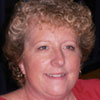
Baker Boys: We're the writers and real-life partners

Blog comments are currently unavailable. Find out more.

Post categories:

Helen RaynorHelen Raynor|11:03 UK time, Tuesday, 22 November 2011

Hello - I'm Helen Raynor. I've worked on established dramas like Doctor Who, Torchwood, and Primeval, but Baker Boys is my first original drama series. We've filmed this blog post to share a bit about the creative process with you.

I created and wrote it with Gary Owen, who you will spot nodding sagely in the video.

Gary is my real life partner - if you don't know that bit, it just looks like the strangest writing relationship ever.

In order to see this content you need to have both Javascript enabled and Flash installed. Visit BBC Webwise for full instructions

Watch Helen and Gary's blog post

The show stars Eve Myles, Torchwood's leading lady, and returns this Thursday, 24 November.

Baker Boys is set in a small South Wales town, and follows the lives and loves of a group of workers at - you've guessed it - a bakery.

We chose a small canvas to tackle the biggest story in Britain right now - the recession. Because we wanted to look at the recession not as experienced by bankers and high financiers with millions to lose, but as it affects ordinary families.

In series one, the bakery closed overnight when the parent company went bust.

Through no fault of their own, everyone found themselves out of a job, and the whole community faced a grim future.

Amid the anger and sadness, Owen, our leading man, had a big idea - that the former workers pool their redundancy and buy the bakery themselves. And by the skin of their teeth, they pulled it off.

In series two our characters face tough decisions as they fight hard to stay afloat.

In order to see this content you need to have both Javascript enabled and Flash installed. Visit BBC Webwise for full instructions

Trailer for series two of Baker Boys

Families and friendships are put under huge pressure, and no-one comes out of it unscathed.

Above all, it's a chance to find out if we really are all 'in this together'.

Helen Raynor and Gary Owen are the co-writers of Baker Boys.

Baker Boys returns to BBC One (Wales only) on Thursday, 24 November at 9pm.

You can also watch Baker Boys in iPlayer until Thursday, 15 December, wherever you are in the UK.

Comments made by writers on the BBC TV blog are their own opinions and not necessarily those of the BBC.

Children In Need: I manage a call centre

Blog comments are currently unavailable. Find out more.

Post categories:

Lisa Cogdell-BrownLisa Cogdell-Brown|10:00 UK time, Monday, 21 November 2011

It was 11 years ago now that I started volunteering to manage a donation centre for BBC Children in Need.

On the night of the first appeal I worked on, we had volunteers lined up to answer 125 phone lines, thinking that would be feasible.

It wasn't until we saw the list of all the UK's donation centres that we realised that on our first ever outing we had become biggest one of the night!

Back in those days the donations were on paper, in triplicate and it meant the call centre team were still working at 4am, tallying totals and splitting the sheets into coloured piles.

But it was worth it, the buzz was still going around the following week and boy did we have fun.

Staff brought friends and family members in to help, it was fancy dress with competitions running throughout the night to keep us all going and our local burger chain kindly fed all of us volunteers for free.

Terry Wogan and Fearne Cotton reveal the total money raised for Children in Need

Terry Wogan and Fearne Cotton reveal this year's total for Children in Need

I cannot lie; I did get very emotional at the closedown of our first year.

In the years that followed we've had great support - players from Bath Rugby came in to take phone calls from the public along with Anthony Head the actor - though I haven't met Terry Wogan yet.

Most staff have worked a full day in their usual day jobs and then go on to work another six hours for Children in Need for free.

Many start off saying they will come in for two hours but then refuse to go home and stay until the end.

We have a team who do the running around on the night, making tea and coffee for the rest of the volunteers, answering queries and keeping us all awake as the hours pass. But the bulk of us are sat taking non-stop calls throughout the night from the public.

At our donation centre in the south west, we've taken over 9,000 calls on one night and as it gets later and other centres close, we ramp up with the number of calls coming through.

There are approximately 50 call centres in total taking part. It's an amazing atmosphere and the people who ring in are always so lovely to speak to.

There are so many different ways to donate now and of course it's now all computerised - no more paper which stops your arm aching in the first hour!

We're cleared away and out of the door within half an hour of closing the event as after years of experience, we have it down to a fine art.

I write this just as we start our 2011 shift and I'm already emotional.

The one thing I think we will all take home with us at the end of tonight is knowing we have helped make a small difference.

Lisa Cogdell-Brown manages the Trowbridge call centre for Children in Need.

You can still watch Children In Need until Friday, 25 November 2011.

Children In Need Rocks Manchester is available to watch until Saturday, 26 November 2011.

Comments made by writers on the BBC TV blog are their own opinions and not necessarily those of the BBC.
Rev. - Directing the second series

Blog comments are currently unavailable. Find out more.

Post categories:

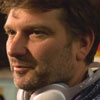
Peter CattaneoPeter Cattaneo|11:58 UK time, Thursday, 17 November 2011

As the director of Rev. it's hugely exciting to see the second series go on air even though I am still very busy finishing the last couple of episodes.

Rev. Adam Smallbone (Tom Hollander) jumps over a pew

Rev. Adam Smallbone (Tom Hollander) jumps over a pew

I watched episode one of series two on two TVs at home to get a sense of how all our painstaking attention to detail sounded and looked on domestic screens.

It seems like a long time ago (over two years actually) since I first read an early draft of the first ever Rev. episode.

I really connected with the script - as a parent with kids at a London Church of England school, I was drawn to the 'on your knees avoid the fees' story alongside a discussion of the miraculous beauty of a snail's shell.

The potential of gritty inner city life slammed up against discussions of faith and spirituality felt like a very potent and contemporary mix to me.

Moving on to series two has been a mix of fun and worry.

Many decisions have already been made on series one - the key locations, core cast and tone of the show has been set.

But there is the 'difficult second album' pressure to live up to the acclaim and awards of series one.

The main challenge in developing the new series was deciding what to change and what not to.

In order to see this content you need to have both Javascript enabled and Flash installed. Visit BBC Webwise for full instructions

Episode two introduces the new curate, Abigail

It's important for the show and the characters to evolve and to offer fresh stories, but not to change the essence of the show created in series one. (See the above clip.)

The atmosphere on set was far more relaxed and fun this time around, with actors really settled into their characters.

In episode two we had the challenge of filming wild animals for the crack squirrel sequence.

Our crew waited for hours during the main shoot in a local park but had no luck. So we managed to stretch our budget and find the money for a dedicated squirrel filming unit to go out a few weeks after the shoot finished.

Our location manager had spotted some good mangy-looking squirrels near one of our locations and we returned stealthily, set up our camera, laid out mixed nuts and waited.

Eventually several squirrels emerged and we got our shot.

Peter Cattaneo is the director of Rev.

Rev. continues on BBC Two on Thursdays at 9pm.

For further programme times, please visit the upcoming episodes page.

Read a Q&A with Olivia Colman, who plays the vicar's wife Alex in the series.

To read a post by Steve Evets, who plays Colin, please see the BBC Comedy Blog .

Comments made by writers on the BBC TV blog are their own opinions and not necessarily those of the BBC.

Double Agent: The Eddie Chapman Story

Blog comments are currently unavailable. Find out more.

Post categories:

Ben MacintyreBen Macintyre|11:24 UK time, Tuesday, 15 November 2011

Eddie Chapman was a crook, a womaniser, an opportunist and a manipulator. But he was also an unlikely sort of World War II hero.

He was motivated by a strange combination of self-interest, hunger for adventure, greed, bravery and patriotism.

He was freed from prison and trained as a spy by the Germans, but he claimed he always intended to swap sides and spy for Britain.

His handlers at MI5 were not so sure. Hence his codename: Agent Zigzag.

Researching the BBC Two documentary Double Agent: The Eddie Chapman Story, I became more fascinated than ever by his extraordinary combination of qualities, both good and bad.

I wrote Agent Zigzag, a book about Chapman, in 2007, but since then a great deal of additional material about his life has emerged: we interviewed the people who knew him, gathered photographs and footage, and consulted the Zigzag files in the National Archives, the huge trove of documents recently declassified by MI5.

But by far the most important contribution to the programme came from Chapman himself.

Chapman died in 1997, but four years earlier he was interviewed by the BBC for a programme entitled The Underworld: Thieves.

Deep in the archives of the BBC we found a box containing more than five hours of videotapes from that interview, in which Chapman discussed not only his criminal past, but every aspect of his wartime career, his womanising, his sabotage, and his life after the war.

The most extraordinary discovery was just how gleefully unrepentant Chapman was about what he happily referred to as his "villainy".

The unused footage even includes a masterclass on how crack a safe.

With remarkable foresight, the makers of the earlier documentary had decided to keep the camera rolling, despite knowing that by discussing his wartime intelligence work, Chapman was violating the Official Secrets Act.

They anticipated, rightly, that the laws might one day be relaxed, allowing the footage to be used.

Chapman had been gagged during his lifetime - when he tried to serialise an account of his spying in a newspaper, a judge ordered the entire print run pulped - and probably assumed that the interview would never be shown.

This may explain why, as you will see in the programme, he is such an uninhibited interviewee, swearing, cracking jokes, and blithely admitting to all sorts of skulduggery.

MI5 started releasing the Zigzag files in 2002, which means that Chapman can tell his story at last, from beyond the grave.

Ben Macintyre in front of an image of Eddie Chapman

Ben Macintyre in front of a photograph of Eddie Chapman

Perhaps the most moving part of Chapman's testimony comes when he describes his love affair with Dagmar Lahlum, a young Norwegian woman he met in occupied Norway - where the Germans sent him on a nine-month holiday as a reward for his successful mission to Britain.

Chapman describes how he encountered Dagmar one evening at the Ritz in Oslo, and how they fell in love.

"We had a great love match and I had the intention of going back and marrying her," Chapman says in the recovered footage. "I'd love to go and see her again."

Chapman was parachuted back into Britain, for a second time, in 1944, with a mission to report back on where Hitler's V1 rockets were landing.

He promised to come back after the war and marry Dagmar.

With his MI5 handlers, Chapman sent misleading reports that caused the Germans to shorten their range, ensuring that many of the rockets landed harmlessly in the fields of Kent.

His mission, as far as the Germans were concerned, was a complete success. The British believed he had helped to save thousands of lives.

But he never went back for Dagmar, who was tried as a Nazi collaborator and sentenced to six months in prison.

In a way, the story of Dagmar perfectly reflects the contradictory character of Britain's most extraordinary double agent: fickle, seductive and staggeringly brave.

Ben Macintyre is the presenter of Double Agent: The Eddie Chapman Story.

Double Agent: The Eddie Chapman Story is on BBC Two on Tuesday, 15 November at 9pm. For further programme times, please visit the upcoming episodes page.

Read a post by Martin Davidson, commissioning editor for BBC History and Business, on all four programmes in the Timewatch series.

Comments made by writers on the BBC TV blog are their own opinions and not necessarily those of the BBC.
Antiques Roadshow: Telling the forgotten stories of war

Blog comments are currently unavailable. Find out more.

Post categories:

Simon ShawSimon Shaw|11:11 UK time, Friday, 11 November 2011

TV producers are often asked "Where do you get the best ideas for programmes?"

I can honestly say that some of the best I have stumbled upon are at a bar whilst enjoying a pint.

In order to see this content you need to have both Javascript enabled and Flash installed. Visit BBC Webwise for full instructions

Antiques Roadshow Remembrance Special trailer

Actually I'm not a big drinker, but being the series editor on Antiques Roadshow inevitably means many nights away from home spent in the company of two dozen of our experts and somehow the bar acts like a magnet for us on evenings before or after a show.

It was in just this situation that Graham Lay, one of our arms and militaria specialists, and I found ourselves chewing over the idea of making a special edition of the programme devoted to wartime stories.

Not the massively recorded turning points of history, rather the equally extraordinary but often untold tales of heroism and dedication when men and women selflessly served their country.

To test the waters we broadcast a 15-second appeal with Fiona Bruce which followed a moving wartime story about a daring fighter pilot which you may remember from one of our shows last year.

His family had come from Australia to make an emotional journey across the UK visiting the bases he had been stationed at.

We were intrigued to see if people were keen to share their family account of conflict, either at home or abroad.

National Memorial Arboretum

The National Memorial Arboretum, where the Remembrance Special was filmed.

As always we required an object to help bring the story alive.

None of us were prepared for the hundreds of emails, followed by equal numbers of letters that arrived from viewers in response.

Nor could we have predicted the remarkable quality of testimony, either from those who had been directly engaged in the action or from family members who have been deeply affected by the actions of their loved ones.

It's not often that a busy production office is reduced to silence but the quiet that followed as we read the stories spoke powerfully about the quality and honesty of the correspondence.

One of the first from the pile I opened found me both humbled and profoundly moved.

Just a few pages written on RAF headed paper from a remote bomber squadron in May 1942 and signed 'Teddy'.

It is an intimate and heartbreaking confession from a husband explaining why he lied and gave up a safe job as ground crew in order to serve his country flying on bombing missions.

You can probably guess the tragic circumstances in which it was delivered to his wife, shortly after the birth of their first child.

I urge you to read the full version on our website, by doing so I think you will understand why this single letter was confirmation of the potential for our programme.

Simon Shaw is the series editor of Antiques Roadshow.

Antiques Roadshow is on BBC One on Sunday, 13 November at 8pm.

For further programme times, please visit the upcoming episodes page.

Press red on Sunday, 13 November between 8.55pm and 4am to watch additional stories filmed at the Remembrance Sunday special.

Comments made by writers on the BBC TV blog are their own opinions and not necessarily those of the BBC.

Life's Too Short: Me, Johnny Depp and Ricky Gervais

Blog comments are currently unavailable. Find out more.

Post categories:

Warwick DavisWarwick Davis|10:10 UK time, Thursday, 10 November 2011

Of all my career achievements, I am most proud of Life's Too Short.

I say this because I have a much closer connection with the series than any project I

have worked on before.

It was an idea that came from a conversation with Ricky Gervais and Stephen Merchant whom I'd first worked with on Extras.

Helena Bonham Carter, Ricky Gervais, Warwick Davis, Stephen Merchant and Johnny Depp

Helena Bonham Carter, Ricky Gervais, Warwick Davis, Stephen Merchant and Johnny Depp

We talked about approaches I was getting from documentary producers wanting to follow me and my family.

This type of thing was not for me, but maybe it would be fun to manipulate my world as an actor and person, presenting a very different version of myself and my life.

And so, Life's Too Short was conceived - a faux documentary following a man obsessed with fame, a man whose career is on the slide, a man whose wife is divorcing him, a man who just happens to be short.

Filming the series was one of the hardest things I've ever done, but it was also the most fun.

For me, it was a chance to pay tribute to my comedy heroes and influences: Laurel and Hardy, Frank Spencer and Captain Mainwaring, who had all been childhood favourites.

Alan Partridge and David Brent set the standard in comedy characters.

Life's Too Short was my opportunity to enter their arena, to see if I had what it takes to stand shoulder to shoulder (in reality, shoulder to knee) with these legends of laughter.

But did I have what it takes? Ricky and Stephen seemed to think so, trusting me

with their seven brilliantly written scripts.

However, I knew that a bad performance could not be disguised by great dialogue or well realised comic situations.

In order to see this content you need to have both Javascript enabled and Flash installed. Visit BBC Webwise for full instructions

The trailer for Life's Too Short

I had to pull this off, there was too much at stake - Ricky and Stephen's reputation, the BBC's money and I knew expectations were very high.

As the start of shooting approached, I buried myself in the scripts. Every waking moment was spent learning.

I downloaded them all so wherever I was, I'd be able to study. In the car (not driving), walking, on the train, on the toilet - I was a man obsessed.

The first day of shooting was amazing. I was starring in my own sitcom for the

BBC, written by, directed by and co-starring Ricky Gervais and Stephen Merchant. Wow! This really is as good as it gets.

To shoot the seven half-hour episodes took eight weeks, and there was not a scene that I didn't appear in.

Each day presented new challenges, wonderful cameos from A-list stars and some lesser known, but equally talented performers. They were all a joy.

Johnny Depp came in on the last day of filming.

There was an air of anticipation before his arrival. Even Ricky and Stephen looked tense and slightly anxious.

I expected a quiet, reserved man who would want to shoot his scenes and leave, but when Johnny arrived it became clear that this wasn't the case.

He was very relaxed and down to earth, making time for photos with the crew and my kids who were there to meet Captain Jack.

Warwick Davis with Johnny Depp

Johnny Depp and Warwick Davis

The last shot of that day involved me sitting 'in' a toilet bowl while Johnny Depp described the scene into a dictaphone as if I was Rumpelstiltskin.

As the crew were setting up, Ricky was helping (actually stuffing) me into the toilet, as Johnny looked on.

It was at this point, I had an out-of-body experience.

In my mind's eye, I looked at the surreal scene - I'm hanging out, literally 'in' a toilet, with Ricky Gervais and Johnny Depp.

I pondered, does this mean my career is going well or not?

Some of most fun I had was doing the physical stuff, the slapstick. This was my nod to those childhood heroes of mine.

Fortunately, as a youngster, I had attended a theatre workshop one summer. I was taught stage fighting and acrobatics.

I knew how to take a hit and fall without getting hurt. I say without getting hurt, which was true at the age of 10, but at 41, falling out of a car or from a bookshelf take after take is not quite so painless.

So here we are, three years since its conception and Life's Too Short is finished.

What would my comedy heroes make of my efforts? Was that fall worthy of Oliver Hardy? Was that look to camera on par with David Brent?

I guess you'll be the judge of that.

Warwick Davis plays the lead role in Life's Too Short.

Life's Too Short starts on BBC Two on Thursday, 10 November at 9.30pm.

For further programme times, please visit the upcoming episodes page.

To read a post by the writer of Life's Too Short, Ricky Gervais, please visit the BBC Comedy Blog.

Comments made by writers on the BBC TV blog are their own opinions and not necessarily those of the BBC.
Britain In A Day: Creating a time capsule for future generations

Blog comments are currently unavailable. Find out more.

Post categories:

Charlotte MooreCharlotte Moore|11:30 UK time, Tuesday, 8 November 2011

Some of you may remember Video Nation in the 1990s - a really ground-breaking project where the BBC trained a group of people to use what were then cutting edge camcorders to record their lives on video for a BBC Two series.

The result was fascinating, intimate and raw, sometimes funny and often surprising but most importantly it gave the public a chance to tell their own stories - and it showed us what life was really like for people from all walks of life living in Britain at that time.

Britain In A Day logo

Flash forward two decades to 2011 and technology has moved on so much that everyday people all over the country are recording snippets of their lives on minicams, mobile phones and digital cameras.

Recording life in Britain has never been easier.

Whether it's personal family moments, footage of the royal wedding celebrations or shocking images of the summer riots, we're fast becoming a nation of amateur filmmakers.

And the great thing is that although the footage might be a bit wobbly and rough round the edges, for the first time ever, home videos are high enough quality for us to broadcast.

So for some time now, I've been trying to work out how to encourage this new found British talent and reinvent Video Nation for the present day to engage with people's hopes, fears and passions in this country on a scale that's never been possible before.

With the Olympics coming to London next year, I think we have the perfect excuse to create a snapshot of Britain and show the world all the variety and intimacy of people's lives here, whether it's a nurse working in A&E in Newcastle, a farmer living in the Welsh valleys or a student studying in Edinburgh.

Earlier this year, I started a conversation about this idea with Oscar winning documentary director Kevin Macdonald, whose feature-length film Life In A Day had just premiered at Sundance.

Life In A Day used footage shot by ordinary people all over the globe to tell a story of one day on earth, to show future generations what it was like to be alive in 2010.

And it got us both thinking about how we could build on the experience and expertise he gained making the film, and make it work for the UK. Soon afterwards Britain In A Day was officially born.

There is no doubt we are living in interesting times in this country.

We're in the midst of the worst economic crisis since the 1930s with the gap between rich and poor ever widening, and we're also about to celebrate the Queen's Diamond Jubilee and play host to the Olympic Games.

So this is your chance to make history, get involved and help us create a definitive self portrait of the UK at an important moment in time.

On 12 November I want you to get out your camera and record something that captures the uniqueness of your life in the UK, whether it's something you're worried about, something that makes you happy, or something you particularly like or dislike about living in Britain.

You then need to upload the footage to the Britain In A Day channel on YouTube, where the director Morgan Matthews and his team will begin watching all the footage and cutting a selection of the clips together to make a feature-length film that will be shown on BBC Two next year ahead of the Olympics.

Britain In A Day is about more than just a film though. All the clips uploaded to YouTube will be kept in a permanent online archive - a sort of time capsule for future generations.

Think how fascinating it would have been if our grandparents and great-grandparents had filmed their day and told us what they thought of Britain, their hopes, their dreams and their fears?

I hope this is what the Britain In A Day archive will give to our grandchildren and great-grandchildren.

The success of this project relies on you, so I hope you will take this opportunity to show the world - and future generations - what life here is really like.

Morgan Matthews will be back here before the film is broadcast to let you know how we get on...

Charlotte Moore is the Commissioning Editor of Britain In A Day.

For more information and guides on how to take part, please see the Britain In A Day page.

Comments made by writers on the BBC TV blog are their own opinions and not necessarily those of the BBC.

Symphony: The fireworks of Johann Stamitz

Blog comments are currently unavailable. Find out more.

Post categories:

Andy King-DabbsAndy King-Dabbs|12:22 UK time, Wednesday, 2 November 2011

Directing the first two episodes of the new Symphony series for BBC Four was a real voyage of discovery for me.

Although I've been making classical music documentaries for about 15 years now, I always find new music and new stories that I've not encountered before.

The big revelation of the series was our earliest composer - Johann Stamitz.

The first time I listened to one of his early 18th Century symphonies I was knocked out by its energy and its brio, the sheer fireworks of the thing. I found myself wondering if I hadn't somehow stumbled onto some sort of neglected genius.

Then the more I listened the more I came to realise that this ability to make your jaw drop on first listening was Stamitz's gift.

Simon Russell Beale

Presenter Simon Russell Beale in front of the Esterháza

OK, there wasn't really anything much else going on there behind the pyrotechnics - but here was somebody who sure knew how to impress a listener.

Once we started filming the music excerpts with Sir Mark Elder and the Orchestra of the Age of Enlightenment I had the privilege of hearing his work again as if for the first time.

Thanks to their beautiful, precision performance I was again totally bowled over.

Some weeks later, when we were filming the documentary stories withSimon Russell Beale, we visited the Mannheimer Schloss in south-west Germany.

This magnificent palace was where Johann Stamitz and his orchestra had performed more than two and a half centuries ago.

Sir Mark Elder and Simon Russell Beale with the Orchestra of the Age of Enlightenment

Sir Mark Elder and Simon Russell Beale with the Orchestra of the Age of Enlightenment.

I clearly remember walking into the main salon for the first time looking for camera positions.

Like Stamitz's music, the space immediately grabbed you by the scruff of the neck and forced you to be stunned by its decorative bravado - the glowing marble walls, the lavish ceiling paintings and scintillating, cascading chandeliers.

Later the curator told us that the original Mannheimer Schloss had been flattened during World War II and that the entire building had been carefully reconstructed from photographs in the 1960s.

Sure enough as we explored further we discovered that this salon, and the magnificent staircase that led to it, was simply all there was - the rest of the massive building being strictly functional corridors and utilitarian meeting rooms.

And if you start to look really closely, those wonderful ceiling paintings start to look a tiny bit sketchy and the finish on the plasterwork reveals itself as just a little too perfunctory and machine finished for baroque craftsmanship.

Funnily enough none of this diminished the experience for me at all - it just seemed so in-sync with Johann Stamitz's music.

As a TV director you soon learn how important first impressions are - most people are only going to experience your work the once.

So, like Stamitz and the rebuilders of Mannheim, I find myself hoping that you'll simply watch in the moment, and enjoy the wonderful music and fascinating stories.

Andy King-Dabbs is the director and producer of episodes one and two of the series Symphony.

Symphony starts with Genesis And Genius on BBC Four on Thursday, 3 November at 9pm.

For further programme times, please visit the upcoming episodes page.

This series is part of the Symphony season on BBC Radio 3 and BBC Four.

Comments made by writers on the BBC TV blog are their own opinions and not necessarily those of the BBC.
Death In Paradise: Playing a detective in the Caribbean

Blog comments are currently unavailable. Find out more.

Post categories:

Gary CarrGary Carr|12:41 UK time, Tuesday, 1 November 2011

I'd say that Death In Paradise is a detective series in a familiar style with a contemporary twist provided by its exotic location.

The show is set in the Caribbean on the fictitious island, Saint-Marie (actually Guadeloupe).

There are surprises and mysteries in the storylines, but also clashes of culture and much to discover about Saint-Marie and its people.

The familiar element is the structure of the series: The event, the investigation and then finally the dénouement where the murderer is revealed.

I play the young detective, Fidel Best.

Gary Carr (Fidel Best) in Death In Paradise

Gary Carr as Detective Fidel Best in Death In Paradise.

When I read the script I felt connected to Fidel, for the main reason that he spends a lot of time trying to be the best without realising his own potential.

With his youth Fidel brings naivety and innocence, yet he is very driven. He is loyal and humble, in contrast to his partner in crime, police officer Dwayne Myers.

The brilliant dynamic between these two was clear even on paper.

The director was keen to add 'quirk' to the role, which was brilliant because it brings out all those things about Fidel that make him awkward.

A month after I was offered the part I found myself on a beautiful Caribbean island, with a team of people I didn't know, making my first ever series.

It was a big deal for me.

One thing I pray for with any job is that I leave it having learned a few things.

With Death In Paradise, I learned about the technical side of filming, the importance of preparation and how to deal with things that aren't so great.

You really do come out feeling more mature than when you went in.

To prepare for the role, I grilled my uncle who's been a policeman for over 20 years in Trinidad and Tobago.

Some of the investigations you see in the show are very similar to the dangerous stories he told me.

In order to see this content you need to have both Javascript enabled and Flash installed. Visit BBC Webwise for full instructions

Detective Inspector Richard Poole (Ben Miller) and his team investigate the death of a bride.

My dad's also from Trinidad. The month before I flew out, I listened to my dad carefully, for once, and tried to tap into the sounds and rhythms in his speech so I could get the accent.

Five months on a tropical island sounds like the dream and it is, but it isn't paradise everyday.

We experienced serious rain, thunderstorms and a few hurricane alerts where roads were closed and bridges collapsed.

And then I LOVE the heat, but when you're filming 12 hours a day, sometimes in interior locations, in a uniform, it can get tough - but in a strange way I enjoyed those bits.

Having said that, I did get to experience the paradise side.

My co-stars and I made it a tradition to swim in the sea at the end of every day so we could see the sunsets and some of them were bloody impressive.

Left to right: DI Richard Poole (Ben Miller), Lily Thomson (Leonora Crichlow), Dwayne Myers (Danny John-Jules) and Fidel Best (Gary Carr)

I did have a few Detective Inspector Richard Poole moments though.

I love animals but I detest moths! And in Guadeloupe, they are everywhere and really no different to bats, I swear, in size and look.

Any time there was one near me, I would end up embarrassing myself.

I am a big fan of some of the darker detective series, like The Wire and Prime Suspect.

Death In Paradise is a lot lighter with its humour and the fun dynamic. But the detective work and realisations are still gripping and bring you in.

There's quite a bit of action in Death In Paradise. Definitely my most thrilling day was when we did a stunt which involved me running off a pier and jumping onto a moving speedboat!

The contrast was when I had to chase a beggar through the market.

I don't have a problem running, but I didn't warm up properly, tut tut.

You tend to spend a while on the same piece of action, so I was running for hours and my legs felt the strain.

I think after watching Death In Paradise, you might have a thirst for some island life, a bit of a getaway.

I see certain scenes and have this feeling of hope that I'll go back there again.

Gary Carr plays Det. Fidel Best in Death In Paradise.

Death In Paradise continues on BBC One on Tuesday, 1 November at 9pm.

For further programme times, please visit the upcoming episodes page.

To read a post by the writer of Death In Paradise, Robert Thorogood, please visit the BBC Writersroom blog.

Comments made by writers on the BBC TV blog are their own opinions and not necessarily those of the BBC.

More from this blog...