BBC TV blog - BBC TV blog

Archives for June 2011

Mock The Week: Coping with nerves and embarrassing moments

Blog comments are currently unavailable. Find out more.

Post categories:

Zoe LyonsZoe Lyons|14:10 UK time, Thursday, 30 June 2011

I think it's fair to say that the first time I appeared on Mock The Week, I really did get the classic pre-show nerves.

It's a different sort of anxiety to that you get when performing live stand-up. There is obviously a feeling of more pressure. This will be my fourth time on the show and I get a bit more relaxed each time I do it.

In order to see this content you need to have both Javascript enabled and Flash installed. Visit BBC Webwise for full instructions

Zoe Lyons in Mock The Week

For a couple of days before the show is recorded I really do swot over the newspapers, but I am by no means someone who could be called a political whizz kid.

I know enough about world affairs to make an idiot of myself in most adult conversation, but actually that doesn't matter. When writing jokes for the show it's about finding your own take on the topics.

I love working with Milton Jones and Stewart Francis. Their off-the-wall, sometimes surreal one-liners bring a beautiful silliness to the proceedings.


Preparation is very important with a show like Mock The Week, so I have a pasta dinner to make sure I have enough carbohydrates to keep me going through the more strenuous rounds.


Backstage, before the show starts recording, I can be found doing a lot of pacing about with bits of paper clasped in my fist with jokes I hope I will get in at some point.

I have yet to be on the show with another lady. That's not unusual in the world of comedy and it has never bothered me working in predominately male environments.

I am not naturally a competitive person, so I have to prime myself for some of the rounds on the show that require a bit of cut-throat action.

I have a love-hate relationship with the Things You Wouldn't Want To Hear round.

I love it because some of the lines that come out genuinely make me howl with laughter, but you've got to be quick off the mark to get to that mic.

Hugh Dennis, Mock The Week host Dara O'Briain, and Andy Parsons

Hugh Dennis, Mock The Week host Dara O'Briain, and Andy Parsons

I favour wearing a flatter shoe when doing the show just so I can try to sprint off the block and get my lines out.

Russell Howard is like Usain Bolt when it comes to getting to the mic - that boy is quick, I tell you.

My only rather embarrassing moment on the show happened the last time I was on.

We had a loo break and the ladies were miles away from the studio. I got a bit lost, which is easy done in BBC Television Centre.

They have colour coded stripes on the floor to help you find your way, but I still managed to wander off in the wrong direction. It meant that my little trip to the powder room took considerably longer than the boys.

When I eventually made it back to the studio I felt I owed the waiting audience an explanation.

I rather foolishly started to explain that I was a long time for no other reason than I had got lost... it wasn't that I had had a... well, you know... it was just a... honestly!

Four hundred audience members blinked back at me as I tied myself up in awkward knots. I thought, "Ronan Keating was right, Zoe. You say it best when you say nothing at all."

Zoe Lyons is a participant in episode four of Mock The Week.

Mock The Week continues on Thursdays at 10pm on BBC Two. For further programme times, please visit the upcoming episodes page.

Comments made by writers on the BBC TV blog are their own opinions and not necessarily those of the BBC.

Touring the country with Crimewatch Roadshow

Blog comments are currently unavailable. Find out more.

Post categories:

Miriam O'ReillyMiriam O'Reilly|10:40 UK time, Monday, 27 June 2011

When I was offered a presenter's role on Crimewatch Roadshow I jumped at the chance because I believe it's public service broadcasting at its best.

Without the support our viewers give to our appeals for information in solving crimes, the programme just wouldn't work.

With Crimewatch Roadshow I'm touring the country, reporting from a different area every week for a month. We began with north west England and end in Gloucestershire and South Wales.

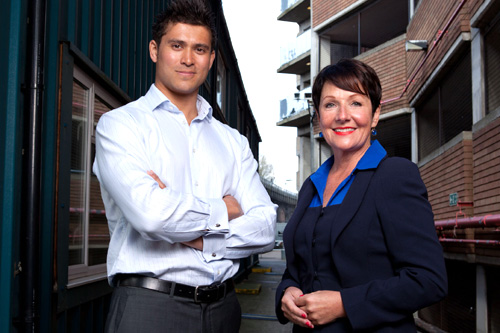
Rav Wilding and Miriam O'Reilly

As it is, Crimewatch Roadshow has been regularly getting audiences of 1.4 million per episode during this run - which is an astonishing number of people watching for 9.15 in the morning.

We constantly appeal for viewers to come forward with information and jog their memories with some very convincing and well-produced reconstructions.

We also feature CCTV of some pretty brazen thieves and, of course, the straightforward rogues gallery of wanted faces still gets great results.

In our first week on air we featured a report on a convicted rapist, Tolgay Istek, who was sentenced in his absence to eight years in jail at Liverpool Crown Court in 2007.

Not long after we showed Istek's photograph the police received a call from someone who went into a London cafe and spotted him.

The police were there in minutes and after four years on the run Tolgay Istek is now back behind bars.

Within four hours of our appeal in the show, he was being held in custody.

His victim agreed to be interviewed by me and it was a very moving experience. She had been petrified while he was still at large and his recapture came as an enormous relief to her.

She was even able to laugh during the interview and talk positively about her future.

Interviews like that have to be handled very carefully. I've had a lot of experience talking to people in distress, but I've been fortunate that people seem to trust me and open up without getting too upset.


Sadly, the common denominator for the people I meet is that they've been the victim of crime.

It might not be the headline-grabbing crime featured on the evening show, Crimewatch, but it is far more common and affects many more people, often with a devastating impact on their lives.

House burglaries, where maybe only a few pounds or a small amount of jewellery has been stolen, leave people feeling violated and vulnerable.

Some of the incidents are disturbing and serious; assaults that have left the victims too scared to leave the house; the apparently motiveless and repeated arson attacks that forced an elderly couple from their home and into hiding.

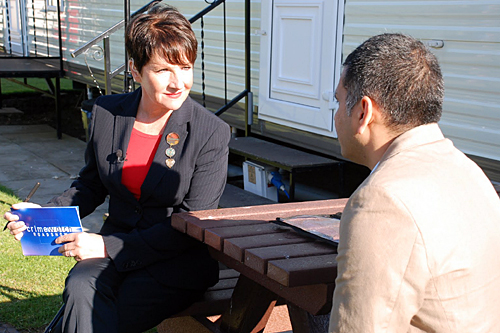
Miriam O'Reilly on Crimewatch Roadshow

Miriam O'Reilly on Crimewatch Roadshow

We obviously work very closely with police forces up and down the country.

The crimes are cases which haven't had an arrest or conviction, so the police are really keen to get onto the show in the hope that our reconstructions throw up new leads for them to follow.

Truth be told, for many it's a highlight in their career. One officer told me you've never really made it in the police until you appear on Crimewatch.


I also think I've got the plum job on the show. Although Rav can keep warm and dry in the studio, nothing beats touring the country, going out into communities and meeting the people we hope to help.

I've been lucky enough to have a great crew to work with whose care and professionalism make the live outside broadcasts run smoothly, masking the hectic behind the scenes manoeuvring as we dash between locations.

I can honestly say it's been my most enjoyable experience working for the BBC - even with the 4.30 morning starts.

I'm regularly asked how I keep upbeat about human nature when I so often see real suffering as a result of crime.

But I honestly get inspiration from the people we feature.

Although many of them have been through a terrible time, the majority say they are not going to let the criminals win, they won't allow them to have a lasting impact on their lives.

Miriam O'Reilly is a presenter on Crimewatch Roadshow.

Crimewatch Roadshow is on at 9.15 on BBC One each weekday until Friday, 1 July.

If you have information about any of the appeals featured on the show, you can call 08000 468 999, email [email protected] or text CW [space] 63399. See the Crimewatch Roadshow contact us page for further details.

You can also make an anonymous call to Crimestoppers, the independent charity on 0800 555 111.

Comments made by writers on the BBC TV blog are their own opinions and not necessarily those of the BBC.
Glastonbury: I film behind the scenes

Blog comments are currently unavailable. Find out more.

Post categories:

Andy DunnAndy Dunn|14:42 UK time, Thursday, 23 June 2011

For the past eight years I've had the pleasure and, sometimes daunting task of working in the old-school titled BBC 'Film Unit' at the Glastonbury Festival.

Our job is to venture outside the protective confines of the BBC's compound to film short items documenting the plethora of weird and wonderful non-musical happenings around the site.

Plus I film and direct some behind-the-scenes pieces with the musicians and performers at the festival. This year, the main draw of course is the chance to see acts like U2, Coldplay and Beyonce to name but a few.

But we hope that in between the world-class acts, you'll also catch our little films and get to experience some of the other unique attractions that make Glastonbury the greatest festival in the world.

DJ Tim Westwood and Andy Dunn at Glastonbury

DJ Tim Westwood and Andy Dunn at Glastonbury

Over the years this has included us working with children, animals, plenty of hippies and the odd rock legend.

Like everything in TV production, much has changed over time in how we work to achieve this. But what hasn't changed is this great festival's ability to surprise us.

My very first assignment in 2003 was to greet glam rockers, The Darkness to film their ostentatious arrival by helicopter for their opening slot on the Pyramid stage. It had been a late night of meticulous logistical planning and an early start to make sure we were in position at the helipad in good time.

The first thing you learn about filming at Glastonbury is that travelling between locations can take a very long time.

All was well, and a ripple of excitement passed through the crew as we caught sight of the helicopter approaching.

The camera rolled and I braced myself for the rush of rotor blades... only to watch the chopper pass over our heads and disappear over a tree line, finally landing three fields away on Glastonbury's OTHER helipad - how many dairy farms have TWO helipads?

Needless to say, a chase ensued and with a minor revision of the shooting plan, the feature survived and the whole episode seemed to fit the Spinal Tap-esque order of the day.

Dusk at Glastonbury

Each year we like to show the nocturnal activity at Glastonbury which often exhibits a more alternative, anti-establishment vibe than in daylight hours. (For anti-establishment read 'It's fun to throw clods of mud at the BBC people!')

Imagine an enormous nightclub in the edgy part of a big city - New York, say, with its own culture of debauched excess and inhabited by hedonists and miscreants of every order.

Well that's exactly what people are in the market for after dark at Glastonbury.

This aspect is an important part of why people love the festival and we do our best to reflect it. I have had my eyes opened and my mind broadened in these areas over the years... all in the course of duty.

My personal highlights range from the sublime; spending time with the Worthy Farm staff while reporting on the wildlife and daily milking which continues throughout the festival, to the ridiculous; directing an episode of Pimp My Tractor with hip hop DJ Tim 'Big Dawg' Westwood.

There is always good television where two worlds collide.

Andy Dunn is a producer/director for BBC TV Music Entertainment.

For all the BBC's Glastonbury coverage on TV and radio, please see the upcoming episodes page.

On the BBC Music blog, Mark Cooper, BBC creative head of music entertainment, has written about the logistics of covering all of Glastonbury.

Andy Parfitt, controller of Radio 1, 1Xtra, Popular Music and Asian Network, has written about staffing numbers at Glastonbury on the About The BBC blog.

You can watch a different artist from Glastonbury every day via the Red Button until Friday, 1 July.

Comments made by writers on the BBC TV blog are their own opinions and not necessarily those of the BBC.
Blue Peter: Overcoming my phobia for a record-breaking swim

Blog comments are currently unavailable. Find out more.

Post categories:

Andy AkinwolereAndy Akinwolere|09:43 UK time, Monday, 20 June 2011

In the five years I've been a Blue Peterpresenter this is one of the hardest things I've done, but also one of my proudest moments.

I wanted to do one final challenge on the show that would push me both physically and mentally, and hopefully inspire people young and old to take up something they're not necessarily comfortable with.

As part of the BBC's Big Splash, which aims to get more people swimming, the Blue Peter team came up with a huge challenge for me - to set two world records by swimming across the Palau trench in the Pacific Ocean, roughly 550 miles east of the Philippines.

At 8,000 metres deep, it's one of the deepest points of the world's seas.

There was just one problem. I could barely swim a length of a swimming pool.

In order to see this content you need to have both Javascript enabled and Flash installed. Visit BBC Webwise for full instructions

I've always been really scared of water - especially deep water. I arrived in Birmingham from Nigeria when I was eight, and by that point most people in my year group were in their pyjamas grabbing weights from the bottom of the pool.

I was the kid with the fluorescent armbands on both my arms AND legs.

The thought of putting my face in the water completely petrified me. It just seemed so unnatural and, for some reason, I felt every time I was in water I would drown.

I have noticed that the black community in general tend to have very few role models for swimming. The one I can remember was Eric the Eel's valiant efforts at the 2000 Olympics.

I've heard many stories as to why 'we' as a community don't swim - heavy bones, not wanting to get our hair wet, the list goes on.


The training sessions of just over 10 weeks were immense and I am so surprised at the amount of progress I made.

I was hypnotised as part of the process to help make me comfortable in the water.

I've learnt to believe that what the mind believes the body achieves, and that the negative thoughts in my head were simply untrue.

With all this in mind and a mile-long swim behind me (at the Big Splash launch in Salford Quays) it was time to set out on the biggest challenge of my life.

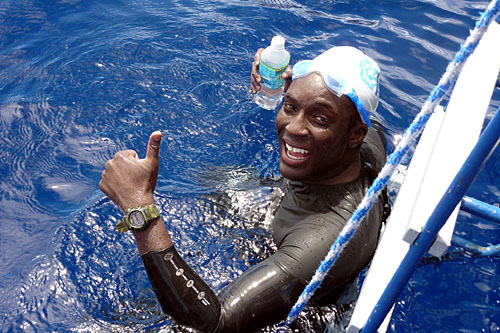
Andy Akinwolere in the water

Andy Akinwolere after his record-breaking swim

It took two days to get out to Palau. From the moment we arrived I just wanted to get the swim over and done with.

Chatting to the locals only heightened my anxieties, with tales of squid, sharks and choppy weather conditions.

At that point I was close to turning my back on this challenge, but it was impossible. We had flown half way across the world to do this and there was a possibility I could be the first person on this earth to swim in the location.

I was told that the five-mile swim would be harder than a marathon. That thought kept playing in my mind.

My fears moved away from the depth I was about to face, and more on whether I had enough in me to cover the distance.

I woke up in the morning to a world covered in water. The reality of my challenge had truly set in.

As the cameras were getting into position I took a quiet moment to myself and chanted "You are going to do this" several times.

I looked out into the ocean, jumped in and never looked back.

The big swim itself was daunting. If I had thought of the depth, the potential of coming across creatures in the sea or even the distance there is no way I could have done it.

I was doing this for people who could not swim - they were my constant motivation to keep going.

In order to see this content you need to have both Javascript enabled and Flash installed. Visit BBC Webwise for full instructions

The swim was made harder by the fact that I was not allowed to touch the boat. I had to feed whilst treading water.

Three hours 30 minutes later, and with an aching leg and a mouth full of saltwater, I heard the air horn to signify the end of my swim.

It was gruelling and more painful than I could have imagined, but I am so glad I did it.

I'm now the world record holder for the deepest recorded location in an open water swim and for being the first person to swim across the deepest part of the Palau trench.

I really hope people can look at what I did and give swimming a go too.


Andy Akinwolere is a Blue Peter presenter.

Andy's Big Splash: Blue Peter Special is on Monday, 20 June on BBC Two at 4.30pm.

Find out more on The Big Splash website.

Comments made by writers on the BBC TV blog are their own opinions and not necessarily those of the BBC.

Terry Pratchett: Choosing To Die

Blog comments are currently unavailable. Find out more.

Post categories:

Charlie RussellCharlie Russell|09:56 UK time, Tuesday, 14 June 2011

Two years ago I directed Terry Pratchett: Living with Alzheimer's for BBC Two, following the author on and off for a year to document his early days with Alzheimer's.

By the end of it Terry and I knew each other well and I had won his trust.

We seem to know instinctively what the other is thinking at any one time. He needs the minimum of guidance, so my role in filming Choosing To Die was often just to capture what he was experiencing.

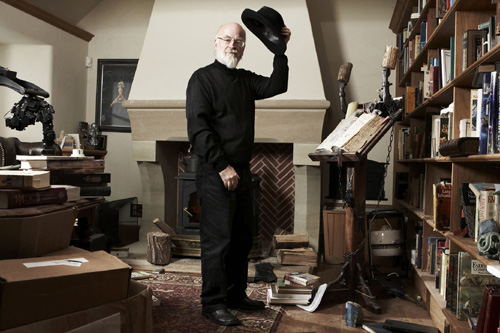
Terry Pratchett

Terry Pratchett

He is brilliant at wrestling with the moral conundrums that the subject throws up - not least because he is genuinely considering some form of assisted death for himself.

But I was still surprised at how emotional he found the experience of making this film.

I had never seen him cry until we went to Switzerland.

We knew that if we wanted this film to be entirely honest about assisted dying then it was important to show the whole process, including the death itself.

When Peter, the man who dies on-camera in the film, agreed to let us record his end, the challenge was to film it respectfully, sensitively, but most of all truthfully.

We don't romanticise it - there could be no fade to black before he drank the poison.

It is up to you to decide whether his last moments are deeply moving, distressing, or rather ordinary.

I suspect it is a little bit of each of these and, depending on your own family's experiences, so much more.

Helping someone have an assisted death is still technically illegal, so we were very careful to make sure that we were there purely as impartial observers.

We didn't break the law, though it was impossible not to feel a deep connection with Peter and his wife - and for Andrew and his mother, who also journeyed to Dignitas.

Everyone involved in the production, no matter what their views on legalising assisted dying, has been profoundly affected by the experience.

I hope that you are too.

Charlie Russell is the director and producer of Terry Pratchett: Choosing To Die.

Terry Pratchett: Choosing To Die is available in iPlayer until Monday, 20 June.

Choosing To Die: A Newsnight debate with Terry Pratchett and Jeremy Paxman is also available in iPlayer until Monday, 20 June.

Comments made by writers on the BBC TV blog are their own opinions and not necessarily those of the BBC.

Case Histories: Bringing Jackson Brodie to the screen

Blog comments are currently unavailable. Find out more.

Post categories:

Ashley PharoahAshley Pharoah|10:03 UK time, Friday, 10 June 2011

I had just finished filming Ashes To Ashes when Ruby Films sent me the novel Case Histories by Kate Atkinson, with a view to adapting it as the first two-parter in a new series for BBC One.

To be honest, I was so knackered I didn't really feel like throwing myself into creating another series.

But it's such a brilliant novel and Jackson Brodie, the central protagonist, is such a wonderful, complex, beguiling character that I couldn't say no.

For those of you who haven't read the Jackson Brodie novels (what sort of people are you?), they are unconventional thrillers, existing in an exhilarating hinterland between genre and art. And they are unputdownable.

As a screenwriter you're always looking for challenges, something to pull you out of your comfort zone, and it quickly became clear that I'd taken on a massive job.

In order to see this content you need to have both Javascript enabled and Flash installed. Visit BBC Webwise for full instructions

Every other person I mentioned the book to adored it, especially women, and had very strong feelings about who should play Jackson Brodie and what the series should look like.

No pressure, then.

But first I had to meet Kate Atkinson.

I've adapted Tom Brown's Schooldays and Under The Greenwood Tree in the past, but those novelists were safely dead and not waiting for me in their house in Edinburgh.

Nobody was as crass to mention it, of course, but this was sort of an audition for me.

As I knocked on Kate's front door and marshalled my thoughts I realised this is how actors must feel a lot of the time.

Note to self - be nicer to actors.

So Kate and I strolled around Edinburgh in the rain, talking about her characters, where they might live and eat and drink.

Case Histories is actually set in Cambridge but, as we were adapting three of the books and they're each set in a different place, it was clearly going to be necessary for us to decide on one city and try to make it a character in its own right.

I plumped for Edinburgh, not because Kate lived there, but because it has such a wonderful Gothic presence that I felt would fit perfectly with Kate's form of skewed realism.

I loved writing the scripts. The heavy-lifting had already been done by Kate - the characters, the story, the tone - so my job was to smash up the novel and re-imagine it as a screenplay. A fresh mosaic.

I decided to curve one story over two episodes, to give each two-parter a strong structure, and then largely play out separate self-contained stories in each episode.

It meant that the films wouldn't have the relentless, restless narrative that you often get on TV in this genre, but could meander through murder to domesticity, from comedy to tragedy.

Jason Issacs as Jackson Brodie and Marion Bailey as Gloria Hatter in episode four of case histories.

Jason Isaacs as Jackson Brodie and Marion Bailey as Gloria Hatter

The books always struck me for their very grown-up sense of sexuality and disappointed hope.

The structure gave us the chance to do justice to that - to sometimes sit back off the main thrust of the story and explore Jackson's life and past a bit.

It's always a privilege to spend time with other writers' characters and works, living or dead. It's not for the faint-hearted.

I know there are armies of Atkinson fans out there who have their own utterly perfect version of Jackson Brodie in their heads, and who will curse me for fiddling with perfection.

But what joy, to take tea with one of our finest living novelists in a damp cafe in Edinburgh and talk about writing. What could be better? A beer with Thomas Hardy?

Ashley Pharoah is the scriptwriter of episodes one and two of Case Histories.

Case Histories continues on Sunday, 12 June at 9pm on BBC One and BBC One HD and at 11.15pm on BBC HD.

For further programme times, please visit the upcoming episodes page.


Comments made by writers on the BBC TV blog are their own opinions and not necessarily those of the BBC.

Poor Kids: A child's view of growing up in poverty

Blog comments are currently unavailable. Find out more.

Post categories:

Jezza NeumannJezza Neumann|10:20 UK time, Tuesday, 7 June 2011

When I was asked to shoot and direct a film about poverty, I knew the team and I would be taking on a massive challenge.

As a society, we have stigmatised poverty to a point where nobody likes to admit they're poor.

By making Poor Kids through the eyes of the children, we could uncover a tough subject through a section of society who rarely gets their say.

But this brings its own issues and complexities as a duty of care towards the children is paramount.

In order to see this content you need to have both Javascript enabled and Flash installed. Visit BBC Webwise for full instructions

Before we even set about finding children, we drew up an extensive protocol on how we would operate with the children's best interests in mind.

I guess the true test of how well we succeeded was when the children watched the film and whether they saw it as an accurate representation of their lives, and they seemed to.

All too often in life children aren't given a voice or the chance to be heard. And all too often adults listen, but they don't really. I'm a dad, so I know, as I'm just as guilty.

Once we'd settled on which children to follow, it was a fascinating journey.

The most important part of the filming process was to gain a bond with the children. After a while children often open up to us because we are a grown-up figure who listens but never judges.

On some days we'd turn up and they didn't feel like filming - they just wanted to go to the park, so to the park we went.

Patience is a virtue, as I keep telling my kids, even if you have driven all the way from London on a tight schedule to move the film forward and you are desperate to turn the camera on.

This patience, though, can pay back in dividends.

One of my favourite scenes in the film is Courtney and Holly chatting on the bed - a scene I could only capture because they were so used to me being around that I was able to blend into the purple wallpaper. I am short though, so that probably helped.

There are times when you do question what you see.

Why doesn't Kayleigh, for example, get a part-time job after college?

Firstly, as Sam clearly tells us in the film, jobs are scarce. Secondly, if her dad is off job hunting in the afternoon, who's looking after Sam and Kaleb when they get home from school?

Sam and Kayleigh from the documentary Poor Kids

Sam and Kayleigh

The answer, of course, is Kayleigh.

Why, for example, does Fran have a dog when she struggles to feed the kids?

"For my family's security," she said. "Do you know what it's like living on an estate alongside drug addicts?"

No, I don't, thank God.

The kids used to have bikes but they were taken from the garden. She also recounts a story about strangers breaking into the house.

That's why, as a single mum with three vulnerable young girls, she has a dog. I was then embarrassed I'd asked the question.


I believe so many of the children we met while making the film could go on to great things in life, if given the right chances.

The trouble is we are not only a product of our family but also society as a whole. So, in areas of the country where services are straining and infrastructure crumbling, these chances are forever decreasing.

It's really difficult for children to have a realistic expectation that they will amount to something when they are surrounded by headlines of job cuts and an estate full of the unemployed.

Kids aren't stupid remember - they get it.

At the end of the film, just like Peter Pan, Courtney says, "I don't want to grow up."

Sadly for her it's due to the fear of what's to come, not so she can stay forever young in a magical Neverland.

UPDATE: Thank you for the overwhelming response. Thanks for your comments, thoughts and generosity. The number of your comments has set a record on the TV blog. If you want to help, our advice would be to get in touch with any of the charities expert in dealing with the issues highlighted in the film, as listed on our programme page - Sam Anthony, executive of Poor Kids for the BBC.

UPDATE 2: There's further information for anyone wanting to donate on True Vision's website (the makers of Poor Kids).

Jezza Neumann is the director of Poor Kids.

Poor Kids is being repeated on Wednesday, 27 July at 9pm on BBC Three.

It was first shown on BBC One and BBC One HD at 10.35pm on Tuesday, 7 June.

Comments made by writers on the BBC TV blog are their own opinions and not necessarily those of the BBC.
Our War: Dealing with death on the frontline in Afghanistan

Blog comments are currently unavailable. Find out more.

Post categories:

Bjorn RoseBjorn Rose|09:31 UK time, Monday, 6 June 2011

In April 2007 I was the officer commanding 3 (Corunna) Platoon in Helmand, Afghanistan.

Due to the events surrounding the death of one of my men, Private Chris Gray, on Friday, 13 April, I was approached by BBC Three to contribute to the programme, Our War.


My platoon sergeant Si Panter had already recorded all the frontline footage used in Our War on his helmet camera.

As a keen mountain biker he had always liked recording his outings on camera and transferred this passion to our six month tour of Afghan, as we called it for short.

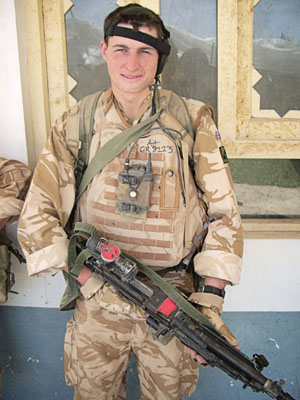
Bjorn Rose in Afghanistan

To the observer it would appear that there were a lot of inexperienced soldiers in my platoon that day.

This is true, but even for some of the seasoned soldiers like Billy Moore, who was shot in the arm in the 'contact' (engagement with the enemy) featured in the programme, this action was like nothing they had experienced before.

Up to 60 per cent of the men in a platoon will have changed by the next operational tour so there is always likely to be a high proportion of inexperienced soldiers in the platoon.

I know the Gray family have seen the programme and are proud of the portrayal of their son. He was a great soldier - something which is often said about the dead, but he truly was.

He showed such potential at an early stage in his career that I was keen for him to go on a promotion course on getting back from Afghan.

In the film, Private Tony Cowley mentions that there were nine empty seats on the flight home. This was true as we had lost nine men from the battalion (which contains nine infantry platoons) during our tour.

Some would say we were fortunate in my platoon to only have one killed and one wounded.

After the action in the programme, we went without a further casualty for the whole remaining six months in Helmand. Other platoons weren't so lucky.

In order to see this content you need to have both Javascript enabled and Flash installed. Visit BBC Webwise for full instructions

After Chris was killed, while still on tour, I decided to write to Chris' mum, Helen. While my training had not covered the writing of 'death letters', I felt it my duty to do so.

The letter I wrote to her was an outpouring of every factual detail I could lay my hands on.

I wanted Chris' family to know everything as I thought it highly likely I was going to 'get it' myself in the next contact.

In hindsight, and as you'll see Helen say in the programme, the detail in the letter was too much for her.

Although my company commander checked the letter and approved it to be sent, it conflicted with the version of events given to Helen on first learning of Chris' death by those in England.

Although an innocent mistake, this had long-reaching and devastating results, which I felt responsible for.

In the programme, I struggled to read the end of the letter to camera because I hadn't read it since the day four years ago I put it in the mailbag to go on the helicopter.

Reading it unlocked a lot of emotions I thought I had got over.

The phrase "a lot of young boys turned to men" was the one that really got me. It was the thought of the lost innocence, I think.

I have had the pleasure of meeting Chris' family on a couple of occasions. I was concerned about how I would be received by Helen after the rejection of my letter.

When I met her for the first time, she simply walked straight up to me and gave me a hug.

That said more than any words ever could. In that moment a lot of wounds were healed for me.

The late Private Chris Gray in Afghanistan

I can remember discussing with one of my fellow officers whether Chris' death was 'worth it'. The gains made on that operation appeared slight to us for the loss of his life.

The truth is I can't go there emotionally - it's too painful to think that it wasn't worth it.

After all, at the time I did genuinely feel the gains we made whilst in Helmand were worth our sacrifices. I think you have to in order to cope.

The Army is a lifestyle choice. If you are not prepared to submit to the demands of that lifestyle then you should leave.

After serving my minimum four-year commission I elected not to extend and left to take up a new career in teaching.

I was content that I had gained some invaluable experience leading men on operations and now have some interesting memories to bore my pupils with.

People ask me if I miss the Army. The simple answer is yes, particularly when I meet up with guys from the battalion who are still serving. I try to stay in touch with them as much as possible.

But I am also grateful for the control I now have over my life by not being in the Army.

I often find myself looking back on the action in Afghan with rose-tinted spectacles, forgetting the uncertainty and confusion, just remembering the action and adrenalin rushes. I suppose that is just human nature.

If I were able to say something to Chris now it would probably be, "Watch out, your mate and fellow soldier Matt Duffy is after your sister!"

Editor's note: Chris Gray's good friend Matt Duffy, who appears in Our War, is now engaged to Chris' sister Katie.

Bjorn Rose was an officer in the British Army during the making of Our War. He is now a history teacher.

Our War starts on BBC Three at 9pm on Tuesday, 7 June. For further programme times, please see the upcoming episodes page.

You can watch exclusive short films from those affected by the war in Afghanistan on the Our War programme page.

Comments made by writers on the BBC TV blog are their own opinions and not necessarily those of the BBC.

More from this blog...