

The plight of the bumblebee
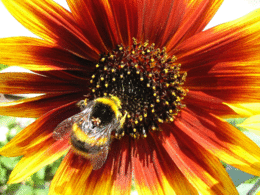 Pollinating insects - like honeybees, bumblebees, hoverflies and moths - are the unsung heroes of global agriculture.
Their busy comings and goings help to fertilise a third of all the crops grown around the world, and provide an economic service to UK farmers (pollinating commercial crops like oil seed rape and soft fruits like raspberries and tomatoes) worth £440 million a year.
Without them we will be hard pushed to feed a global population set to reach nine billion by 2050.
And that's a problem, because pollinating insects are in steep decline.
Of the 25 species of bumblebee native to the British Isles three have recently gone extinct and others are increasingly rare. Honeybee populations have crashed (mostly as a result of disease), and there has been a 75% decline in butterfly species since the 1970's.
Speaking on the programme this morning Professor Andrew Watkinson described the decline in insect pollinators as "catastrophic", but said there was no obvious single cause, or cure.
"There are a range of potential issues here. We know that wild flower populations have declined significantly since the 1930's, and that agricultural land use patterns have changed. Habitats have been destroyed, pesticide use has increased, and pollinators have also faced problems with disease. So there are a range of problems that we need to address".
In a bid to get to grips with the problem the Government is to fund a series of nine research projects through the Insect Pollinators Initiative, that will look at everything from the causes of insect decline to potential treatments for disease.
The studies include research into the Varroa mite, which has devastated honeybee populations, and the impact of the cocktail of pesticides and agricultural chemicals in use in modern farming.
"It's imperative that we get to the bottom of what's causing these declines," Prof Watkinson says, "so that we can ensure food security and also maintain biodiversity in the countryside."
 I'm Tom Feilden and I'm the science correspondent on the Today programme. This is where we can talk about the scientific issues we're covering on the programme.

Comments Post your comment