

A cathedral for science
 The UK is rightly proud of its record in biomedical research, punching above its weight in terms of investment, and second only to the United States in the number of academic papers published in scientific journals.
The question is how to maintain and enhance that leadership position in the face of fierce competition from emerging economies like China and India.
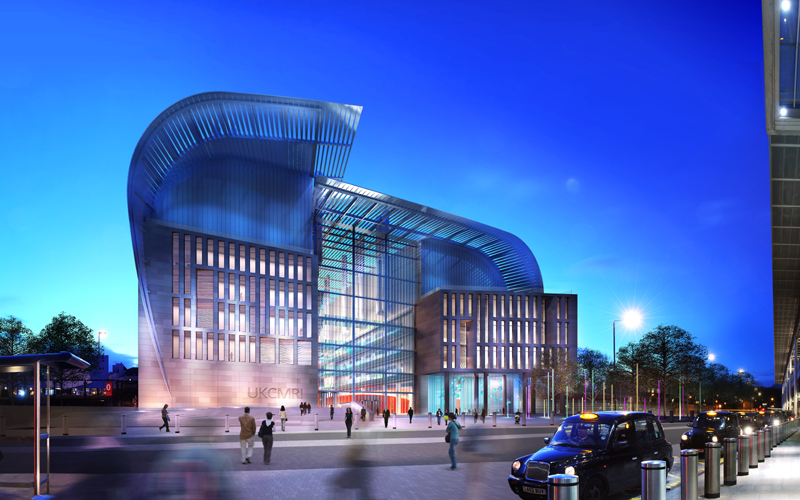
Dubbed a "cathedral for science" the UK Centre for Medical Research and Innovation (UKCMRI) is one answer to that challenge.
The Institute is the brainchild of the Medical Research Council, the Wellcome Trust, Cancer Research UK and University College London, who are joining forces to create this huge new hub for research and cementing the UK's position at the forefront of international science for years to come.
The vision includes space for more than 1,250 scientists, and brings biologists together with chemists, physicists and computer scientists under one roof to tackle the underlying causes of some of our most pressing health care problems.
According to Sir Paul Nurse, the Nobel Prize winning biologist who chairs the consortium's scientific planning committee, "The UKCMRI will provide the critical mass, support and unique environment to tackle difficult research questions."
At an initial cost to the Government of £250 million the UKCMRI had been considered vulnerable to the Treasury axe. When the project was signed off by Gordon Brown shortly after the last budget that money was due to be paid in a lump sum up front.
Earlier this month a spokesman for the Department of Business Innovation and Skills confirmed the project would go ahead, but that the funding would now be staggered over a five year period. It means the project will get just £17 million this year.
In the circumstances the MRC's chief executive, Sir Leszek Borysiewicz, said it was the best the consortium could hope for.
"The Medical Reasearch Council understands the need for budget savings in the current economic climate. We are satisfied that the Government is fully committed to UKCMRI".
 I'm Tom Feilden and I'm the science correspondent on the Today programme. This is where we can talk about the scientific issues we're covering on the programme.

Comment number 1.
At 12:17 19th Jun 2010, BluesBerry wrote:UKCMRI, true cost:
The choice –
a) social housing and community facilities (none of which would be built if the research centre goes ahead) or
b) UKCMRI.
While this is the surface debate, there is whispering debate going on beneath the surface debate. The whispering debate speaks the same battle in different words:
a) urban planning for the sake of the common welfare or
b) a beautiful (in fact awesome) show-off piece for the sake of medicine & science.
The supporters have already
1. bought the site (from the Department of Culture, Media and Sport DCMS) for God knows how much money,
2. sunk additional money into architectural design and
3. apparently walked all over Camden Council’s local plans for area - a social mix including ‘community’ spaces and housing.
Seems to me like the powers that be have established facts on the ground (or maybe I should say money on the ground). Money makes it sticky to backstep.
Seems to me that Camden's overcrowded, often sickly throw-away people will have to…well…get out of the way.
Complain about this comment (Comment number 1)