

The dung beetle evolves
Scientists studying bugs in the lowland rainforests of Peru have discovered a dung beetle with a difference.
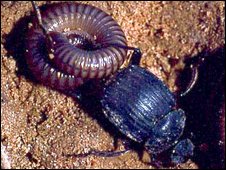 This dung beetle, a well known species named Deltochilum Valgum, appears to have given up eating dung altogether and decided to eat the millipedes that live along side it instead - and it really is a voracious predator, using its hind legs to latch onto much larger millipedes, decapitating them, and eating them from the inside out.
Observing the beetle's bizarre behaviour in pitfall traps the team, led by Dr Trond Larsen from Princeton University, realised that subtle changes in the shape of its head and hind limbs had enabled this dung beetle to abandon traditional ball-rolling behaviour and make the leap to predation.
In subsequent tests, and using a variety of paired dung and millipede baits, Deltochilum Valgum "was attracted exclusively to millipedes, and strongly preferred live injured millipedes over dead millipedes."
Writing in the Royal Society Journal Biology Letters Dr Larsen argues that intense competition amongst dung beetles (which occupy a highly specialised ecological niche) could be promoting speciation - the process by which one species evolves into something new.
"Ecological transitions such as these are important for understanding the evolution and diversification of new species and may help explain the disproportionately high diversity of insects".
It's a rare snapshot of evolution caught in the act. We may be witnessing the birth of a new species...the millipede predator beetle.
 I'm Tom Feilden and I'm the science correspondent on the Today programme. This is where we can talk about the scientific issues we're covering on the programme.

Comments Post your comment