

Science minister conducts his own research
While it was the £250m to be invested in training the scientists of tomorrow that grabbed the headlines, it was the Science Minister's comments on standards in education that generated the most heat at a press briefing in London yesterday.
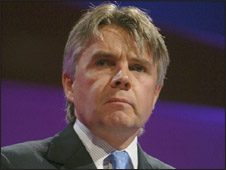 Lord Drayson was on hand to unveil plans for 44 new post-graduate training centres across the UK, and funding for more than 2,000 PHD students.
The new centres will focus on some of the most pressing problems facing the country - from climate change and energy, to medical science and crime and security. Students at the new Security Science Centre at University College London for instance, will concentrate on developing the technologies to combat terrorism and explore how companies can protect themselves from hackers and fraud.
There's a heavy emphasis on commerce underpinning the scheme, and students will spend the first year of their courses improving their practical research skills and building links with industry.
"Even though we're going into a downturn" Lord Drayson said, "it's vital that we maintain our investment in science and innovation. It's going to be the application of science that gets us out of this downturn more quickly".
But it was the Minister's response to a question about 'dumbing down' in schools that had journalists scribbling furiously in their shorthand notebooks.
Asked whether the new centres were needed because higher education wasn't producing students good enough for entry level jobs in engineering or science-based companies, Lord Drayson claimed one of the first things he'd done after his appointment was to demand to see last year's GCSE and A-Level papers. He'd "dusted down" the exams he sat in the 1970's and had been engaged in a little comparative research project of his own.
Lord Drayson - who has a PHD in Robotics, and made a fortune running his own medical research company - was careful not to condemn current standards, but he said it was vital to make sure that the education system stretched the brightest and the best pupils.
His concerns echo those of the Royal Society of Chemistry. Last week it launched an e-petition on the Downing Street website condemning a catastrophic fall in the standard of science teaching, and claiming that record breaking exam results were "illusory".
 I'm Tom Feilden and I'm the science correspondent on the Today programme. This is where we can talk about the scientific issues we're covering on the programme.

Comment number 1.
At 07:35 6th Dec 2008, JAlexW wrote:If the UK Government encouraged Academia and SMEs to undertake EU funded research activities then there would be ample funds for investment. There has historically been a lack of take up by UK researchers in the funds available under the ECs Framework programmes and if this was addressed then these funds could support both the Academic world and the UK SME community to develop and grow.
Complain about this comment (Comment number 1)
Comment number 2.
At 22:52 6th Dec 2008, The Realist wrote:Wow...
So the Government is going to accomadate another 2000 people going for PHD's. Has anyone asked them what the plans are for the rest who are being forced out of the industry?
And why is ITER still getting very low funding? 5 Billion Euro's over 50 years... The Space Station gets much more over half the time, surely the UK even in this economic climate can give 5 Billion on its own as well as the others.
Science is cronically underfunded, politics has a real knack for wasting obscene amounts of money. Just take the US missle test at $100 Million and imagine what that could have been spent on. Could have gone towards a nice new project's like designing the next generation of Hydro Electric Dams, better processors or turning sci-fi medicine into reality.
Complain about this comment (Comment number 2)
Comment number 3.
At 11:16 7th Dec 2008, skatesection wrote:Why not ask the Universities to set the exams with the things they want undergraduates to know?
Then it will be less about generating headlines about standards improving and more about having students who are ready for university.
Teachers will teach to the test, whatever the test is, if they are judged on the results.
Complain about this comment (Comment number 3)