

GM knocking...
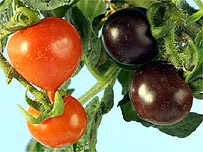 GM's knocking at the door gets ever more insistent. Depending on your point of view the global food crisis offers either another great opportunity to promote this exciting and much maligned technology, or is being cynically exploited to line the pockets of farmers and the agri-chemical industry.
Either way it looks like we're in for a long hot summer.
We covered the issue before the Rome Food Summit last month, pointing out just how widespread the global adoption of GM technology had been.
At the time I quoted figures published on the Natural Environment Research Council's website showing that over eight million farmers in 16 countries were growing GM crops....making biotechnology the most rapidly adopted technological innovation in the history of agriculture.
Boy, did that stir up a hornet's nest! First to respond was Monsanto's former press officer, who pointed out that the figures were woefully out of date: The real stats were closer to 12 million farmers in 23 countries.
Then came Friends of the Earth who demanded to know my sources. Interestingly when I told them, it all went a bit quiet....until I got a triumphant e-mail claiming the page on NERC's website had been taken down. I checked again last night, and it has.
So what about the second generation of GM crops - ones with attributes aimed at the consumer rather than farmers or the agri-chemical industry? Could a vegetable oil that contains Omega-3 fatty acids (the so called "good fats" that help to reduce cholesterol), or a purple tomato that's rich in anthocyanins and isoflavonoids switch you on to GM food?
Or perhaps you'll be like the producer in our morning meeting who said: "Ugh, I don't want to eat fishy bread" - thereby putting back the argument by a decade.
 I'm Tom Feilden and I'm the science correspondent on the Today programme. This is where we can talk about the scientific issues we're covering on the programme.

Comment number 1.
At 10:27 24th Jul 2008, ColinMerritt wrote:Perhaps you should explain politely to your producer that the 'fishy bread' problem would only happen if it was made using omega 3 from fish oil, but precisely NOT if the omega 3 was produced in plant oils. In the GM way the fish is by-passed, saving fish stocks and removing the flavour taint.
Unless of course he likes sardines on toast or smoked mackerel pate sandwiches, in which case he might not notice!
Complain about this comment (Comment number 1)
Comment number 2.
At 12:01 28th Jul 2008, ClareOxborrow wrote:Rather than the number of farmers growing GM crops, it was your claim that GM crops account for 25% of global agricultural land that Friends of the Earth contested.
The correct figure, even if you believe the GM industry’s unreferenced data, is that just 2.4% of agricultural land globally is planted with GM crops. NERC removed the 25% figure from its website because it was wrong – by a factor of 10.
It is impossible to verify the number of farmers claimed by the GM industry to be growing its crops.
GM crops do not increase yields and have failed to deliver for the environment, farmers or consumers, despite heavy investment over decades. They are neither inevitable nor necessary.
Clare Oxborrow
Friends of the Earth
Complain about this comment (Comment number 2)
Comment number 3.
At 19:15 1st Aug 2008, tonycombes wrote:I would suggest it's very easy to verify the number of farmers growing GM crops - in the same way FoE justifies its claims of the number of members. Those who buy crops or pay membership fees are counted for records and comparison purposes year on year. The reason why everyone globally accepts ISAAA figures as accurate is because when one compares their January figures with annual company accounts which by law are accurate, they are always within 5% either way.
If, as Clare claims, GM crops do not increase yield, or deliver for the environment, farmers or consumers, why do more acres get planted in more countries each year? It's for the same reason that farmers have always chosen different varieties or strains when planting crops - whether organic or conventional. Which one offers the best return for my customers and my investment?
When the USDA sees efficient U.S. farmers choosing GM for yield reasons (between 59 to 76%, depending on crop) and due to easier management/less chemical use (between 15 - 38%) it's easy to see why 90% of GM farmers come from developing countries where the greatest yield gains are to be had. The fact those developing countries are home to more than half the world's population must tell FoE something.
Complain about this comment (Comment number 3)