

Will taxpayers get their money back on Rock?
What brought Northern Rock to the brink of collapse in the boom years before September 2007 was that it lent too much too quickly, fuelled by finance that could not be relied upon to be permanently available.
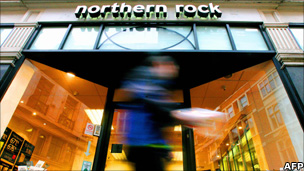
So there is something of an irony that the £232m of pre-tax losses generated by new Northern Rock - which is owned by taxpayers and was stripped of its historic loans - stem from its inability to lend enough.
The bank has been cleaned up for privatisation. But that means it is lending too little to cover the costs of its overheads and the interest paid on deposits.
It started life a year ago with £19.5bn of deposits and £10bn of mortgages. It ended the year with £16.7bn of deposits and £12.2bn of loans to customers (with some of that fall in deposits the result of the closure of the offshore savings operation in Guernsey).
So the Rock's income from interest on loans was £407m. But it paid out £448m of interest, and administrative expenses were £251m.
When fee and commission income are taken into account, and restructuring costs are deducted, the net result is a fairly thumping loss.
Which sounds serious. But it isn't a disaster, because overheads can be cut and lending can be increased.
That said, it is pretty difficult to say when the Rock will be back in profit, which means that if the government presses ahead with an early privatisation - and the Treasury shows every sign of wanting to do that - it can't expect a bumper price for the bank.
Does that mean there's a risk of taxpayers not getting back the £27bn they lent and invested in Northern Rock in the autumn and winter of 2007-8, to keep it afloat?
Well there is a risk of losses for taxpayers, but - absent a return to cripplingly recessionary conditions in the UK - I wouldn't say it is a huge risk. On the other hand, it doesn't look as though taxpayers will do much better than break even on the Rock rescue.
Certainly in the case of a sale of new Northern Rock - the bank I've been musing about above - there is a chance that taxpayers won't be repaid all of the £1.4bn they've injected into the bank to capitalise it (unless, as I said, the privatisation is delayed until the Rock is back in profit).
With the outlook for the British economy - and for the housing market - uncertain at the moment, lossmaking retail banks aren't the easiest businesses to flog right now. Even so, the likelihood is that at the end of April, UK Financial Investments - which manages taxpayers' stakes in banks on behalf of the Treasury - will initiate some kind of auction of lossmaking Rock.
But let's say the sale of the Rock generates less than the £1.4bn taxpayers have put into it. Would that be a disaster?
Well it would be wrong to see that £1.4bn in isolation. The more important asset on the public-sector balance sheet which stems from the nationalisation of the Rock is the so-called "bad bank".
That is the part of Northern Rock, called Northern Rock Asset Management (NRAM), which was hived off from the branch network and deposit-taking business, and took ownership of £50bn of the banks' older mortgages.
The irony is that this supposed bad bank was in substantial profit at the half year and probably was for the year as a whole (its results aren't being published today). The reason for the profit is that the economy has recovered a bit, so borrowers aren't finding it as difficult to repay debts. And, unlike new Northern Rock, NRAM has relatively low overheads and a stream of interest receipts on all the loans it made.
In other words, the much more important determinant of whether taxpayers get back their £27bn is whether borrowers repay the money they owe to NRAM, and as and when borrowers default, whether their seized properties can be sold for more than the value of the debt.
NRAM has net equity on its balance sheet, largely because it succeeded in buying back £1.1bn of its own debt at a very substantial discount.
So for taxpayers to end up as losers on the Rock, the deficit on any privatisation of new Northern Rock, when netted from any profits or losses from the winding up of NRAM, would have to exceed £800m.
Which probably leads to the conclusion that - in years to come - the rescue of the Rock will be seen to be have had negligible fiscal consequences, for all its massive impact on the financial and political environment of three years ago.
 I'm
I'm 






Page 1 of 2
Comment number 1.
At 10:12 9th Mar 2011, Lindsay_from_Hendon wrote:Yes, we'll make a significant profit. Happy days.
Complain about this comment (Comment number 1)
Comment number 2.
At 10:14 9th Mar 2011, writingsonthewall wrote:I heard you on the radio this morning Robert - your 'brave' claim that the government should see it getting back it's 27 Billion it lent to Northern Rock was a little mis-leading.
A quick education in finance folks (I know Robert knows this)
£27 Billion today is not worth the same as £27 Billion in 2008 - inflation has eroded this amount and is still eroding it. The purchasing power that £27 billion gives you is much reduced today.
Secondly, there is an opportunity cost question - imagine if NR didn't need bailing out - as an alternative the Government could have built....say a hospital. This would provide jobs for people which would a) Bring in tax revenues and b) get people off (or keep them off) the dole.
This is known as opportunity cost - funnily enough bankers (especially fixed income dealers) constantly refer to this concept when working out profit and return.
Why would the Government not do the same accounting? - could it be that they want to make it look like the result was a 'profit' to the dimwitted public?
I hope that this little post will help them understand how they are being ripped off - even if we end up with £27 billion back from the sale of NR.
This is financial deception on a Government scale.
Complain about this comment (Comment number 2)
Comment number 3.
At 10:17 9th Mar 2011, Lindsay_from_Hendon wrote:So the Rock's income from interest on loans was £407m. But it paid out £448m of interest, and administrative expenses were £251m.
- It seems fairly obvious that they should reduce the interest they pay to depositors (the depositors are benefiting from a Government guarantee so should pay for this) and cut costs (salary freezes, redundancies etc.). Finally, they should lend more.
Complain about this comment (Comment number 3)
Comment number 4.
At 10:19 9th Mar 2011, writingsonthewall wrote:...oh by the way - no matter what dramy accountants from Milton keynes (pretending their in Switzerland) say.
WE ARE NEVER GETTING THE MONEY BACK ANYWAY!
Prepare to read a piece from Robert annually for the next decade on how 'Northern Rock might be sold soon'
It's a scam folks - and the sooner you wise up to it - the better.
Complain about this comment (Comment number 4)
Comment number 5.
At 10:22 9th Mar 2011, Lindsay_from_Hendon wrote:Do Northern Rock still sponsor a soccer team? They should cut that.
Complain about this comment (Comment number 5)
Comment number 6.
At 10:24 9th Mar 2011, writingsonthewall wrote:What's funny is I couldn't even see post 1 when I made my comment in post 4!
So predictable Lyndsay - and yet so very, very wrong......
Maybe you're just not very good at reading...letting the old faith rule over the logic in the mind
"£232m of pre-tax losses"
Even a retired accountant should know that a loss of £232m is not a sign of a profit.
(or are we taking 'mark to fantasy' quite literally?)
Complain about this comment (Comment number 6)
Comment number 7.
At 10:29 9th Mar 2011, Lindsay_from_Hendon wrote:This comment was removed because the moderators found it broke the house rules. Explain.
Complain about this comment (Comment number 7)
Comment number 8.
At 10:33 9th Mar 2011, Timmaid wrote:As nearly all the overheads were in sensitve Labour electoral areas, its not surprising that it is making a loss
Complain about this comment (Comment number 8)
Comment number 9.
At 10:37 9th Mar 2011, stevewo wrote:Yes RP,
the rescue of the Rock probably does have "neglible fiscal consequences"....it's a shame that all banks aren't broken up into this size of operation....we might not be in this mess.
Your revelations about this bank 3 years ago were indeed the beginning of the end of Browns disastrous "boom-that-never-was".....and the end of "carefree" Britain.
It was probably the most important day in British history since 1945....although a lot of us are still "playing the ostrich".
"Prudence"?....that's a Beatles song, isn't it?
Complain about this comment (Comment number 9)
Comment number 10.
At 10:37 9th Mar 2011, writingsonthewall wrote:This comment was removed because the moderators found it broke the house rules. Explain.
Complain about this comment (Comment number 10)
Comment number 11.
At 10:37 9th Mar 2011, excellentcatblogger wrote:5. At 10:22am on 9th Mar 2011, Lindsay_from_Hendon wrote:
Do Northern Rock still sponsor a soccer team? They should cut that.
====================================
A rugby team as well? And a spanking brand new office is being built which they probably do not need anymore...
Complain about this comment (Comment number 11)
Comment number 12.
At 10:40 9th Mar 2011, Jacques Cartier wrote:@ 5. At 10:22am on 9th Mar 2011, Lindsay_from_Hendon wrote:
> Do Northern Rock still sponsor a soccer team? They should cut that.
I don't know, but RBS sponsor the "Six Nations" rugby games. We all know that those hideously greedy bankers have ruined the financial sector, but surely rugby isn't "too big to fail", is it?
Complain about this comment (Comment number 12)
Comment number 13.
At 10:43 9th Mar 2011, nautonier wrote:Another bank that should be guided by the big society bank ... being itself efficient but 'not for profit' and doing the right things for Britian, in Britian for British taxpayers, British students and British workers.
How about it becoming a bank for helping British students?
Complain about this comment (Comment number 13)
Comment number 14.
At 10:47 9th Mar 2011, Justin150 wrote:#5 Yes it does and no you should not cut that - NUFC need it (and it is contracted for a set period)
WOTW wrote: "So predictable Lyndsay - and yet so very, very wrong.....Maybe you're just not very good at reading..."
Just out of interest did you read all of Roberts blog or just the bits you agreed with. Robert did specifically point out that you could not look at NR in isolation but also had to look at NRAM which has a healthy profit.
Whether that is enough to allow tax payer to recover the cost of bailing out the old NR is still uncertain because we have no idea what deal govt can get for selling new NR and no idea how much of NRAM loans will ultimately be repaid. Personally I think govt will make a loss but that is opinion and guesswork not fact
Complain about this comment (Comment number 14)
Comment number 15.
At 10:52 9th Mar 2011, yam yzf wrote:NRAM has effectively been set up as a securitised book. The result is that NRAM is a profit making business, hence the popularity of investors buying securitisation notes.
So clearly, from an investment point, packaging up mortgages and selling them on is not a bad thing to do.
As for NR, they are now in a difficult position for they will need to increase their margins to be profitable and that will then lead to people complaining about "high" interest rates they are being charged. If they do not do this, then the sale price will be depressed and so people can then moan about how it did not make a profit for the taxpayer.
Although, as RP poins out, in the grand scheme of things, impact is negligible - apart from investors who were paid a below market rate for their shares when it was nationalised.
Complain about this comment (Comment number 15)
Comment number 16.
At 11:07 9th Mar 2011, Lindsay_from_Hendon wrote:• 6. At 10:24am on 9th Mar 2011, writingsonthewall wrote:
What's funny is I couldn't even see post 1 when I made my comment in post 4!
- Well comment 4 has been referred so we'll never know.
Even a retired accountant should know that a loss of £232m is not a sign of a profit.
- I meant for the taxpayer when they privatise NR. I should have said "gain" but I'm trying to be more "street" and use the vernacular.
Complain about this comment (Comment number 16)
Comment number 17.
At 11:07 9th Mar 2011, Reticent_Trader wrote:15. At 10:52am on 9th Mar 2011, yam yzf wrote:
===========================
"So clearly, from an investment point, packaging up mortgages and selling them on is not a bad thing to do."
Yes, like all derivatives they work nicely until they, erm, dont. And you lose all previous profits plus some.
"apart from investors who were paid a below market rate for their shares when it was nationalised."
And what was the market rate?
The market had long been suspended. The business was insolvent. Equity was worth ZERO.
Complain about this comment (Comment number 17)
Comment number 18.
At 11:09 9th Mar 2011, barry white wrote:And bonuses? I thought that they were paid on positive results and gaining an advantage to the company.
As for the taxpayers gaining from the sale.........
Maybe they should stop being a bank and become a building society and ignore the carpetbaggers next time
Complain about this comment (Comment number 18)
Comment number 19.
At 11:11 9th Mar 2011, Decentjohn wrote:As I recall NR was one of those high street Banks that Cable and Peston seem to champion. In size terms it was fairly insignificant and certainly not an international player.
So perhaps it was too small to fail!!!
What ever happens, the Government and the taxpayer will make a healthy profit from NR and in due course from Lloyds and RBS. I wonder what Robert will saying then? Perhaps he will turn his attention to the "business news" or is that too much to expect?
Complain about this comment (Comment number 19)
Comment number 20.
At 11:12 9th Mar 2011, Peter Bench wrote:Mr Peston,your 'knowledge' that the NR failed because of a finance that could not be relied upon is solely based upon hindsight. Since their inception the wholesale capital markets for general and mortgage based funding for financial institutions had NEVER closed. You also fail to explain how maturity transformation takes place in a bank unless it either runs a huge exposure between short deposits and long lending OR takes long funding to match its assets. So easy to point and shoot when you don't understand. And Lindsay, have you considered the NR singed long term sponsorship contracts for the sports teams? and the office building?
Complain about this comment (Comment number 20)
Comment number 21.
At 11:13 9th Mar 2011, startsmall wrote:stevewo and lyndsey have said it. the housing bubble ,subprime mortgages, bad debt was allowed to grow to such proportions by a bad chancellor that the consequences three years later...what a mess. And who is the shadow chancellor.... Ed Balls, the bad chancellor's main protege and architect of the imprudent economy. But NUFC are still reaping the rewards??!!! What is the difference between this football club and bankers bonuses.. Lack of effective banking laws.
Complain about this comment (Comment number 21)
Comment number 22.
At 11:15 9th Mar 2011, common_man_123 wrote:Let me get this right:
NR was split into 2, NR & NRAM, with NRAM taking 50bln of the best assets. NRAM then bought 1.1bln of it’s own bad debts (eg 10p in the £).
NRAM merged with Bradford and Bingley under the holding company UK Asset Resolutions Ltd – NRAM as no trading arm/facility and therefore only as to cover administration and therefore as a result should always be in profit?
NR on the other hand having lost 50bln of good debt is now making a loss but as got a trading facility.
Questions:
As NRAM been totally split off from NR because it appears that it is? And therefore cannot be associated with NR.
On the other hand does NR come under the holding company UK Asset Resolutions? If it does then surely the interest is in this company because it controls |NR, NRAM and B&B?
PS. This all happened before the current government came to power, so Timmaid #8 it as nothing to do with ‘sensitve Labour electoral areas’ unless you are suggesting that labour screwed it’s own electorate.
Complain about this comment (Comment number 22)
Comment number 23.
At 11:22 9th Mar 2011, watriler wrote:Why sell it off when the impact will be negligible - it is more important that the mortgage book is well managed to return the 27Bn debt to the government and to avoid the social consequences of turfing people out of their homes who have temporarily fallen on bad times which only this 'non' commercial arrangement can deliver. NR could become part of a publicly owned banking sector that is gaining acceptance from a wider group of influential people. The alternative is to offer it to a building society (e.g. Newcastle) and effectively to re-mutualise.
Complain about this comment (Comment number 23)
Comment number 24.
At 11:29 9th Mar 2011, Wee-Scamp wrote:I'll give take it off your hands for £50 providing I can move it to Scotland so we can use it to put RBS out of business.
Complain about this comment (Comment number 24)
Comment number 25.
At 11:39 9th Mar 2011, tFoth wrote:The figures quoted suggest that NR was charging interest on loans at 3.34% and paying interest on deposits at 2.68%. Maybe the margins are a little tight?
Complain about this comment (Comment number 25)
Comment number 26.
At 11:48 9th Mar 2011, yam yzf wrote:17. At 11:07am on 9th Mar 2011, Reticent_Trader wrote:
"Yes, like all derivatives they work nicely until they, erm, dont. And you lose all previous profits plus some."
Except RMBS has never really stopped working has it. Even the UBS bankers who were paid bonuses by being given shares in those packages as a form of "punishment" are doing rather nicely out of them I recall.
"And what was the market rate?
The market had long been suspended. The business was insolvent. Equity was worth ZERO."
The market rate was at a minimum the price that they were last trading at. Investors knew that the govt of the day were ripping them off for they could see longer than the next set of headlines about pensioners queueing to get their money.
NR's initial problems were that a lot of funding matured in a short timeframe window and so they went to BoE facilities to tide them over. Unfortunately, some reporters did not give all the facts and so the wheels were set in motion for a run on the deposits
Complain about this comment (Comment number 26)
Comment number 27.
At 11:50 9th Mar 2011, Cthru wrote:15. At 10:52am on 9th Mar 2011, yam yzf wrote:
"Although, as RP poins out, in the grand scheme of things, impact is negligible - apart from investors who were paid a below market rate for their shares when it was nationalised."
So I'm not sure what you mean here, there's no such thing as a "below market rate", that's what someone was willing to pay and so that IS the market rate. There was a comment on RPs blog yesterday or the day before saying that Barclays or HSBC were currently "undervalued" on the stock market. If you believe in markets and that they give "price discovery" then you have to accept that the current price IS the current price.
If you care to think about it though Stock markets (in particular) do nothing of the sort, think about chartists who analyse the market price of companies through the use of charts, they us the movement of the price to decide when to buy or sell (look up "dead cat bounce" etc). They have minimal interest in the underlying business and that changes the value of the stock as they buy and sell depending on the shape of the chart.
The very fact that there was a stock market crash shows you that the value of a share on a stock market has only a small amount to do with the value of the business. How can a business be worth X one day and X/2 the next?
Real accountants know that Accountancy isn't a science it's an art form, that's why balance sheets and PL accounts are so difficult to read and it's all intended to manipulate the perception of the markets. If markets were based on fact they couldn't be manipulated.
Complain about this comment (Comment number 27)
Comment number 28.
At 11:57 9th Mar 2011, NorthSeaHalibut wrote:This comment was removed because the moderators found it broke the house rules. Explain.
Complain about this comment (Comment number 28)
Comment number 29.
At 12:03 9th Mar 2011, Cthru wrote:20. At 11:12am on 9th Mar 2011, Peter Bench wrote:
"Mr Peston,your 'knowledge' that the NR failed because of a finance that could not be relied upon is solely based upon hindsight. Since their inception the wholesale capital markets for general and mortgage based funding for financial institutions had NEVER closed."
Peter, I'm not meaning to belittle your point but it sounds like the sort of conversation I have with my 6 and 9 year olds. Just because it NEVER happened doesn't mean that you shouldn't consider the consequences if it should happen.
Yes son, I know that you've skated on the pond, not worn a helmet on your bike, eaten worms, pushed matchsticks into the power socket, hung out of the open window loads of times and nothings gone wrong but maybe you should consider what might happen if something did?
It's a common thread with the people who are appologising for those that caused the financial collapse that they couldn't have known that what they were doing was fraught with danger or unsustainable. There are many people out there (me included) applying the simple maxim that they wouldn't run their own finances the way the large banks ran theirs because the risks are too great.
Complain about this comment (Comment number 29)
Comment number 30.
At 12:03 9th Mar 2011, openside50 wrote:Northern Rock?
Any truth in the rumours that lloyds were willing to take them over when their finance problems arose only for super brains King and Darling to bungle the negotiations
A few weeks later we had the first run on a British bank for a century and NR's liabilities of £100b lumped on to the national debt!
Not labours finest hour :-0
Complain about this comment (Comment number 30)
Comment number 31.
At 12:12 9th Mar 2011, yam yzf wrote:27. At 11:50am on 9th Mar 2011, Cthru wrote:
"So I'm not sure what you mean here, there's no such thing as a "below market rate", that's what someone was willing to pay and so that IS the market rate."
The government of the day decided a price and no option was given to the shareholders to "sell" to anyine else. Therefore the government were paying below market price. As I also explain in post 26, investors saw that the underlying business was sound, there was a short term funding problem. Unfortunately, other things got reported and the government of the day did not want pictures of pensioners queueing outside the branches, so they panicked.
Complain about this comment (Comment number 31)
Comment number 32.
At 12:12 9th Mar 2011, John_from_Hendon wrote:Northern Rock is offering 90% mortgages again!
They say that they will check if these are affordable even with an increase in interest rates - but this is the start of exactly the same slippery path that caused the crash in the first place!
At the risk of being boring, I repeat, that 'affordability' leads directly to bubbles and hence crashes and hence the need fro the taxpayer to rescue imprudent bankers.
Once one lender starts offering 90% mortgages the rest will follow then they will edge up to 95% etc etc. There MUST be legislation that curtails this race to the bottom on loan quality. This is what the BoE and FSA was SUPPOSED to do but they failed catastrophically and there is little sign yet of the new regulatory structures getting to grips with this critical issue. (This is why Mervyn King needs firing.)
Complain about this comment (Comment number 32)
Comment number 33.
At 12:22 9th Mar 2011, torpare wrote:@19. Decentjohn wrote:
"Perhaps he will turn his attention to the "business news" or is that too much to expect?"
Another poster anxious to divert public attention from the financial sector and the ongoing consequences of its crazy greed-fuelled binge.
Wonder why...
Complain about this comment (Comment number 33)
Comment number 34.
At 12:24 9th Mar 2011, Kit Green wrote:This comment was removed because the moderators found it broke the house rules. Explain.
Complain about this comment (Comment number 34)
Comment number 35.
At 12:27 9th Mar 2011, common_man_123 wrote:Following on from #22 and it’s getting complicated (what a tangled web was woven)
1.Does UK Financial Investments Ltd manage, still manage/oversee NR?
2.Does UK Financial Investments Ltd Manage/oversee UK Asset Resolutions Ltd?
NRAM is responsible for paying back the government loan and maintain responsibility for Granite (or Down’s Syndrome North East Charity) and I am unsure if it is doing new business or being allowed to run down.
Sorry Mr P you are being far to simplistic in your blog! Perhaps you have toned it down to compensate?
Complain about this comment (Comment number 35)
Comment number 36.
At 12:28 9th Mar 2011, torpare wrote:@20. Peter Bench wrote:
"Mr Peston,your 'knowledge' that the NR failed because of a finance that could not be relied upon is solely based upon hindsight".
So does that make it any less true? If so, why?
Just curious.
Complain about this comment (Comment number 36)
Comment number 37.
At 12:30 9th Mar 2011, Up2snuff wrote:Mebbe ...
Was it wise to split it? {Don't forget this is the BAD lump} Maybe not.
Is it wise to split up any bank's operations ... ?
Complain about this comment (Comment number 37)
Comment number 38.
At 12:34 9th Mar 2011, stanilic wrote:A loss-making mortgage bank? Hmm! Perhaps Lloyds would be interested? They have a track record for buying such.
Alternatively we could change its name to the Rock of Gibraltar and flog it to the Spanish: a bit like Abbey National.
Or we could turn it into a competitor to the Big Society Bank as we are told that competition is good as it allows choice. We could call it the Broken Society Bank.
Complain about this comment (Comment number 38)
Comment number 39.
At 12:37 9th Mar 2011, common_man_123 wrote:• 30. At 12:03pm on 9th Mar 2011, openside50 wrote:
Northern Rock?
Any truth in the rumours that lloyds were willing to take them over when their finance problems arose only for super brains King and Darling to bungle the negotiations
XXXXXX
From what I have read NR was eventually Nationalise because of Granite (Down’s Syndrome North East Charity). From what I understand if not, all of Granite (45Bln) would have gone into this charity. NR had never up until this point given a single penny to the charity!!!
So there we have it: Banker charity starts at home?
Complain about this comment (Comment number 39)
Comment number 40.
At 12:48 9th Mar 2011, Cthru wrote:31. At 12:12pm on 9th Mar 2011, yam yzf wrote:
"The government of the day decided a price and no option was given to the shareholders to "sell" to anyine else. Therefore the government were paying below market price. As I also explain in post 26, investors saw that the underlying business was sound, there was a short term funding problem. Unfortunately, other things got reported and the government of the day did not want pictures of pensioners queueing outside the branches, so they panicked."
That's all fine but if there'd been a better offer on the table then NR would have taken it. So the price they got was the best they could get. That's how markets work. Unless you're suggesting that the Government somehow forced the sale at a lower price?
I don't think it was pictures of people queueing that caused the problem it was the very real problem that NR would have run out of money. That's what a run on a bank is and that what happened. It's all part of Capitalism except the part where the Government steps in to bail out the bank.
Complain about this comment (Comment number 40)
Comment number 41.
At 12:58 9th Mar 2011, Reticent_Trader wrote:The market rate was at a minimum the price that they were last trading at. Investors knew that the govt of the day were ripping them off for they could see longer than the next set of headlines about pensioners queueing to get their money.
NR's initial problems were that a lot of funding matured in a short timeframe window and so they went to BoE facilities to tide them over. Unfortunately, some reporters did not give all the facts and so the wheels were set in motion for a run on the deposits
================================
A bit of revisionism going on here.
Their asset base was impaired due to the realisation that a small increase in expected default would be disastrous for 125% mortgages.
Their liabilities were short term money market loans which became unaffordable when the LIBOR rate rose 4% over the swap rates that they had hedged themselves with.
The equity could not withstand the reduction in assets and increase in liabilities. It really was a solvency issue and not a liquidity issue.
Complain about this comment (Comment number 41)
Comment number 42.
At 13:00 9th Mar 2011, Cthru wrote:This comment was removed because the moderators found it broke the house rules. Explain.
Complain about this comment (Comment number 42)
Comment number 43.
At 13:06 9th Mar 2011, Reticent_Trader wrote:As I also explain in post 26, investors saw that the underlying business was sound, there was a short term funding problem. Unfortunately, other things got reported and the government of the day did not want pictures of pensioners queueing outside the branches, so they panicked.
==============================
Ah but unfortunately the investors were wrong and the pensioners were right.
Complain about this comment (Comment number 43)
Comment number 44.
At 13:12 9th Mar 2011, Reticent_Trader wrote:32. At 12:12pm on 9th Mar 2011, John_from_Hendon wrote:
Northern Rock is offering 90% mortgages again!
They say that they will check if these are affordable even with an increase in interest rates - but this is the start of exactly the same slippery path that caused the crash in the first place!
At the risk of being boring, I repeat, that 'affordability' leads directly to bubbles and hence crashes and hence the need fro the taxpayer to rescue imprudent bankers.
==============================
The issue with the affordability test is that a 1% increase in rates from 3% to 4% would cause a 25% reduction in affordability. It is "local thinking" at best.
Complain about this comment (Comment number 44)
Comment number 45.
At 13:22 9th Mar 2011, Kit Green wrote:This comment was removed because the moderators found it broke the house rules. Explain.
Complain about this comment (Comment number 45)
Comment number 46.
At 13:22 9th Mar 2011, lacplesis37 wrote:Please don't tell me Gordon Brown did something right? I thought that was categorically impossible.
Complain about this comment (Comment number 46)
Comment number 47.
At 13:23 9th Mar 2011, Lindsay_from_Hendon wrote:20. At 11:12am on 9th Mar 2011, Peter Bench wrote:
And Lindsay, have you considered the NR singed long term sponsorship contracts for the sports teams? and the office building?
- But why did they sign a long term deal with Newcastle? Soccer fans of other clubs will not want to use their services then, the only positive impact is on the Newcastle fans but they do have any money so why try to woo them?
24. At 11:29am on 9th Mar 2011, Wee-Scamp wrote:
I'll give take it off your hands for £50 providing I can move it to Scotland so we can use it to put RBS out of business.
- I thought Newcastle was in Scotland.
Complain about this comment (Comment number 47)
Comment number 48.
At 13:24 9th Mar 2011, writingsonthewall wrote:This comment was removed because the moderators found it broke the house rules. Explain.
Complain about this comment (Comment number 48)
Comment number 49.
At 13:26 9th Mar 2011, Phil wrote:Yes the Rock still sponsors Newcastle United, its a commercial/marketing decision, after all its still a bank and needs to publicise its self to try and get new business.
Before the crunch the Rock also sponsored a the Newcastle Falcons rugby team (at one point they even ownd the rugby stadium, thats been sold to a Uni), the Newcastle Eagles Basketball team and Durham County Cricket club, all these sponsorship deals have ended.
So they've kept the highest profile sponsorship deal wich makes some sense, you may not agree, but Lloyds are still running those silly TV adverts and RBS are sponsoring the Six nations, perhaps we should stop all of the banks that we own or partly own from advertising and premoting their (our) business.
39. Common Man 123
"NR had never up until this point given a single penny to the charity!!!"
Where have you got this from???
I work in fundraising (no I'm not a Charity Mugger) and have worked with the Northern rock foundation for many years and know how they get their money.
NR was legal required by a covenant to give the Northern Rock Foundation 5% of its profits every year and at privitisation 15% of the share capitol was given to the foundation. The profit deal ended with nationalisation, the foundation does still recieve money from NR and I hope this link can be maintained when its sold off as the foundation is one of the biggest sources of funding for good/worthy causes in the North East, to see what they do just visit their website, In my experience the London based foundations aren't that interested in the North East.
Complain about this comment (Comment number 49)
Comment number 50.
At 13:29 9th Mar 2011, leicestersq wrote:It doesnt appear to me that there is much appetite for borrowing in the UK at the moment. That means that NR can only increase its lending by taking on riskier borrowers, and we know where that leads.
I think that we would just be better off winding it down, we hardly need this bank after all.
Complain about this comment (Comment number 50)
Comment number 51.
At 13:38 9th Mar 2011, yam yzf wrote:40. At 12:48pm on 9th Mar 2011, Cthru wrote:
31. At 12:12pm on 9th Mar 2011, yam yzf wrote:
"That's all fine but if there'd been a better offer on the table then NR would have taken it. So the price they got was the best they could get. That's how markets work. Unless you're suggesting that the Government somehow forced the sale at a lower price?"
Yes they did - investors were not given an option
"I don't think it was pictures of people queueing that caused the problem it was the very real problem that NR would have run out of money. That's what a run on a bank is and that what happened. It's all part of Capitalism except the part where the Government steps in to bail out the bank."
No, the run was caused by a certain journalist exclusive of NR going to the BoE for funding as the BoE was there for. It was reported as NR being in dire trouble, hence the run. Hence govt stepped in to stop the bad press etc
Had capitalism been allowed to operate, another company would have been allowed to buy NR if they so wished or it would have been allowed to go bust. Govt prevented that and then further muddied the waters with their "we will not let any bank fail" statement
Complain about this comment (Comment number 51)
Comment number 52.
At 13:38 9th Mar 2011, Up2snuff wrote:re #13
It's already in existence - apparently it is the Basic Rate Taxpayer Bank.
Complain about this comment (Comment number 52)
Comment number 53.
At 13:41 9th Mar 2011, Conrad wrote:"The bonuses will be awarded in spite of the bank posting a full-year pre-tax loss for 2010 of £223.5m, which excluded an £8.9m loss on bad hedging. The lender narrowed its losses over the year from £142.6m in the first half to £80.9m in the final six months."
Guess it proves that in the Banking community - bonues are funded by Tax Payers; not by performance.
Exactley when are people going to snap out of their apathy and demand answers from their MPs?
Do we have to go through some kind of revolution in the UK before this corruption ends - similar to Egypt or are we all going to be led around like so many sheep?
Cut the jargon, it's the corruption stupid.
Complain about this comment (Comment number 53)
Comment number 54.
At 13:44 9th Mar 2011, Jacques Cartier wrote:14. At 10:47am on 9th Mar 2011, Justin150 wrote:
> Personally I think govt will make a loss but that is opinion and guesswork not fact
By "govt", you mean the public, do you? You are right, so why is Mr Applegarth still a free man?
Complain about this comment (Comment number 54)
Comment number 55.
At 13:46 9th Mar 2011, Firey Shandy wrote:It looks like the trend now is that the good bank makes losses whilst the bad bank makes profits.
A point that is not mentioned in your report is that at the date of nationalisation the bank had capital & reserves of £1.7 billion. This was money that belonged to the shareholders and was then acquired but not paid for by HMG.
The reason that the government gave for effectively stealing the shareholders £1.7 billion was that the value of Northern Rock as given by an independent valuer was nil.
Obviously if NR has a book value of £1.7 billion but an independent valuer values them as nil there is a discrepancy. In this case the discrepancy was because the government used its powers to set the terms of the valuation to insist that NR was valued as if it was not a going concern.
This is complete nonsense as the facts are that NR has always been a going concern and will be sold on as a going concern.
The injustice suffered by NR shareholders many being ex-employees who have lost their life savings appears to have been airbrushed out of the NR story in favour of a will they wont they story about the govt. making a profit.
I am fairly certain that the govt. will make a profit on it's involvement in Northern Rock but considering that they are running a structural deficit of £163 billion a profit of a billion or so to them is as useful as urinating in the sea. Meanwhile shareholders who have saved all their lifes to provide a retirement for themself can look forward to spending the rest of their life on benefits.
Complain about this comment (Comment number 55)
Comment number 56.
At 13:52 9th Mar 2011, U14802065 wrote:All this user's posts have been removed.Why?
Complain about this comment (Comment number 56)
Comment number 57.
At 14:00 9th Mar 2011, common_man_123 wrote:49. At 13:26pm on 9th Mar 2011, Phil
You are confusing Northern Rock Foundation and Down’s Syndrome North East as being the same?
Down Syndrome North East is the charity from in which Granite operates. All banks that securitize have them (part of the fiddle). Granted it is difficult to find these things out but I believe RBS is something like Aberdeen Charity co (well something like that)
I no longer give to charities because I have been involved in the past and I know what happens to most of the moneys given. I prefer to give direct! At least they get the full pound!
Complain about this comment (Comment number 57)
Comment number 58.
At 14:01 9th Mar 2011, Jacques Cartier wrote:51. At 13:38pm on 9th Mar 2011, yam yzf wrote:
> Had capitalism been allowed to operate, another company would have been
> allowed to buy NR if they so wished or it would have been allowed to go bust.
If we were operating true capitalism, we would have debtors' prision, where bankers would fester until they had paid us back. When we abolished debtors prision, we trusted business to hold up its end of the plank. They have failed utterly (as usual).
> Govt prevented that and then further muddied the waters with their "we will not
> let any bank fail" statement
Without the heavy threat of debtors' prison, there was no moral hazard to keep the Sir Greedies and Adam Applegarths in line. They should never have been allowed to walk the streets as free men after what they did.
Complain about this comment (Comment number 58)
Comment number 59.
At 14:06 9th Mar 2011, Jacques Cartier wrote:Below is what Samuel Byrom wrote about Debtor's Prision. Be honest - who amongst us would not rejoice at the spectacle of bankers held in such circumstances? We must be prepared to do whatever it takes to bring that crowd to heel.
:---
What barbarity can be greater than for gaolers (without provocation) to load prisoners with irons, and thrust them into dungeons, and manacle them, and deny their friends to visit them, and force them to pay excessive fines for their chamber rent, their victuals and drinks; to open their letters and seize the charity that is sent to them! And when debtors have succeeded in arranging with their creditors, hundreds are detained in prison for chamber-rent and other unjust demands put forward by their gaolers, so that at last, in their despair, many are driven to commit suicide..
:---
Complain about this comment (Comment number 59)
Comment number 60.
At 14:10 9th Mar 2011, iantrucker wrote:Thats all fine unless of course they are lending on assets that are going to fall , and to people who when interest rates rise wont be able to pay back their loans .... haven"t we been here before.
Complain about this comment (Comment number 60)
Comment number 61.
At 14:14 9th Mar 2011, the_fatcat wrote:55. At 13:46pm on 9th Mar 2011, Firey Shandy wrote:
"A point that is not mentioned in your report is that at the date of nationalisation the bank had capital & reserves of £1.7 billion. This was money that belonged to the shareholders and was then acquired but not paid for by HMG."
The bank may have had 'capital & reserves of £1.7 billion' at the time of nationalisation but it also had liabilities far in excess of this and had no way of raising funds to meet those liabilities - it was bankrupt.
I'm sorry for you if you have lost your life's savings in the collapse of NR, but you cannot simply extract the parts of a balance sheet which support your point of view.
Complain about this comment (Comment number 61)
Comment number 62.
At 14:15 9th Mar 2011, nautonier wrote:52. At 13:38pm on 9th Mar 2011, Up2snuff wrote:
re #13
It's already in existence - apparently it is the Basic Rate Taxpayer Bank.
.......................
Well it is obviously not doing enough, not functioning properly and will need to do a lot more going forward because what I'm thinking of is more than compound interest at 0.1 % and higher and higher fees for students ... as a bank that invests its money not for profit in e.g. University work/part time work, innovation and other schemes ... requiring some vision and planning.
Try and be part of the solution and not part of the problem? Eh?
Complain about this comment (Comment number 62)
Comment number 63.
At 14:23 9th Mar 2011, haufdeed wrote:31. At 12:12pm on 9th Mar 2011, yam yzf wrote:
27. At 11:50am on 9th Mar 2011, Cthru wrote:
The government of the day decided a price and no option was given to the shareholders to "sell" to anyine else. Therefore the government were paying below market price
-----------------------------------------------------------------------------------------------------------------
Why does this follow? Can you explain?
Complain about this comment (Comment number 63)
Comment number 64.
At 14:24 9th Mar 2011, writingsonthewall wrote:This comment was removed because the moderators found it broke the house rules. Explain.
Complain about this comment (Comment number 64)
Comment number 65.
At 14:38 9th Mar 2011, Firey Shandy wrote:. At 13:46pm on 9th Mar 2011, Firey Shandy wrote:
"A point that is not mentioned in your report is that at the date of nationalisation the bank had capital & reserves of £1.7 billion. This was money that belonged to the shareholders and was then acquired but not paid for by HMG."
61 The bank may have had 'capital & reserves of £1.7 billion' at the time of nationalisation but it also had liabilities far in excess of this and had no way of raising funds to meet those liabilities - it was bankrupt.
I'm sorry for you if you have lost your life's savings in the collapse of NR, but you cannot simply extract the parts of a balance sheet which support your point of view
-------
Shareholders funds equals the difference between the Assets and Liabilities.
Hence if a company has Assets of £10 and Liabilities of £9 then Capital and Reserves would be £1 - this £1 is monies that it is due to Shareholders.
It is therefore impossible to have Capital and Reserves of £1.7 billion and for Liabilities to exceed Assets.
Many people do not understand that the loan from the Bank of England, increased both the Assets and Liabilities of NR by the same amount and hence they have no effect on Capital and Reserves.
Also a lot of people may be surprised to learn that the loans that were given to NR by the Bank of England appear as assets on the Balance Sheet of the Bank of England.
I think if people were able to review accounts rather than just listen to the sound bites then they would have a far better understanding of the financial crisis but as yet I have never seen a Balance Sheet of NR or any other bank explained on the business news.
Complain about this comment (Comment number 65)
Comment number 66.
At 14:40 9th Mar 2011, United Dreamer wrote:Yam ysf - care to respond to Reticent Trader in #41? It seems to me that he debunked your assertion. I'm curious to hear your response.
Complain about this comment (Comment number 66)
Comment number 67.
At 14:44 9th Mar 2011, writingsonthewall wrote:Robert,
in Post 2 I referred to something you said on Radio 4 this morning - but apparently this is a breach of house rules.
Are the BBC saying their reporter was inaccurate when speaking to the listeners? - or is it that the BBC are worried about being held accountable for their inaccurate reporting on Radio 4 this morning?
Complain about this comment (Comment number 67)
Comment number 68.
At 14:49 9th Mar 2011, Phil wrote:Common Man 123
I'm not confusing the two charities I was mearly pointing out that although Down’s Syndrome North East had not benefited from Granite, NR had given very large sums to charity (over £200million since 1996). I dont want people to have the view that Northern Rock was all bad! I should have worded my post better!
The Granite scame was as we say up here "shocking", but Down's Syndrome North East would have only recieved the profits from the fund not the £45billion in assets (they would have got the profits if the trust had been registered in the UK). The big issue is how can a british teritory that largly follows UK law be allowed to facilitate these financial scams? after all what Granite did was not technicaly against the law in the Channel Islands.
Complain about this comment (Comment number 68)
Comment number 69.
At 14:50 9th Mar 2011, Supersage64 wrote:44. At 13:12pm on 9th Mar 2011, Reticent_Trader wrote:
32. At 12:12pm on 9th Mar 2011, John_from_Hendon wrote:
Northern Rock is offering 90% mortgages again!
They say that they will check if these are affordable even with an increase in interest rates - but this is the start of exactly the same slippery path that caused the crash in the first place!
At the risk of being boring, I repeat, that 'affordability' leads directly to bubbles and hence crashes and hence the need fro the taxpayer to rescue imprudent bankers.
==============================
The issue with the affordability test is that a 1% increase in rates from 3% to 4% would cause a 25% reduction in affordability. It is "local thinking" at best.
++++++++++++++++++++++++++++++++++++++
This explains what triggered the Financial Crisis in the US... Mortagages that were more than affordable at 2% rose to over 5%.. That represents over 100% reduction in affordability and the clever boys at the bank presumed it would not result in a crisis??? There is also a more sinister view of this... The failure was planned. I believe that the federal reserve was in with the hedge funds to create the conditions for a failure and hence an opportunity for super profits by very few members of a select club.
I see that the MEP's in the European parliament have voted in favour of Tobin tax which seemingly needs further ratification. The beginning of the end???
Complain about this comment (Comment number 69)
Comment number 70.
At 14:56 9th Mar 2011, Phil wrote:Sorry Common Man 123 I did miss read you origonal post, I do apologise.
Complain about this comment (Comment number 70)
Comment number 71.
At 14:59 9th Mar 2011, JF60 wrote:But what about the bonuses Northern Rock top people are getting despite losses? I think I heard the figure 13 million on Radio 4 today.
Perhaps Robert Peston could start a blog or a national campaign against these enormous bonuses. The investment banking sector are out of touch with the real world. Jon Snow on Channel 4 news said that a banker earned more in a week (or was it a day) than an ordinary worker earns in a lifetime.
Could Robert ask his team to produce more horrifying but meaningful facts for the public to digest and get angry about?
Complain about this comment (Comment number 71)
Comment number 72.
At 15:02 9th Mar 2011, yam yzf wrote:66. At 14:40pm on 9th Mar 2011, United Dreamer
It is not revisionism, for it was speculation that there was going to be a big increase on expected default of 125% mortgages. Speculation that has proved incorrect
I have stated that their issue was funding maturing in a relatively short timescale
It was not a solvency issue as someone else has pointed out on here - the nationalisation and ripping off of investors was all done for political reasons
Complain about this comment (Comment number 72)
Comment number 73.
At 15:13 9th Mar 2011, Amused2Death wrote:1.Moderator, judging from the first seven entries of today's blog you appear to be operating under a duopolistic market structure. Or should that be a duoponistic structure with RP as the product ?
2.It seems to be that Economists are fond of elision...even stooping to the elision of the spacebar. The 'Tobin' tax is the 'To bin' tax.
3. NR stock is something to do with sleepers. But one would never guess that from this blog.
Complain about this comment (Comment number 73)
Comment number 74.
At 15:33 9th Mar 2011, United Dreamer wrote:#72
"It is not revisionism, for it was speculation that there was going to be a big increase on expected default of 125% mortgages. Speculation that has proved incorrect"
My understanding of reticent_trader's post was that he was saying the government stepped in to prevent this. So it "proved incorrect" only because the action they took prevented it from happening. So the speculation you refer to can neither be proved or disproved.
Either way quick action was required, in my opinion, to prevent a confidence collapse and a mass withdrawal of savings across the country from other banks. But I'm not a banking expert as you know.
Complain about this comment (Comment number 74)
Comment number 75.
At 15:45 9th Mar 2011, avalanche-jersey wrote:74. At 15:33pm on 9th Mar 2011, United Dreamer wrote:
Either way quick action was required, in my opinion, to prevent a confidence collapse and a mass withdrawal of savings across the country from other banks. But I'm not a banking expert as you know.
==========================================================
its an interesting thought but surely if they had let it carry on and people had found out that in fact it was fine and that the reporting had been over exagerated then you would have had if anything an confidence increase, rather than just trying to stop people starting runs on the bank but still being worried.
Complain about this comment (Comment number 75)
Comment number 76.
At 16:04 9th Mar 2011, haufdeed wrote:72. At 15:02pm on 9th Mar 2011, yam yzf wrote:
It was not a solvency issue as someone else has pointed out on here - the nationalisation and ripping off of investors was all done for political reasons
-------------------------------------------------------------------------------------------------------------
Nothing political, just for once- there was a run on the bank, queues outside the branches, at that point, the politicians don't have a choice. The bank was bankrupt- that's a fact. Don't talk about timing where depositors' money is involved- once they all want their money "now" then the bank is bust. If you aren't happy with that, stay out of bank shares.
Complain about this comment (Comment number 76)
Comment number 77.
At 16:05 9th Mar 2011, United Dreamer wrote:#75 Avalanche - this is an extract from Wiki about the order of events as I can't recall the exact order.
"Northern Rock became unable to repay loans from the money market with money which should have been raised from securitisation. The problems were anticipated by the financial markets which made the issue more public. On 14 September 2007, the bank sought and received a liquidity support facility from the Bank of England, to replace funds it was unable to raise from the money market. This led to panic among individual depositors fearing that their savings might not be available should Northern Rock go into receivership. This led to a bank run – the UK's first in 150 years – where depositors line up outside the bank to withdraw all of their savings as quickly as possible, particularly since everyone else was doing the same."
So the bank run had already happened and I remember at the time that there was speculation about Northern Rock closing their doors. The Government only stepped in after this.
Complain about this comment (Comment number 77)
Comment number 78.
At 16:06 9th Mar 2011, JF60 wrote:Are some of the blogs here from NR employers/ employees? I suppose it's impossible to prevent them.
I think the general publics' main concern are the bonuses. Losses in the banks are important to us only when our meagre (in comparison with the bankers bonuses) bank accounts maybe adversly affected.
On the news last night, a banker said that if these large bonuses were not paid, banks such as Barclays HSBC, RBS and now NR, they would lose their top staff to global markets like China. Can you imagine Diamond, Hester and the guy who heads NR wanting a job in China? Anyway there are hundreds of young men and women in this country who are well qualified and clever who could step in if these bonus bankers were to leave the country. 20 young graduates could fill the job of one bonus banker. It would help the unemployement situation. The bonuses we have heard about in the last few days and today with NR are just the tip of the iceberg. Apparently a handful of best paid traders at Barclays Capital were on packages of £20 to £30 million last year. Yes! £20 to £30 million. And the new Merlin agreement has forced banks to declare only the pay of the 5 senior bankers below board level. Several of the best paid staff at these banks remain below the radar. we may never know how many more millions are being paid out.
Complain about this comment (Comment number 78)
Comment number 79.
At 16:09 9th Mar 2011, BluesBerry wrote:I don't know if the taxpayers will get their money back, but I know that Northern Rock has certainly paid a good deal of money to itself. i.e. Northern Rock will pay £13m in bonuses. The bonus situation is becoming more and more laughable as each day passes. Someone should use the scenario to write a comedy.
13.1m in bonuses in spite of the government-owned lender reporting a full-year loss of more than £223.5m. Shouldn't the bonus base at least be applied to the loss base before the bonuses are handed out?
The Newcastle bank, collapsed 3 years ago, & was taken into state ownership.
And it will pay 4,500 staff (average salary @ £20,000) – a bonus of about £3,000 each.
Northern Rock Director, Jim McConville, will receive a bonus of £185,000.
The losses EXCLUDED excluded an £8.9m loss on bad HEDGING. (HEDGING, AS IN GAMBLING OR SPECULATION?). What was Northern Rock doing in the hedge business?
It's true that Northern Rock narrowed its losses over the year from £144M in the first half to £81M in the final six months, which looks pretty good.
Northern Rock had expenses of £326.5M. £59.9M of extraordinary expenses relating to the formal separation of Northern Rock Bank, which houses its savings accounts and writes new mortgage lending, and Northern Rock Asset Management, which contains the bulk of the old residential mortgage portfolio and the £22.5B government loan. Well, at least the general direction of the bank is good - splitting off retail banking from what is likely bad debts/liabilities.
Nonetheless, the £223.5M loss doesn't seem to augur well for the taxpayer or a return of Northern Rock to private ownership, UNLESS a phased sale can be negotiated, or a a straightforward purchase by a new bank. Apparently, the bank had not yet appointed sale advisers and therefore all options remain on the table with no timetable for private ownership.
But last month, I could not help but notice that Northern Rock (to that hedging noted above) was returning to riskier lending practices. It launched a range of mortgages offering up to 90% of a property’s value.
Tsk, tsk, tsk, t'is worrisome.
The defence: “Provided those products are offered correctly, and that there is proper affordability testing . . . we feel that we can improve our profitability by doing so, and therefore benefit the taxpayer.”
Are you convinced? I'm not.
Northern Rock’s aggressive practices, including the 125% mortgages caused one of the most noted failures of the financial crisis. Since then it has restricted the loan it offers customers to 85 per cent, but launched the 90 per cent mortgage on February 28. Higher loan-to-value mortgages command greater margins due to the added risk of losses SHOULD THE HOUSE PRICE FALL.
Will taxpayers get their money back? It depends on who's at the helm and how agrressive s/he intends to be.
Complain about this comment (Comment number 79)
Comment number 80.
At 16:15 9th Mar 2011, Lindsay_from_Hendon wrote:71. At 14:59pm on 9th Mar 2011, JF60 wrote:
Jon Snow on Channel 4 news said that a banker earned more in a week (or was it a day) than an ordinary worker earns in a lifetime.
- The majority of people in the world earn a dollar a day. Let's say they work every day that's $365 p.a and let's say they work for 50 years, that's $18,250 which is approximately £11,300. Wow, the council bin workers earn in a year what the majority of people earn IN A LIFETIME! Wowzers, teachers earn in six months what the majority of people earn IN A LIFETIME! I see your point, anyone that earns more than the majority should be restricted. Some in Hendon are suggesting a limit of 20 times so that's $7,300 (£4,500) but that's if you work every day.
Complain about this comment (Comment number 80)
Comment number 81.
At 16:35 9th Mar 2011, Decentjohn wrote:33. At 12:22pm on 9th Mar 2011, torpare wrote:
@19. Decentjohn wrote:
"Perhaps he will turn his attention to the "business news" or is that too much to expect?"
Another poster anxious to divert public attention from the financial sector and the ongoing consequences of its crazy greed-fuelled binge.
Wonder why...
I presume that your question is "do I work in the financial sector"? The answer is no. I just feel that some called the BBC Business Editor should be capable of and commenting on business news not just bashing the Banks.
I suspect that you feel that no one has any personal responsibilty for the consumer led over- borrowing.
Complain about this comment (Comment number 81)
Comment number 82.
At 16:37 9th Mar 2011, JF60 wrote:I do appreciate your other copmparisons Lindsay, worldwide. I was only stating the comparison Jon Snow made in relation to this country's economy and workers.
The global issue ie people existing on $1 dollar a day if they are lucky is another issue and makes our bankers bonuses even more henious if that's possible.
Just another thought, perhaps Robert, you could tell us how much tax these banker bonuses contribute to the Government purse
If the bonuses were to be cut by 90%, would the country suffer in tax revenue?
Complain about this comment (Comment number 82)
Comment number 83.
At 17:37 9th Mar 2011, nautonier wrote:Robert Peston like most of us does not bash 'banks'
The corporate 'banking' giants, that most are concerned about, are not actually 'banks' are they in the true sense of the word ? ... Where we save and deposit money and have trust in their financial stewardship and handling of the money?
I think a bank is something simple ... something that the ordinary person in the street can understand ... if he or she can't understand what a bank is doing ... then it is not a 'bank'
So the term 'bank' or 'banking' does not fit these massive corporate sleaze empires ... so the question is also... If these 'CPE's' are not 'banks' ... What are they?
When is a bank not a bank? ... Sometimes we can all overlook the obvious but important isues ... but IMHO, one thing is for sure ... Robert Peston does not bash 'banks'!
Complain about this comment (Comment number 83)
Comment number 84.
At 18:01 9th Mar 2011, United Dreamer wrote:#81
"I suspect that you feel that no one has any personal responsibilty for the consumer led over- borrowing.
"
A little question for you here DecentJohn. When the lender goes cap in hand to the government - who's at fault? The lender who overlent or the borrower who was allowed by the lender to overborrow?
Is there something I missed from the equation? Was a gun involved in the transaction?
Complain about this comment (Comment number 84)
Comment number 85.
At 18:34 9th Mar 2011, splendidhashbrowns wrote:Evening Robert,
your Blogs have a very short half-life. Why is that?
New, more important subjects, don't like the quality/quantity of replies?
It seems like contraversial subjects are quickly moved to page 6 of your newspaper!
Meanwhile back to the subject of Northern Rock. Like other posters here, I have followed this story with all of its twists and turns for the last 3 years. The first bonuses to be paid to NR employees after nationalisation was for their hard work in identifying and closing down bad loans (ie doing their job). After this, some of these employees were made redundant. Now we read that more taxpayers money is to be used to pay bonuses to retain key staff! What for?
It strikes me that the saga of NR is nothing to do with 125% mortgages, BOE bailouts, separation into good and bad banks, continuing losses or bonus payouts.
It is politics, plain and simple (and distasteful).
For NR to continue to make losses as an ongoing business, then their business model must be wrong, and no high street bank would loan money to a business where they believe that there is no chance of getting their money back -with interest.
So why is that different when a Government department owns the business?
Either the business should be wound up, or sold on to some foreign bank...or it should be re-launched as a bank to provide social services at taxpayers expense which, I believe, we need in this country.
The only problem that I can see with this approach, is that it would be strongly resisted by the other High-Street banks because they couldn't cope with the (unfair) competition.
As long as NR slumbers on wasting tax-payers money, not being accountable for the bad loans that its employees made then the other High-Street banks can continue their fleecing of the general public as there is no competition.
Will the taxpayers ever get their bail-out money back? Never!
Complain about this comment (Comment number 85)
Comment number 86.
At 19:35 9th Mar 2011, Justin150 wrote:"The issue with the affordability test is that a 1% increase in rates from 3% to 4% would cause a 25% reduction in affordability. It is "local thinking" at best."
No it is not to do with local thinking more like a complete failure to do some basic maths
Lets take a simple example. A person after tax earns £30,000 (about £40,000 before tax). Obviously that person has unavoidable costs (food, heating etc) of say £12,000 excluding rent/mortgage. If that person takes out a mortgage which costs say £12,000 a year (at current rates that is about £200,000 or 5x salary). That leaves our mythical borrower with £6000 a year cushion and so is technical affordable. A 1% rise in interest rates would cost about £2000 per year and so would reduce the cushion by 1/3rd. If I were this mythical borrower I would definitely want a mortgage rate fixed for 2 or 3 years.
The problem with people who want simple rules about no mortgage being more than 3x salary is that this is simply not consistent with what govt is asking banks to be. We have spent the last couple of years berating banks for not paying enough attention to risk. It is not the property which pays the mortgage but the salary of the borrower. Therefore the important thing is not slavish adherence to formula but to actually check what the borrower's salary is per month and what his/her outgoings are a month. That may result in some people not being able to afford a mortgage of 3x salary whereas others are fine at 5x
Complain about this comment (Comment number 86)
Comment number 87.
At 19:36 9th Mar 2011, haufdeed wrote:80. At 16:15pm on 9th Mar 2011, Lindsay_from_Hendon wrote:
- The majority of people in the world earn a dollar a day.
----------------------------------------------------------------------------------------------------------------
Do you have any source for this latest gem?
Complain about this comment (Comment number 87)
Comment number 88.
At 19:37 9th Mar 2011, Amused2Death wrote:84. At 18:01pm on 9th Mar 2011, United Dreamer wrote:
A little question for you here DecentJohn. When the lender goes cap in hand to the government - who's at fault? The lender who overlent or the borrower who was allowed by the lender to overborrow? [End quote]
Why are they not BOTH indulgent, both lender and borrower representing moral hazard ?
Complain about this comment (Comment number 88)
Comment number 89.
At 19:55 9th Mar 2011, Amused2Death wrote:59. At 14:06pm on 9th Mar 2011, Jacques Cartier wrote:
Below is what Samuel Byrom wrote about Debtor's Prision. Be honest - who amongst us would not rejoice at the spectacle of bankers held in such circumstances? We must be prepared to do whatever it takes to bring that crowd to heel.
:---
What barbarity can be greater than for gaolers (without provocation) to load prisoners with irons, and thrust them into dungeons, and manacle them, and deny their friends to visit them, and force them to pay excessive fines for their chamber rent, their victuals and drinks; to open their letters and seize the charity that is sent to them! And when debtors have succeeded in arranging with their creditors, hundreds are detained in prison for chamber-rent and other unjust demands put forward by their gaolers, so that at last, in their despair, many are driven to commit suicide..
:--- [End quote]
But if we had modern Debtors' Prisons Jacques they could be organized along much more humane and tolerant lines : weekdays spent outside making a living...weekday nights in a cell...to remind them of the harm they have done to society. Then Weekends at liberty for family and socially inclusive reasons....
Society does not address the problem of moral hazard. From wherever it stems in that society.
Moral hazard is almost a worry-free gamble and it should NOT be....from many angles. Many of the people I know would be in Debtors' Jails. But not me Jacques...and probably not you either.
Bankruptcy is too easy. So living on Easy Street is too too easy too.
Complain about this comment (Comment number 89)
Comment number 90.
At 19:58 9th Mar 2011, Dakota wrote:In relation to affordability, most banks are now tightening up their lending criteria. Northern Rock, for example, no longer has "Income Multiples", the amount a customer can borrow is purely based on their ability to afford that loan. The customer has all of their income and expenditure checked, and challenged if it is not deemed reasonable. They are then stress-tested against a % above NR's Standard Variable Rate, I'm not 100% sure what % but it's got to be roughly 6% (inc SVR).
And no before you ask I do not work for Northern Rock, I just actually do some research before posting.
In relation to the bonus', at least this money will be used for something useful. Since most of the workers will be on
Complain about this comment (Comment number 90)
Comment number 91.
At 20:28 9th Mar 2011, haufdeed wrote:87. At 19:36pm on 9th Mar 2011, You wrote:
80. At 16:15pm on 9th Mar 2011, Lindsay_from_Hendon wrote:
- The majority of people in the world earn a dollar a day.
----------------------------------------------------------------------------------------------------------------
Do you have any source for this latest gem?
------------------------------------------------------------------------------------------------------------
No answer, was the loud reply. So just your usual garbage (given your apparent fixation with binmen, no surprise there).
Well here are some facts (which I know you are uncomfortable with, much better to spout garbage all day, and hope not to be contradicted),
Average annual income per capita, computed on PPP basis 8200 usd, computed on Atlas method, 5500 usd. Here is a link (if it passes mods) : https://www.success-and-culture.net/articles/percapitaincome.shtml
Only out by a factor of at least fifteen this time, LFH. But kind of worrying from someone who claims to be so highly qualified. Or is this just symptomatic of the sort of stellar "talent" all these bonuses are about? No wonder people get cross.
Complain about this comment (Comment number 91)
Comment number 92.
At 20:48 9th Mar 2011, spike1606 wrote:Fascinating set of results and its basically showing that the good Northern Rock back is too good, is overcapitalised and is paying too much to fund itself. I bad the bad Northern Rock is raking it in.
Some simple metrics;
Liabilities £17.3bn - of which £16.9bn is customer deposites (i.e. most)
Interest expense - £240.1m.
In other words NR has paid an interest rate of 2.5% on its savings
Assets
£18.5bn with mortgages of £12.2bn
Interest income £406m
So the highest interest yield NR can be earning on Mortgages is 3.3%
TO EMPHASISE - THE ANNUAL RESULTS SHOW THE AVERAGE MORTGAGE RATE FOR THE GOOD BANK IS 3.3%APR (at his highest)
Looking at the delinquency metrics (0.17%) and average LTV 59% the good Northern Rock has hugely good assets.
This must be a hugely attractive asset for purchase in the market - it has excellent, extremely low risk mortgage assets. The only issues are that it is overcapitalised - a purchaser could immediately reduce the funding costs by diverting the excess cash that would come with the purchase into higher earning assets and I imagine there is a lot of opportunity in the cost base as well. Of course if that sounds like evil capitalism then we could just keep it as it is so in effect the taxpayer a paying to subsidise NR savers a NR staff.
Don't let the fact it NR good made a loss this year make you think it is high risk and garbage assets - it is completely the opposite
Complain about this comment (Comment number 92)
Comment number 93.
At 20:51 9th Mar 2011, spike1606 wrote:God knows what happened to my typing - if you require an English version please let me know
Complain about this comment (Comment number 93)
Comment number 94.
At 22:23 9th Mar 2011, Belinda wrote:I'm confused.
I took two mortgages out with NR, first in 1998 and the second in 2007.
The older mortgage, 50% LTV is still with NR. The more recent mortgage, 100% LTV is with NRAM. So this is the opposite of what this blog says.
"That is the part of Northern Rock, called Northern Rock Asset Management (NRAM), which was hived off from the branch network and deposit-taking business, and took ownership of £50bn of the banks' older mortgages."
So if NRAM has taken on the "bad" debt and is also no longer open to new business can't we already work out roughly what NRAM is actually going to make minus possible defaulters, based on default average across current mortgage business?
If not why aren't the Government taking money off NRAM each year to start repaying the £27bn?
I'm probably over simplifying and I don't work in the banking sector but I'm not happy with what the reporting on this story today, it doesn't add up.
Complain about this comment (Comment number 94)
Comment number 95.
At 08:59 10th Mar 2011, Lindsay_from_Hendon wrote:91. At 20:28pm on 9th Mar 2011, haufdeed wrote:
No answer, was the loud reply. So just your usual garbage (given your apparent fixation with binmen, no surprise there).
- I was watching the match!
Average annual income per capita, computed on PPP basis 8200 usd, computed on Atlas method, 5500 usd. Here is a link (if it passes mods) : https://www.success-and-culture.net/articles/percapitaincome.shtml
- Average income? I wasn't talking about average income? You can't use average income as that includes the income of the rich. If you want to correct someone, try to be right! Say there are 10 people earning the following:
1 = £100k
3= £50k
5 = £15k
Total income = £325k
Average income = £32.5k
Most earn £15k.
However, I'm not sure what your point is. I was pointing out that minimum income has to be based globally otherwise it is arbitrary. You keep getting overwhelmed by the numbers. If I said A Ltd has a profit of £100 would you check Companies House and declare the example wrong?
Only out by a factor of at least fifteen this time, LFH. But kind of worrying from someone who claims to be so highly qualified.
- I only said what my qualifications were, I never said I was highly qualified, that is what you say. Still as I said before you're missing the point.
Complain about this comment (Comment number 95)
Comment number 96.
At 09:34 10th Mar 2011, DibbySpot wrote:The imagery is that the UK Government will make a profit. The reality is that it will actually make a thumping great loss once it allows for all the tax right offs and other "fiddles" used to get it back to profitability.
The reality is that it should have gone bust, Government should have protected investors and mortgage holders only. Once this was done action should have been taken against the directors to recover all their assets and pension pots as recompense for the corporate failure.
This would then have brought some reality to the banking system. Sadly, as with all governments an opportunity lost based on incompetence greed and arrogance.
Complain about this comment (Comment number 96)
Comment number 97.
At 10:08 10th Mar 2011, yam yzf wrote:77. At 16:05pm on 9th Mar 2011, United Dreamer wrote:
"this is an extract from Wiki about the order of events as I can't recall the exact order.
"Northern Rock became unable to repay loans from the money market with money which should have been raised from securitisation. The problems were anticipated by the financial markets which made the issue more public. On 14 September 2007, the bank sought and received a liquidity support facility from the Bank of England, to replace funds it was unable to raise from the money market. This led to panic among individual depositors fearing that their savings might not be available should Northern Rock go into receivership. This led to a bank run – the UK's first in 150 years – where depositors line up outside the bank to withdraw all of their savings as quickly as possible, particularly since everyone else was doing the same.""
And who reported the story in such a way that people panicked? There was no story, as NR was using a BoE facility that is there to prevent a collapse of a bank through simple liquidity problems. Unfortunately, sensationalist reporting meant people panicked, caused great TV scenes, caused govt to panic as it did not make great TV for them.
NR made a mistake in not co-ordinating the maturity dates of it money market loans, they went to use a facility to help tide them over - that is all
Complain about this comment (Comment number 97)
Comment number 98.
At 10:10 10th Mar 2011, nautonier wrote:The ongoing banking crisis does, I think, illustrate that the regulators, BOE, FSA. HM treasury/ govts/ ECB/ Basel/ etc have all got it wrong on how to reform banks ... the test for whether something really is a 'bank' is whether or not the assumed reasonably ordinary person in the street would understand what a particular financial organisation does in its trading of money.
If it is 'Yes' ... it is bank ... If it is 'No' it is a not a 'bank' and is some other form of money traders.
Banks and the 'some other form of money traders' - (the SOFOMT's) - should have distinct laws and regulations regarding their licensing and operations, accounting etc.
It is the wayward 'Sofomt...ing' that is the problem ... and not 'banking' ... we all use banks and I'm not anti-bank either ... but I do have great concerns about some of the 'Sofomts'!
Cheers!
Complain about this comment (Comment number 98)
Comment number 99.
At 10:13 10th Mar 2011, United Dreamer wrote:#88 Amused2Death - of course you're right in terms of making the right decision - the main point is risk. But the borrower took and paid the price of the risk (presumably) by losing the house. The lender clearly hasn't paid the price of systematically overlending.
A system that allows collapse on this basis is fundamentally flawed. And you have to ask yourself why they took on these unsustainable risks. The standard mortgage was for a long time given on the 3 + 1 x mortgage (indeed it used to be two and a half times this). Departing from this model increases your risk. It builds a leeway to survive economic downturn.
Why did they take on this risk? I suspect it was because a substantial element of market growth was fueled by the property price boom and there was pressure to keep inflating that bubble. Of course I don't know if that's the case but it was clear to a number of observors that the ratio of house price to salary had to come down.
Complain about this comment (Comment number 99)
Comment number 100.
At 10:25 10th Mar 2011, United Dreamer wrote:#97 yam ysf - I'm all for hammering the media and their sensationalising rarely has a positive impact. But you can't hammer the government for stepping in when they did - as they know how the media can turn events regardless of whether the media are right or wrong.
Complain about this comment (Comment number 100)
Page 1 of 2