

BP, banks, and shareholder neglect
The panoply of diverse financial reforms that are being discussed and implemented by governments all over the world are aimed at embedding the principle that the polluter should pay into banking.
Whether it's the requirement that owners of banks should put more of their equity capital at risk, or the imposition of new taxes on what banks borrow, or even the planned resolution procedures which aim to protect "innocent" depositors while heaping losses on more sophisticated creditors and investors, they're all attempts to prevent a repeat of what happened in 2007-8, when the losses of banks were nationalised and born by taxpayers to a wholly unprecedented extent.
The underlying problem is that the global economy is so dependent on credit and payments services provided by banks that we dare not allow big banks to collapse. So somehow we have to find a way to punish and wipe out the owners and institutional creditors of banks without wiping out those banking operations that are vital to our prosperity.
Tricky - but important.
As it happens, oil is probably as vital to the functioning of the global economy as credit creation and money transmission. And right now, in the oil industry, we have an apparently conspicuous example of a polluter paying, BP.
So are BP's woes an example of what we would wish to see in the banking and finance industry?
 There are certainly very interesting similarities between the debacle at BP and what happened at the likes of Royal Bank of Scotland, Northern Rock, Citigroup, HBOS, AIG and so on.
The first is that neither BP or any of the big banks took out external insurance - or at least sufficient external insurance - for what have come to be known as low risk, high impact events.
The banks became lethally dependent on raising finance by parcelling up loans and selling them to international investors on asset-backed securities markets. And they had no plan B when those markets shut down in the summer of 2007 and the finance dried up. They had taken out no insurance to cover the funding gap.
At that point, they could not borrow what they needed, and so become unable to lend what businesses and households required. That was the beginning of what we called the "credit crunch", which led directly and inexorably to both global recession and the near meltdown of the entire financial system in the autumn of 2008.
In a very similar way, BP had a formal policy of not buying external insurance against possible disasters. Here is the relevant excerpt from its 2009 report and accounts:
"The group generally restricts its purchase of insurance to situations where this is required for legal or contractual reasons. This is because external insurance is not considered an economic means of financing losses for the group".
Hmmm. I suspect the board of BP would concede they got that one wrong - as the company faces uninsured losses that are expected to exceed many tens of billions of dollars, the monetary measure of all that oil spewing from the Macondo well and poisoning the Gulf of Mexico.
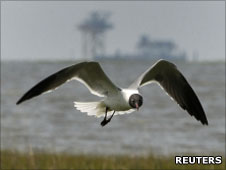 President Obama has been adamant that BP will pick up all the direct costs of the disaster and many of the indirect costs. Which BP can obviously do unless and until it is bankrupted.
Or to put it another way, the principle that the polluter pays only works if the polluter is kept alive long enough to finance and execute the clean-up. The US government therefore needs to be mindful to calibrate its onslaught on BP in a way that doesn't scare off providers of vital credit to the oil company and tip it into bankruptcy.
Damage has already been done, however, to the aspiration that commercial companies should bear all the costs of oil extraction. The adversarial nature of the relationship between the White House and BP probably means that even if a company like BP wanted to take out catastrophe insurance for platforms operating in deep waters, the market would probably be closed.
So like it or not, if it's felt that the world needs the oil from more treacherous locations, the public sector and taxpayers may find they are underwriting some of the risks - unless, that is, the big oil companies themselves can be persuaded to mutually insure each other.
I suppose the big point is that even in the oil industry, it's very difficult to make the polluter pay everything. Whether its finance or energy, taxpayers and states cannot escape exposure to some pretty big liabilities.
Which points perhaps to one of the most puzzling failures of all - which is why the owners of the banks and BP have been so hopeless at looking after their own interests.
Even if shareholders of banks haven't paid their fair share of the cost of cleaning up the worst banking crisis since the 1930s, they've paid quite a lot, in collapsing share prices and cancelled dividends.
They barely raised a titter of protest when the banks were taking reckless risks with their money between 2001 and 2007. And even today, as the Bank of England points out, they're permitting banks to deprive them of vital dividends while handing out colossal remuneration to bankers: shareholders seem to be singularly unable to defend their own interests (with the exception, I should point out, of hedge funds - which will doubtless upset many of you, and is a story for another day).
Equally, did any shareholder in BP notice that it was self-insuring and question whether that was appropriate? In the unlikely event that they did, why did they keep their fears private given the refusal of the company to lay off the risks of its activities?
As luck would have it, the Financial Reporting Council has today published a new "stewardship" code for institutional shareholders, filled with worthy principles for investors to follow in the hope this turns them from absentee landlords into engaged, constructive owners.
It's a start, most would say. But the culture of neglect that arguably infects the big institutions that own our biggest businesses (on behalf of us, because it's our savings that they're investing) won't quickly or easily be cured.
 I'm
I'm 





Page 1 of 2
Comment number 1.
At 09:55 2nd Jul 2010, John_from_Hendon wrote:Banking reforms are pointless without a mechanism for enforcement.
Logically there is a need to first provide mechanisms that prevent avoidance of the regulations. I do not hear any discussions of this at all!
It is I think safe to write: we are not likely to see in our lifetimes any from an global enforcement system as this will require that every state on the planet allows itself to become subsidiary to a global regulator.
Therefore the only option left is to monitor money flows between states - that is bring in Exchange Control. (Someone please argue against me and show that it is possible to regulate in one state and at the same time let money move unhindered.)
Pan-national banks (and other businesses, but less so) are supranational quasi 'states' beyond regulatory control. Discussion of regulation without the means to enforce it is simply a pointless marketing exercise supported by the banks themselves so that they 'appear' to be curbing their own excesses. We must not let them stop us providing an enforcement mechanism.
Complain about this comment (Comment number 1)
Comment number 2.
At 10:20 2nd Jul 2010, Dempster wrote:Will financial reforms work?
Personally I don’t think so.
In the UK, the financial industry has been regulated in the past by the following:
The Bank of England
The Financial Services Authority
The Financial Ombudsman
The Treasury
The Basel ll Agreement
The European Union
That’s an awful lot of people doing an awful lot of regulating.
And let’s face it, it’s not worked has it.
The creation of money in private corporate hands = Debt slavery for the majority.
In any event, the plain truth is, if the state (which is us) does not control the creation of money as debt, then the state (which is us) can only ever be at the mercy of those who do.
And to those who have read this before I apologise for repeating it.
Complain about this comment (Comment number 2)
Comment number 3.
At 10:33 2nd Jul 2010, watriler wrote:In both cases it seem there was no real business continuity or disaster recovery plan which in the case of the Banks required the government to be involved because of the impact on the economy as a whole (unlike even a large oil disaster). For the time being the regulation has to be national (possibly EU wide). Bankers will only pay attention if there is a serious risk that their recklessness or negligence lands them in jail ie statutory backed governance preferably in a mixed economy where the state retains a significant power of ownership and control. Currently UK is well placed to do this.
Complain about this comment (Comment number 3)
Comment number 4.
At 10:41 2nd Jul 2010, writingsonthewall wrote:This comment was removed because the moderators found it broke the house rules. Explain.
Complain about this comment (Comment number 4)
Comment number 5.
At 10:42 2nd Jul 2010, nametheguilty wrote:Exactly - it is the big institutional investors who are most culpable in all this. They routinely act as absentee landlords, putting at risk the money they are paid to safeguard.
Never mind about punishing bankers etc., what is needed is enabling a way for the fund mangers to suffer the consequences of their neglect. The only way banks will be properly run is if their owners are forced to take an interest in what they are doing.
Complain about this comment (Comment number 5)
Comment number 6.
At 10:43 2nd Jul 2010, mibren wrote:It's quite simple really.
The banks were too big to fail.
The oil giants are too big to insure.
Which insurance company in the world could have covered this disaster?
AIG ????
BP are by no means the only major company to self insure.
Complain about this comment (Comment number 6)
Comment number 7.
At 10:43 2nd Jul 2010, Mafiosi wrote:Robert
I am a BP shareholder.
I am very well aware that BP self-insures. I would be keen that it continued to do so.
I remember well that around 20 years ago, BP pioneered a form of analysis that led to increased levels of self-insurance among larger corporates.
The full rationale is complex, but the basic issue for BP is that because it is simply so large an organisation, it dwarfs any insurer from whom it would be able to buy insurance. Even in its current dimished state, its market capitalisation is far ahead of the total market capitalisation of the entire UK non-life insurance industry. The amount of cover that could be provided on anything like sensible terms for an event such as that which it is currently experiencing simply would be too small to be worthwhile.
Possibly the only real argument for BP holding external insurance is that the insurance underwriters might increase the extent of external verification and oversight of its risk controls, but that is another story.
Complain about this comment (Comment number 7)
Comment number 8.
At 10:44 2nd Jul 2010, AndyfromPerth wrote:This comment was removed because the moderators found it broke the house rules. Explain.
Complain about this comment (Comment number 8)
Comment number 9.
At 10:47 2nd Jul 2010, plamski wrote:1. At 09:55am on 02 Jul 2010, John_from_Hendon wrote:
It is I think safe to write: we are not likely to see in our lifetimes any from an global enforcement syste
------------------------
Wherever there's an enforcement, there's a resistance.
Complain about this comment (Comment number 9)
Comment number 10.
At 10:50 2nd Jul 2010, copperDolomite wrote:Problems are only as difficult as anyone wants to make them.
Just dangle some handcuffs in front of them. They'll behave soon enough once some of their mates have been frogmarched off to Bellmarsh with their wealth taken back into public ownership.
Complain about this comment (Comment number 10)
Comment number 11.
At 10:51 2nd Jul 2010, stanilic wrote:Robert, what you are mourning is the death of professional integrity and discretion.
I can recall some 38 years ago being pulled to one side by my director and given a ticking off for becoming too verbal about the liquidity of another business. He told me that whatever the case may be there are very good reasons to keep quiet about such matters as companies can close and people lose their jobs which is in nobody's interest. His words included the phrase `this is not fun, this is real life'. It was a lesson I never forgot.
We now live in more enlightened times in which professional integrity is not valued. BP have made an awful mess of their drilling in the Gulf because they tried to be too clever by half. The same applies to the banks.
It is the absence of risk management which I find quite extraordinary. Surely, if one is pushing either banking or mechanical engineering to the limits then caution should be the determining culture. Seemingly not!
The reality is that our major businesses are now run by the aggressive bonus driven egotistical type who will brook no debate from his subordinates. They only thing that sort want to hear are the words `How high' when they say `Jump'. This is not the way to run complex processes.
We have experienced the full competence of such unprofessional conduct. Why should the responsible collective have to suffer and pay for these disasters without obtaining some consolation from within the criminal legal process?
Managers have to be professional, have to possess moral integrity and have to act responsibly. How else can they successfuly lead a successful business?
Complain about this comment (Comment number 11)
Comment number 12.
At 10:52 2nd Jul 2010, stanblogger wrote:Robert wrote:
"The underlying problem is that the global economy is so dependent on credit"
Very true and this problem must be dealt with if the world economy is ever to recover fully without recreating the conditions which led to the "crunch".
The banks, very sensibly, are not willing to allow their capital reserve ratios to go down to the low levels common before the "crunch" and the new Basle recommendations should be implemented to stop them doing so. However this means that the banks and other financial institutions will not lever up the money supply as much as they used to do, by providing easy credit. So larger supplies of money will be required.
The problem is that European governments including the UK's are hooked on the idea that printing money is always bad. It is not, too little money is just as bad as too much.
Complain about this comment (Comment number 12)
Comment number 13.
At 10:54 2nd Jul 2010, Dave wrote:Shareholder democracy has become non-existent for small shareholders since the nominee system came into force: most nominee accounts do not enable the owner of a share to make a vote.
So salaries continue to be set by the same group of people who would like their own salaries to be in the same ballpark.
And that's just nominee accounts for people who actually explicitly select and own shares.. Pension owners, a further step removed from the system, have absolutely no right to influence the companies that they own.
Complain about this comment (Comment number 13)
Comment number 14.
At 11:00 2nd Jul 2010, CorporateAnarchist wrote:It is possible to insure against all aspects of misfortune in life unfortunately if you did so you would probably starve to death and your house will fall down as you can't afford to maintain it. Companies and people make decisions as to what they can afford to insure. HMG does not purchase any insurance as far as I am aware because the policies would cost more than the returns. BP may have felt it was far better to spend the money trying to make sure that such disasters never happen then in buying insurance. Add up the saved policy quantities from when the "no disaster insurance" policy was initiated and BP could still be up on the deal for all we know.
I'd imagine it is standard industry prractice not to have such insurance.
By all means pick on BP & Haliburton etc for any negligence that occured but this seems like a jibe that is only possible with hindsight.
Complain about this comment (Comment number 14)
Comment number 15.
At 11:09 2nd Jul 2010, Jacques Cartier wrote:@ 1. At 09:55am on 02 Jul 2010, John_from_Hendon wrote:
> Logically there is a need to first provide mechanisms that prevent
> avoidance of the regulations. I do not hear any discussions of this at all!
Banking is a dirty job but somebody has to do it, so we need a two pronged approach.
The trick is to pay as few bankers as possible as little as possible to get the very best service for ourselves. High taxes should drive most of them into better jobs.
We'll also have to pick off each rogue banking state one at a time, starting with London then Switzerland etc. That means sanctions, export bans and electronic isolation.
So far, so good.
Complain about this comment (Comment number 15)
Comment number 16.
At 11:12 2nd Jul 2010, costmeabob wrote:Robert, you state in conclusion
>It's a start, most would say. But the culture of neglect that arguably >infects the big institutions that own our biggest businesses (on behalf >of us, because it's our savings that they're investing) won't quickly >or easily be cured.
Perhaps the article written by a co-founder of Intel (on Bloomberg yesterday) underlines your points, that whether creating jobs or making companies sound for the future, is not made by simply looking to "make a buck" or "please investors"
A brief quote "a daily reminder that while pursuing our company goals, all of us in business have a responsibility to maintain the industrial base on which we depend and the society whose adaptability -- and stability -- we may have taken for granted."
A lot of meaning in those few words. Full article is an interesting read at https://www.bloomberg.com/news/2010-07-01/how-to-make-an-american-job-before-it-s-too-late-andy-grove.html
Complain about this comment (Comment number 16)
Comment number 17.
At 11:24 2nd Jul 2010, plamski wrote:4. At 10:41am on 02 Jul 2010, writingsonthewall wrote:
This comment has been referred for further consideration. Explain
--------------------
First post by WOTW and the moderator does not know how to handle it.
WOTW, have you been telling the truth again, you naughty boy!?
Complain about this comment (Comment number 17)
Comment number 18.
At 11:30 2nd Jul 2010, oldcynical wrote:Its not holding the banks to account where are the sanctions that can be applied to the people running our pension funds inappropriately there appears a very cosy relationship on the whole chain of investment managers once the monies leave our pay packets after the Iceland debacle how many fund managers lost their AAA rating a league table of pension performance would make interesting reading most pensioners have'nt a clue where they stand at this time in relation to before the crunch
Complain about this comment (Comment number 18)
Comment number 19.
At 11:31 2nd Jul 2010, leicestersq wrote:I have to agree with the thrust of the article, that shareholders seem to be unable to act in their own best interests.
The reason for this, is that the true beneficial shareholders, are normally different from those who control the votes of those shares.
Huge numbers of shares are controlled by pension funds, investment banks and insurance companies. They decide how the power of the votes for those shares are exercised. These people who decide how to vote, may well have different interests to those who are the beneficial owners, Mr and Mrs Pension scheme owner or ISA holder.
Over time, the boards of directors have managed to form what appears to be a corrupt relationship, particularly with the investment banks. They advise others on how to cast their votes. It appears that boards of directors are reappointed without fuss and with huge guaranteed pay, and in return, money for old rope work is sent out to the investment banks who control so many of the votes.
The only way I can think of to break this stranglehold on the control of our major companies, is to implement a law, that only allows the 'individual' who is the actual beneficial holder of the share, to cast votes on ordinary shares. These 'Sids' will vote very differently from the stolen votes wielded by the institutions. In short order, executive pay would be brought back under control, and money wasted on investment bank services would be require board members to be sacked.
Until we get this change, legitimised theft of the assets of ordinary people will continue apace.
Complain about this comment (Comment number 19)
Comment number 20.
At 11:33 2nd Jul 2010, 24law wrote:politicians expenses, bankers economy, fiat currencies, environmental disasters...
'Things fall apart; the centre cannot hold...'
It is the time for honesty
Complain about this comment (Comment number 20)
Comment number 21.
At 11:37 2nd Jul 2010, Sutara wrote:The whole problem with all of this is an almost obsessive, unmoderated, love of money to the degree that care and concern for anything or anyone else is pushed aside.
Now, clearly, money IS important, but so are other things in life, business and finance.
If you ALWAYS put money before integrity, justice, fairness, loyalty, social responsibility, professionalism, health & safety, honesty with shareholders, customer relations, and a whole list of other things depending where you sit in the market place (e.g. civil servants and LGO's would probably add accountability and propriety) then these unrescueable messes will occur.
I'm only surprised that anyone's surprised.
Complain about this comment (Comment number 21)
Comment number 22.
At 11:43 2nd Jul 2010, Uphios wrote:11. At 10:51am on 02 Jul 2010, stanilic wrote:
The reality is that our major businesses are now run by the aggressive bonus driven egotistical type who will brook no debate from his subordinates. They only thing that sort want to hear are the words `How high' when they say `Jump'. This is not the way to run complex processes.
........................................
That's how it used to be, now they do not want to hear anything, just do it. And when/if it all goes pear shaped it was your fault for jumping too high/low. Either way it wasn't their fault.
Complain about this comment (Comment number 22)
Comment number 23.
At 11:45 2nd Jul 2010, twinturbo wrote:Good article by Gordon T. Long of Tipping Points, posted on Zero Hedge re the far reaching potential affects of BP's plight.
https://www.zerohedge.com/article/guest-post-sultans-swap-bp-potentially-more-devastating-lehman
Complain about this comment (Comment number 23)
Comment number 24.
At 11:46 2nd Jul 2010, ARHReading wrote:A good starting point would be regulation to force companies to reveal which major shareholders did vote or did not vote at meetings. The technology exists to enable this to be done. So far, no government has moved to enforce disclosure. As transparency is a sign of the times this change would be welcome.
Complain about this comment (Comment number 24)
Comment number 25.
At 11:48 2nd Jul 2010, ARHReading wrote:By the way some hedge funds are interested in buying catastrophe insurance risk.................
Complain about this comment (Comment number 25)
Comment number 26.
At 11:49 2nd Jul 2010, Sutara wrote:8. Andy from Perth wrote
'Surely this is the nub of what has been going wrong for the past 20 years or more - the linkage between the true shareholders of businesses, pension funds etc, and the businesses themselves has been broken.'
And in so many more ways too. Nowadays try and talk or see your GP and you're told to talk to some call centre worker typing replies into a computer. Try to deal with a bank and it's the same or even worse, you have to do it all 'on-line' to save their admin costs. And on, and on, and on.
When - was it nearly two years ago? - people on this blog were calling for a return of the Captain Mainwaring sort of banker, it was for the linkage or connectedness factor. Everything today is distant and remote. Everyone claims that you only have to 'push a button' or 'click a mouse' or 'one simple call' - but it never truly ever works out like that at all.
Perhaps the true problem is that we've not worked out how to truly carry finance, investment and money into the computer age, other than in ways to suit the convenience of the 'greed is good' brigade.
You're right though. No-one actualy seems to want to interact or connect with other real humans any more and so the 'linkage' is broken between customer and bank, pension investor and pension managers, policyholder and insurer, etc., etc.
Complain about this comment (Comment number 26)
Comment number 27.
At 11:52 2nd Jul 2010, shireblogger wrote:Proactive ownership is a worthy objective but it will cost the institutional investors, and therefore us. If the information supply from management is available, that would help. The concern is that you might in effect be suggesting that shareholders become sleeping directors and guide the management process, which I imagine funds would not wish to do. You might need a change of law here.
Complain about this comment (Comment number 27)
Comment number 28.
At 11:55 2nd Jul 2010, 24law wrote:11. At 10:51am on 02 Jul 2010, stanilic wrote:
Robert, what you are mourning is the death of professional integrity and discretion.
_________________________________________________________________________________
when I was 12 I went to the three main political parties local HQ's with a question
because I was young and needed to know about life, so I asked them:
"excuse me what is true? I am 12 and need to know thank you."
I got a similar answer from all three, one put it very clearly
"the truth? the truth is political suicide - haw, haw, haw!"
I have never believed them since,that greedy lying attitude has been proved over and over but now what is the difference between politicians, bankers, international conglomerates? our world is in a 'seriously not good place' and being lied to is not where the future is.
As others have mentioned we need integrity, openness, honesty - values - in the future, and we need them now. as recent events are showing us, the more people lie the worse things become
Complain about this comment (Comment number 28)
Comment number 29.
At 12:02 2nd Jul 2010, LostatHome wrote:I've puzzled over the behaviour of shareholders for a while. Those of us (self included) who acquire (nominee) shares by pooled investments such as unit trusts probably don't see ourselves as in any way entitled to a say in the company's affairs. Our contract is with the investment fund manager who we reasonably expect to acquire and sell individual share to meet the objectives of the fund. So what is the relationship between fund manager and the company? I can't see any long term incentive for the fund manager to help fix any significant problems in the company; all he needs to do is sell that equity and buy a better performing one. So, simplistic as it sounds shareholders (investment funds) in major listed companies seem to take no part in controlling their activities.
On the other hand, shareholders in unlisted companies can be equally pervserse, especially where they are NOT actively managing the business. They seem to take a purely short term financial view of ROI and similar and measures and as long as these appear superficially OK they are happy.
Either way, the very people who own companies were never going to spot the malpractice going on in technically complex companies such as BP.
Complain about this comment (Comment number 29)
Comment number 30.
At 12:14 2nd Jul 2010, DebtJuggler wrote:BP's Tony Hayward will rue the acronym FMEA.
It stands for Failure Modes and Effects Analysis in the engineering industry. It's a sort of 'what if' type of analysis used to analyse every conceivable failure mode.
It's used extensively throughout the aerospace and automotive industries.
I have rarely met an engineer (in 25 years of working life) that has not possessed 'professional integrity'. Engineers are paid a pittance in this country. I'm sure there's an inverse relationship between those facts somewhere.
I think Hayward was a geologist by background. I'm not suggesting geologists do not possess 'professional' integrity, but why is a geologist running (what is essentially) an engineering company?
I also seem to remember there was another unqualified person (an ex retailer!) running one of the largest UK banks before it went bust. I think he went back to retailing. How that man was ever allowed to run another large company in the UK again is nothing short of scandalous.
It could only happen in the UK and USA!
Complain about this comment (Comment number 30)
Comment number 31.
At 12:26 2nd Jul 2010, piquetb wrote:You cannot insure against the USA 's retrospective capriciousness (long history eg Internet poker - er the profits are offshore let's ban it on a whim; Internet porn - er we make the money that so no need for a ban; Insurance - Lloyds seems to rule the world - lets them bust them with asbestosis and let our boys get ahead; Aerospace - lets try and ban Concorde at all costs likewise and lets over-rule fair tenders to keep the business here; lets extradite UK directors using anti-terrorism rules but reciprocate - you must be kidding; WW2 - now Hitler has attacked us we will have to join in, but we will send the bill to the Brits etc etc)
But an industry collectively insured/funded disaster response unit sounds like it would have been an excellent idea - then Obama couldn't just bash the brits, it would be the whole bunch. And maybe it would have provided a better focus than the wasters they put in to "regulate" the industry
Complain about this comment (Comment number 31)
Comment number 32.
At 12:32 2nd Jul 2010, Mark Harrison wrote:Robert,
1: As has already been pointed out, self-insurance is not unusual, BP took a commercial risk that didn't come off, but in the same way that shareholders didn't notice and express concerns, nor did certain journalists. Where are the BBC's articles about the risk of self-insurance in the oil industry PRIOR to the current spill.
2: Let's play a little thought experiment. In this alternative world, BP _had_ purchased insurance. President Obama makes some public statments about how BP will pay, bypassing the court system to do so, and calls in BP's senior management.
Which scenario plays out as most likely?
A: The insurers authorise BP to commit to making the payout on their behalf, rather than waiting till the courts decide what liability is BP's and what is Haliburton's / whoevers?
B: BP turn up, and tell Obama that they can't make any such offer, since it's their insurers' problem, and Obama accepts this.
C: BP turn up, tell Obama that it's their insurers' problem, but Obama plays to the crowd and insists that, since BP has the money, they need to settle. BP agrees, and the insurers subsequently accept that they will just pay BP anyway.
D: BP turn up, tell Obama that it's their insurers' problem, but Obama plays to the crowd and insists that, since BP has the money, they need to settle. BP agrees, but the insurers confirm that they will meet valid claims as assessed by the courts, and that in agreeing to pay, BP has waived (much of) its cover.
or
E: BP turn up, tell Obama that it's their insurers' problem, but Obama plays to the crowd and insists that, since BP has the money, they need to settle. BP refuses to make such a commitment, and the result is massive uncertainty not only about BP, but about Haliburton et al, as well as all those who are then uncertain whether they WILL get any compensation.
I honestly can't see A or B happening.
And I'm not entirely clear why C, D, or E are better than the situation we're in now....
Complain about this comment (Comment number 32)
Comment number 33.
At 12:34 2nd Jul 2010, BobRocket wrote:#16 ostmeabob
good article from Andy Grove, the one thing that leapt straight off the page at me was
'Levy an extra tax on the product of offshored labor'
to my mind that tax should be the difference between our minimum wage and the wage paid in the manufacturing country.
Complain about this comment (Comment number 33)
Comment number 34.
At 12:39 2nd Jul 2010, Jacques Cartier wrote:@ 10. At 10:50am on 02 Jul 2010, copperDolomite wrote:
> Just dangle some handcuffs in front of them.
That's not scary to those guys...
> with their wealth taken back into public ownership.
But that scares the living daylights out of those wimps!
Complain about this comment (Comment number 34)
Comment number 35.
At 12:40 2nd Jul 2010, AudenGrey wrote:I think a lot of 'average Joe's' will maybe start using the supermarket banks in the future. They do not rely wholly on savers and borrowing off the big boys. Tesco's for example also have their punters cash as well.
Maybe 'just banks' will be a thing of the past.
Thanks for clearing up the BP insurance cover. They insure their selves. Lets hope they squirrelled enough shekels away to cover this horrible disaster.
Complain about this comment (Comment number 35)
Comment number 36.
At 12:41 2nd Jul 2010, lsi-92 wrote:Fear not, fellow travellers, this is not the end.... it's just the end of a chapter....
The old world is dying. it was always going to be ugly, just as it was always going to happen.
The old-boy networks are crashing down around us, as they are replaced by a global technocracy.
Everything that is unsustainable is being eliminated. This can only be good for the long-term future of the planet.
Those shareholders who failed to ensure they were not dependent upon an unsustainable resource have only themselves to blame.
Hint: less bingo, more forum postings
Complain about this comment (Comment number 36)
Comment number 37.
At 12:42 2nd Jul 2010, mischievousCheesy101 wrote:10. At 10:50am on 02 Jul 2010, copperDolomite wrote:
Problems are only as difficult as anyone wants to make them.
Just dangle some handcuffs in front of them. They'll behave soon enough once some of their mates have been frogmarched off to Bellmarsh with their wealth taken back into public ownership.
And they are to be charged with....what exactly? Not being very good at your job is not a criminal offence sadly,neither is getting most of your bets wrong in the global financial casino. There has been an underlying assumption on this and Stephanies blog that the credit crisis is the result of concerted criminal activity, but selling stuff you know to be worthless for as much as you can screw out of people is also not a criminal offence...Caveat Emptor applies always.
Complain about this comment (Comment number 37)
Comment number 38.
At 12:45 2nd Jul 2010, writingsonthewall wrote:17. At 11:24am on 02 Jul 2010, plamski wrote:
"First post by WOTW and the moderator does not know how to handle it.
WOTW, have you been telling the truth again, you naughty boy!?"
...as the speed of collapse increases - more and more WOTW blogs are moderated. Speaks volumes about which side our state backed media is on.
It might be because I criticised Robert - the journalists club don't like their failings being pointed out - it makes it hard to be so dismissive of others.
Complain about this comment (Comment number 38)
Comment number 39.
At 12:50 2nd Jul 2010, Steve wrote:Hmmm, with the greatest of respect Robert on the subject of insurance you sound just like my wife! I've had this discussion countless times but when dealing with probabilities it's no good looking back with hindsight when the dishwasher breaks and saying "that proves we should have bought the extended warranty". Everyone seems to have a different view on this and the value of "peace of mind" but from a purely mathematical perspective it's just as "foolish" to throw away premiums each year that could have been invested as it is to be hit with a big but just about affordable bill after a low risk event.
At the end of the day the money has to come from somewhere and the insurance company would not offer to cover it if they hadn't assessed the risks and decided on an appropriate premium (well, in theory anyway). In the case of BP, perhaps it isn't clear whether the final bill they end up being "affordable" but there may not be many insurance companies that would have been able to take such a hit either.
Complain about this comment (Comment number 39)
Comment number 40.
At 12:53 2nd Jul 2010, DisgustedOfMitcham2 wrote:I'm not convinced that BP were wrong not to take out insurance.
No doubt if they had done, they'd just have discovered something in the small print of the insurance policy saying something like "losses arising from exploding oil wells aren't covered if the blow-out preventer hadn't been serviced by an approved blow-out preventer contractor in the 48 hours before the explosion".
You know what insurance policies are like.
Complain about this comment (Comment number 40)
Comment number 41.
At 12:54 2nd Jul 2010, Youre wrote:Shareholders rarely appear to hold a business to account.
Last year BP increased its pay to top executives despite a fall in profits.
"BP faces down shareholder protest on oil sands project"
https://news.bbc.co.uk/1/hi/business/8621366.stm
I wonder what the shareholders think now?
Complain about this comment (Comment number 41)
Comment number 42.
At 13:05 2nd Jul 2010, arun wrote:'Sophisticated' investors' goal is to concentrate profits as much as possible, extracted from as wide a global market as possible. At the same time any risks or losses are to be dispersed to as wide a population as possible, so that their share of losses will be relatively very small. The banks have successfully demonstrated how to do this. The shareholders could collect big profits among themselves while the losses were distributed to the general population. The principle is applied recursively. For example, within the companies themselves profits are concentrated more towards the executives, people managing the institutional shareholders etc. in the form of huge salaries, bonuses, guaranteed pension etc. The risks and losses will be distributed more widely among the ordinary shareholders.
Unfortunately for BP, Obama seems to be making it not easy by insisting that it bear all the losses. It appears that the oil companies need more 'sophistication' to reach the level of the bankers. One can understand many people say it is unfair.
Complain about this comment (Comment number 42)
Comment number 43.
At 13:15 2nd Jul 2010, BP1 wrote:Reasons for BP not to buy insurance:
1. They would be transferring risks to insurers that are most likely weaker than BP. If the insurance company fails then BP still has an uninsured loss but won't get their insurance premium back
2. Unlikely that capacity exists within the insurance market to buy cover up to the level of losses that BP is going to suffer, at least not at a reasonable price
3. Financing risks internally using their captive insurance company has most likely generated huge savings for BP compared to the cost of buying insurance externally
4. Insurers will often want to take control of disaster response in order to limit their losses. By self-insuring, BP is able to take full control of their response to this incident
5. Insurers don't like to pay big claims. It would take years of litigation for BP to recover losses from insurers and reinsurers
Complain about this comment (Comment number 43)
Comment number 44.
At 13:15 2nd Jul 2010, thomas betham wrote:For every extra million pounds that the banks are required to keep in capital, the system of leverage means that fifteen million pounds are removed from the economy.
It is no good politicians then complaining that businesses cannot get loans and consumers can’t get mortgages.
You can have safer banks but only at a cost.
Complain about this comment (Comment number 44)
Comment number 45.
At 13:24 2nd Jul 2010, YellowBrickRoad wrote:26 Sutara:
'You're right though. No-one actualy seems to want to interact or connect with other real humans any more and so the 'linkage' is broken between customer and bank, pension investor and pension managers, policyholder and insurer, etc., etc.'
Thank you, you have described the exact opposite of what we do and why it works for us. We work with our customer over the internet. We may be remote but we are anything but remote and our contact is direct. You are also describing why so many corporations are motoring full steam ahead into trouble. It is one of the great conflicts in the current situation that we have more potential connectivity than ever before but more disconnection is in process than ever before.
Complain about this comment (Comment number 45)
Comment number 46.
At 13:27 2nd Jul 2010, hubert huzzah wrote:"Even if shareholders of banks haven't paid their fair share of the cost of cleaning up the worst banking crisis since the 1930s, they've paid quite a lot, in collapsing share prices and cancelled dividends."
Nonsense. The collapsed share prices and cancelled dividends are not a cost of cleaning up the crisis they are unrealised predictions. The dividends expected have not come to pass. That is the nature of the catastrophe: the banks and their shareholders have been paying themselves from the future for decades. That is coming to an end. That is not a "cost" of cleaning up. It is the clean up.
The true costs of the crisis are the direction of the profits of productive activities in all sectors other than the banks into ensuring the banks do not fail. The crisis was created by the banks. The crisis is being sustained by the banks. The crisis is all that is keeping the banks afloat and in existence.
The credit issue model of commercial banking is dead. Revival through "recovery" of that model is irrational and recreates the absentee landlord relationship between banks and taxpayers. This reinforces the fact that banking profit is taxation - which is never the proper activity of private business. Credit issue has to become controlled by Central Banking or the crisis will reoccur.
While BP is culpable for a massive ecological disaster that will take decades to stabilise - let alone clear up - the BP Shareholding is aware that they self insure (or should be given the BP annual reports). This polluter pays principle is exactly the principle that the banks are seeking to avoid.
There is much talk of personal responsibility emanating from the banks in respect of personal debt, there is little balancing discussion of corporate responsibility. The Systematic cuts that have been identified in the Welfare State are the social pollution of the banks. On the BP Principle of self insurance and polluter pays, the Taxpayer is reasonable in expecting the Banks to sustain the Welfare State without compensation. While there is much talk of the Banks being to big to fail - well so is BP, yet they have a model for coping with disaster.
There should also be some discussion of society being to big to fail and why taxpayers are being expected to fund the social pollution they did not create.
Complain about this comment (Comment number 46)
Comment number 47.
At 13:29 2nd Jul 2010, alzyalzo wrote:WOTW - you should write your own blog away from the restrictions of moderators. You have many fans!
Complain about this comment (Comment number 47)
Comment number 48.
At 13:36 2nd Jul 2010, Up2snuff wrote:re #38
Oh dear. I've just been a bit unenthusiastic about NR's latest effort. Yes, you could be right. I had a post nailed day before yesterday by the Mods and it didn't break the rules but just pointed out that a bit more info was needed in RP's Blog. After all, that's what journalism is about, is it not?
Complain about this comment (Comment number 48)
Comment number 49.
At 13:43 2nd Jul 2010, Up2snuff wrote:1. At 09:55am on 02 Jul 2010, John_from_Hendon wrote:
Banking reforms are pointless without a mechanism for enforcement.
Logically there is a need to first provide mechanisms that prevent avoidance of the regulations. I do not hear any discussions of this at all!
--------------------------------------------------------------------
OK. Here's a bit. Unfettered inspection powers for the BoE.
The problem is that Inspectors need to be able to look at values. A lot of what is being traded now is of uncertain value. And how to stop the system long enough to look.
Complain about this comment (Comment number 49)
Comment number 50.
At 13:43 2nd Jul 2010, writingsonthewall wrote:Do you want to know why I am so convinced our Government would rather lie until the bitter end rather than face up to the public the extent of the problem?
This story here shows exactly why - the comment "But Cabinet Office minister Francis Maude said public servants "should not alarm the public"."
So being honest is now 'alarming the public' now is it? Does that mean my comments are moderated out for fear of 'alarming the public'? Do we all have to keep quiet for fear of 'alarming the public'? Do we have to stand by and witness the grandest robbery in history and say nothing for we do not want to 'alarm the public'?
If you cannot see this now - you never will - one day you will wake up and it will all be a surprise to you - but it will be far too late.
https://news.bbc.co.uk/1/hi/england/london/10485429.stm
If they don't want to disclose issues of a terrorist nature - what are the chances they're going to bother us with the small matter of Economic collapse.
Whilst the plane is crashing, our politicians are on the tannoy reassuring us that everything is OK and that the ground which is approaching fast outside your window - is perfectly normal.
Meanwhile they are all quietly taking their crash positions.
They blame the shareholders for the collapse and mismanagement of these giant corporations - if I were shareholders I'd turn my shares in today and we'll see how long they survive without shareholders investment.
Complain about this comment (Comment number 50)
Comment number 51.
At 13:45 2nd Jul 2010, writingsonthewall wrote:40. At 12:53pm on 02 Jul 2010, DisgustedOfMitcham2
...or "sorry, but your oil rig was not 'at home' and you only have home policy cover. Items away from home are not covered I'm afraid"
Complain about this comment (Comment number 51)
Comment number 52.
At 13:46 2nd Jul 2010, Up2snuff wrote:re #2
Needs saying again but thanks for the apology. Two of your list were external to the UK. We could, and hopefully will (as it seems the Coalition are headed that way) put it all back in the hands of the BoE.
Complain about this comment (Comment number 52)
Comment number 53.
At 13:53 2nd Jul 2010, Everydayperson wrote:30. At 12:14pm on 02 Jul 2010, DebtJuggler wrote:
"BP's Tony Hayward will rue the acronym FMEA.
It stands for Failure Modes and Effects Analysis in the engineering industry. It's a sort of 'what if' type of analysis used to analyse every conceivable failure mode.
It's used extensively throughout the aerospace and automotive industries."
It's not just used in aerospace & automotive. It's universally used in the oil industry. Including refineries, distribution, storage and yes, drilling platforms. Hmmm, I wonder if that professional integrity mentioned extensively on this blog will save the paperwork heading for the shredder as we write!
Complain about this comment (Comment number 53)
Comment number 54.
At 13:53 2nd Jul 2010, engineer99 wrote:How many of the oil majors are likewise self-insured. Most I expect. After all what is equity but risk capital. Insurance is a largely over-rated product and probably very hard to obtain for such events. Who insures our nuclear power operating companies against a devastating reactor event. I expect they are either self insured and would go bankrupt or the government will pick up the tab - same result in either event.
The parallels between BP and the banks are not that clear to me:
The banks were too big to fail - BP clearly isn't and so the risk to society from what BP has done is tiny in comparison to what the banks have done, just a lot more obvious.
Complain about this comment (Comment number 54)
Comment number 55.
At 14:01 2nd Jul 2010, writingsonthewall wrote:37. At 12:42pm on 02 Jul 2010, mischievousCheesy101 wrote:
"There has been an underlying assumption on this and Stephanies blog that the credit crisis is the result of concerted criminal activity, but selling stuff you know to be worthless for as much as you can screw out of people is also not a criminal offence...Caveat Emptor applies always."
Well that's not true - it's only in finance that this is the case. You open up a shop tomorrow and start selling gold plated watches as solid gold and see how long before trading standards come along with a court order to shut you down and lock you up - here's an example if you don't believe me.
"Babar Hussain
Pleaded guilty at Birmingham Crown Court on 26th June 2009 to 7 offences of having in his possession, custody or control in the course of a business 514 items of clothing which bore signs identical to or likely to be mistaken for registered trade marks with a view to sale or distribution and without the consent of the proprietors. Sentence was imposed on 21st July 2009.
6 months imprisonment
No costs awarded
Forfeiture order granted in respect of 551 total items seized
TRADE MARKS ACT 1994"
...of course this was a mere drop in the ocean compared to the huge amounts of money involved in finance - caveat emour is it?
You can browse all day if you like in order to further your education.
https://www.birmingham.gov.uk/cs/Satellite?c=Page&childpagename=Regulatory-Services%2FPageLayout&cid=1223092615528&pagename=BCC%2FCommon%2FWrapper%2FInlineWrapper
It is a criminal offence - just not for those who currently control Government.
Complain about this comment (Comment number 55)
Comment number 56.
At 14:02 2nd Jul 2010, writingsonthewall wrote:41. At 12:54pm on 02 Jul 2010, Dillers wrote:
"Shareholders rarely appear to hold a business to account.
Last year BP increased its pay to top executives despite a fall in profits.
"BP faces down shareholder protest on oil sands project"
https://news.bbc.co.uk/1/hi/business/8621366.stm
I wonder what the shareholders think now?"
Oh they're all too busy crying about how unfair it is that BP is being picked on by the US - oh woe is me, didn't take any responsibility but now want someone to wipe my bum now I've had an accident - sound familiar?
Complain about this comment (Comment number 56)
Comment number 57.
At 14:07 2nd Jul 2010, writingsonthewall wrote:43. At 1:15pm on 02 Jul 2010, BP1
6) Insurance is a bottom line cost - and who needs it anyway - it will never happen!!
...best to just not bother...someone will bail me out if it all goes wrong, and besides I'll earn a fat bonus for 'driving down costs' and the shareholders will love me - as long as it doesn't go pop on my watch I'll probably get a nice new job in Government on a Quango advising how to 'make public services more efficient' - perhaps by removing insurance costs for 'highly unlikely events'.
Come on filks - it doesn't take a genius to work it all out.
Complain about this comment (Comment number 57)
Comment number 58.
At 14:17 2nd Jul 2010, writingsonthewall wrote:44. At 1:15pm on 02 Jul 2010, thomas betham
Oh that's just the upcoming 'squeeze'.....
What the media has failed to notice while it busilly applauds banks getting back to profits as a good thing - is where that profit is coming from. The massive losses were plugged by Government, but the ongoing losses are being covered by the consumer. Unfortunately only the consumer in debt is able to support this, the debt-low and debt free (the prudent) do not contribute to this in any significant way (banks make money from lending, not borrowing)
If you think about the consequences of those who are already in big debt being squeezed for more - and simultaneously the prudent reducing their debts - there is only 1 conclusion, there will be more and more bankruptcies from one section of society - totally polarising the nation into good debtors and bad debtors. Unfortunately this is the reverse of what is required if your plan is to 'borrow your way out of recession' - not that you have a choice as a Government anymore, that die has already been cast.
I now know why they call them vampire banks - because they literally do suck the blood (wealth) out of the Economy, but unlike a vampire they do not have a single access point (the neck) - but are in fact drawing it from the public sector, the private sector and the consumer.
Remember GDP?
GDP(Y) = C + I + G + (X − M)
C - Vampired (mortgage rates of 4% above BoE rate)
I - Vampired (lending rates very high - I know a SME paying 25% on it's overdraft, a rise from 12% pre-crisis)
G - Vampired (The bailouts and diversion of project spending to the financial sector, aided and abetted by Government)
No wonder all the hopes are for an export led recovery - the vampires have their teeth in all the other parts and are sucking them dry.
Complain about this comment (Comment number 58)
Comment number 59.
At 14:17 2nd Jul 2010, ghostofsichuan wrote:It might be better to pass a law that would state that taxes could not be used to bailout any private companies. We should put some of the responsbility where it belongs and that is with the political process that facilitated the crisis and decided that their banking friends were much more important than the people. Also, as the banks were essentially bankrupt, or so they said, they should also be given a repayment plan for the bad debt assumed by the governments. Why should the taxpayer be burdened with taxes to pay for the poor judgement and risky behaviors of the banks? The banks were insuring their loans only the insurance they devised had no funds..in any other situation this would have been considered an illegal lending practice by defrauding the investor with claims of insured investments that were not. I still believe that most of this should be in the courts so that the truth might to some degree be known and allocations of responsbilities be awarded. I would not believe a sigle thing put forward by the bankers or their government handmaids as they have both already proven to be untrustworthy. I would not object and probably most others would not if some funds were used for investigations and prosecutions, as there has been no justice to this point.
Complain about this comment (Comment number 59)
Comment number 60.
At 14:23 2nd Jul 2010, writingsonthewall wrote:46. At 1:27pm on 02 Jul 2010, hubert huzzah wrote:
"Nonsense. The collapsed share prices and cancelled dividends are not a cost of cleaning up the crisis they are unrealised predictions. The dividends expected have not come to pass. That is the nature of the catastrophe: the banks and their shareholders have been paying themselves from the future for decades. That is coming to an end. That is not a "cost" of cleaning up. It is the clean up."
Take note all - this is exactly what has occured in the last decade - the dividends pais are from future expected profits if they don't arrive then whoever is holding the parcel when the music stops gets stuffed - whether they are speculator (who deserves it) or unwitting pensioner (who doesn't even know it's going on)
hubert huzzah - you have earned your stripes on the Peston blog today - lets hope others pay attention to this 'hidden fact' (hidden by the media, not by the public)
Complain about this comment (Comment number 60)
Comment number 61.
At 14:27 2nd Jul 2010, writingsonthewall wrote:47. At 1:29pm on 02 Jul 2010, alzyalzo wrote:
"WOTW - you should write your own blog away from the restrictions of moderators. You have many fans!"
If I did, the digital economy bill would ensure it was shut down quickly. After reading a very interesting article about the internet and how it laughs in the face of scarce resource management (that's economics to you and I) - I now realise why they want to control it.
You cannot make money from abundance, and the internet has it.....well in abundance!
I'm much better off here showing the BBC up for their part in this whole deception - whether they're doing it knowingly or not.
Still, when you have such highly paid executives it seems failure is the only result these days.
Complain about this comment (Comment number 61)
Comment number 62.
At 14:28 2nd Jul 2010, Tim wrote:"27. At 11:52am on 02 Jul 2010, shireblogger wrote:
Proactive ownership is a worthy objective but it will cost the institutional investors, and therefore us."
Oh, really? These funds have lost collosal sums of pensioners' money by failing to be responsible owners of the businesses that they invested in. I fail to see how correcting this lax attitude should cost us a penny: quite the reverse.
Complain about this comment (Comment number 62)
Comment number 63.
At 14:39 2nd Jul 2010, Tim wrote:Unless Robert is able to name an insurance company large enough to swallow BP's liabilities relating to Deepwater, I think his point about buying insurance is a bit silly.
Surely the point is that BP weren't self-insuring? Self-insurance doesn't mean no insurance, it means taking internal measures to reduce and hedge risk. 4 fatal accidents and one catastrophic oil spill in the Gulf of Mexico area tells you all you need to know about BP's risk management, at least in North America. It was woefully inadequate.
This comes back to shareholder activism. Where were the shareholders demanding improved safety when fatal accident after fatal accident in the Texan refinery was tarnishing the company's image and impairing the value of their shares? They did nothing because they just didn't care, as they would get their 1.5% "management" fee regardless of performance.
Complain about this comment (Comment number 63)
Comment number 64.
At 14:46 2nd Jul 2010, writingsonthewall wrote:54. At 1:53pm on 02 Jul 2010, engineer99 wrote:
"The banks were too big to fail - BP clearly isn't and so the risk to society from what BP has done is tiny in comparison to what the banks have done, just a lot more obvious."
I'm not so sure....if BP fails then the direct job losses (96,000), the sub-contracting losses and the loss of income to both Governments (through taxes) and to individuals (through investments / pensions) are probably enough to force a bailout consideration (if it's even possible).
...and before all those free market losers come on here and remind us of how the rivals will re-employ all these people - a) this takes time and b) a vast number of people won't be taken on by rivals, and if they do it's at a much reduced cost.
Complain about this comment (Comment number 64)
Comment number 65.
At 14:51 2nd Jul 2010, Barry wrote:no. 34, Jacques Cartier
Should legislation be enacted to put bloggers in charge of banks? Then again, I suppose that might not work, since if they had proper and meaningful jobs, bloggers wouldn't be blogging in the first place!
Best you stick to Peston's Picks and blogging..
Complain about this comment (Comment number 65)
Comment number 66.
At 14:53 2nd Jul 2010, Tim wrote:This comment was removed because the moderators found it broke the house rules. Explain.
Complain about this comment (Comment number 66)
Comment number 67.
At 14:55 2nd Jul 2010, Robin Gitte wrote:Insurance inherently increases social division so I never insure myself unless legally required to do so.
Insurance is a rip off cartel - how else could they afford such a huge chunk of the yellow pages? We are mugs to buy into this.
BP are absolutely right to reject insurance.
#23 twinturbo - excellent article thanks.
Complain about this comment (Comment number 67)
Comment number 68.
At 15:35 2nd Jul 2010, nautonier wrote:Sounds to me like the taxpayer and stakeholders are paying while - the piggies still have their golden ladders, troughs and ... a trotter in the till for 'good measure'.
Complain about this comment (Comment number 68)
Comment number 69.
At 16:20 2nd Jul 2010, YellowBrickRoad wrote:errorist attack warning
Robert, you make money by taking risks. Fair enough. (If you take absolutely no risk you will make very little money unless you have a monoploy, which is why business seeks a monopoly). This risk exposure is controlled by some form of risk evaluation, whether it is called quality control, insurance, statistics etc etc, it makes no odds where the risk is sold or managed in house. The question of selling the risk on is a red herring. Unfortunately the bigger the risk usually the bigger the related profit. As the word risk implies not all downside outcomes are realised. So there are always beancounters around who say look how clever I am - I am ignoring risk and turning a fantastic profit. Dont listen to that boring guy over there saying there is risk he's just so square - Its all a matter of skill and I'm just so skilled. No your a flaming berk, a 'fantastic fab', a raving lunatic in a pin striped suit and you should be locked up in a mental hospital because you have a personality disorder. Then the statistics kick in at some point and you get a disaster. I HAVE NO SYMPATHY. Just how many examples are needed before people get it. Space shuttle, Baring Bank, BP, Exon, RBS etc etc. BTW can you explain to me how Sir Shred can run RBS into the ground, get a handout, be declared not a fit person to be involved in finance again by the FSA, yet no action apparently taken against him.
BP Haywood 'I want my life back'. Doh, so the the 11 guys that were on the rig.
I understand that volumetrically more oil spills flow in to the sea off Africa than the BP spill off the US but mysteriously that doesnt seem to get mentioned in the media. Despite the fact its our planet not some oil companys.
As the size of corporations grows so does their home brewed disaster capability. You dont need terrorists when you have these corporate errorists about do you, they are far more catastrophic.
Complain about this comment (Comment number 69)
Comment number 70.
At 16:24 2nd Jul 2010, YellowBrickRoad wrote:66. Tim:
Your assumption is probably the wrong gender WOTW has a prefered hairdresser.
Complain about this comment (Comment number 70)
Comment number 71.
At 16:40 2nd Jul 2010, newProtectorCromwell wrote:According to the Bank for International Settlements, by the 4th quarter of 2009 UK Banks had racked up total external debt of £5.758tr. Of course, on the other side of the equation there are assets. But, in the current dire economic circumstances of the world, how much of those assets are worth anything? How much is in irrecoverable sovereign debt, how much in banks not worth a fig? So we need to amend Robert's "The underlying problem is that the global economy is so dependent on credit" to read "on dodgy credit". It can't continue like this. Another crash is inevitable.
Complain about this comment (Comment number 71)
Comment number 72.
At 16:53 2nd Jul 2010, Tony wrote:Private sector Rating Agencies which are lightly regulated and funded by their clients.
The opaque operations of fund managers speculating with other people's money.
Designer label accounting statements that can produce whatever financial picture you require.
Off Balance Sheet SIV's to hide those embarrassing assets.
Utterly meaningless jargon and a lexicon designed to confuse and create a false sense of security (doesn't 'investing' sound SO much more attractive than 'speculating!'.
I could go on...
Personally, I wouldn't go anywhere near the Stock Market, or any of it's acolytes.
To turn an old saying on it's head - "Where there's brass, there's muck!"
Complain about this comment (Comment number 72)
Comment number 73.
At 17:09 2nd Jul 2010, John_from_Hendon wrote:#49. Up2snuff wrote:
"
#1. John_from_Hendon wrote:
Banking reforms are pointless without a mechanism for enforcement.
OK. Here's a bit. Unfettered inspection powers for the BoE.
"
You seemed not to comprehend the 'INTERNATIONAL' nature of the banking business. No inspection by the Bank of England will ever stop overseas subsidiaries doing exactly what the bank wants them to do.
So No your 'answer' is an illusion....
Complain about this comment (Comment number 73)
Comment number 74.
At 17:23 2nd Jul 2010, BluesBerry wrote:Banks and shareholder neglect:
How much further can the American middle class carry the American budget?
The Financial Reform Bill provided some little protection for consumers.
BUT for Goldman Sachs and other derivative investment banks, the bill was a winner. The headline" "Wall Street remains open for speculation and gambling."
Having provided trillions to save the Wall Street boys, the American Government’s credit rating is now in jeopardy. The citizens have been laden with the derivative bundles.
Some states have budget shortfalls.These states have to borrow through bond issues; many are so close to bankruptcy that their municipal bond ratings are collapsing. Worse, states are not legally allowed to default. Unlike the federal government, which can go into debt indefinitely, states must balance their budgets. They cannot simply print money. This puts the states into the very same position as Greece, Spain and other European Union countries (All European-member countries are restricted under EU rules from either issuing their own currencies or borrowing from their own central banks.).
Paul Volcker, former Federal Reserve Chairman and current White House economic adviser, said that Congress needs to consider a Value Added Tax (VAT) – a tax on various stages of production of consumer goods. A VAT of 17.5% is now imposed in Britain, with 20% pending. In Europe, citizens get something for their money - including federally-funded health care. What will they get in the United States?
An American VAT will hit the lower and middle classes, since they spend most of their incomes on consumables. The rich, on the other hand, put much of their money into speculative trades, and how can you tax those – except by a Tobin Tax.
The financial speculators who caused the economic collapse are having a field day. They not only pay no tax on the purchase and sale of their financial goodies, but they pay very little in the way of income taxes. Goldman Sachs paid an effective income tax rate of only 1% in 2008. How was that possible?
While Congress & The Senate (mostly elites to begin with) cater to the banks, the little people have been left in the financial desert.
Unlike EU countries, where the VAT is the largest single source of tax revenue, the States of the United States already have an essential VAT in their sales tax. Adding an American VAT would be equivalent to doubling the sales tax.
The United States desperately needs a financial transaction tax on speculative trading (aka “Tobin Tax”) The revenue potential is huge. The Bank for International Settlements (BIS) reported that for 2008 the annual derivatives trades were $1.14 quadrillion (a quadrillion is a thousand trillion). A mere 1% tax on $1 quadrillion in trades would generate $10 trillion. That is only for the derivative trades. There are also stocks, bonds and other financial trades.
Another advantage, a Tobin Tax would likely wreck havoc with the high-frequency program trades that now effectively run 70% of stock market purchases. The sudden, thousand-point drop in the Dow Industrial Average on May 6 showed (not worries about the Euro or anything else but) how vulnerable the stock market is to manipulation by these sophisticated market gamblers & their speculation machines. The whole high-frequency trading business needs to be stopped, in order to protect legitimate investors.
At the G20, a financial transaction tax was discussed and supported by France and Germany but opposed by the U.S. and Canada, although nothing binding was resolved. The Americans cannot afford to wait; they need a Tobin Tax, and they need it now. Objection might be made by the Wall Street speculators, but why would the American Government cater to the robber barrons?
Complain about this comment (Comment number 74)
Comment number 75.
At 17:32 2nd Jul 2010, writingsonthewall wrote:This comment was removed because the moderators found it broke the house rules. Explain.
Complain about this comment (Comment number 75)
Comment number 76.
At 17:37 2nd Jul 2010, Sasha Clarkson wrote:Robert wrote: "As it happens, oil is probably as vital to the functioning of the global economy as credit creation and money transmission."
More proof of your bankocentric view of the economy :-D
Money could be regarded as merely an aid to accounting, whereas energy is vital. I remember visiting the Ukraine in 1992, not long after the collapse of the Soviet Union. Yeltsin had effectively divorced Ukraine in order to consolidate his power in Russia. So Ukraine was left without a currency. It immediately invented a new one "Coupons", which were more or less worked for things that were produced internally. The problem was inefficient industry and the foreign trade deficit - especially an energy shortage.
The propblems persist there today. What ever the solution is to Ukraine's problems, it's not banking. But a new source of energy might help a lot!
PS Good posts from @1 John, @12 Stan and others.
@16 Thanks very much for that link!!
A general comment - the lack of accountability of public compamies is not a new issue: it was highlighted by JK Galbraith in several works in the 60s, most notably in "The New Industrial State".
Complain about this comment (Comment number 76)
Comment number 77.
At 18:27 2nd Jul 2010, plamski wrote:50. At 1:43pm on 02 Jul 2010, writingsonthewall wrote:
So being honest is now 'alarming the public' now is it? Does that mean my comments are moderated out for fear of 'alarming the public'? Do we all have to keep quiet for fear of 'alarming the public'?
-------------------------
WOTW, this is classic case of Cognitive Dissonance. Most of the people, the media, the government, the bankers, the police can NOT face up to the idea that they might have been following the wrong idea all their lives.
It's the very top elite that knows and accepts two ideas and it's how they make both work for them ONLY.
It's more than just wanting to know the truth is the ability to BEAR the idea of EVERYTHING IS WRONG.
You have to understand that it's hard for most of the people. Most of us have been indoctrinated in school to follow just ONE idea. The ability to bear two contradictory thoughts and accept both at the same time is not taught in schools.
It's the case of convincing ourselves that the grape is sour as it is too high on the tree! Life is more bearable for the soul that way.
Asking question and knowledge brings sorrow.
Complain about this comment (Comment number 77)
Comment number 78.
At 18:49 2nd Jul 2010, DebtJuggler wrote:#53 Everydayperson wrote:
'It's not just used in aerospace & automotive. It's universally used in the oil industry. Including refineries, distribution, storage and yes, drilling platforms. Hmmm, I wonder if that professional integrity mentioned extensively on this blog will save the paperwork heading for the shredder as we write!'
-----------------------------------
Hmmm...maybe it wasn't an 'accident' then!
Because 'accidents' like the Gulf oil disaster certainly helps Gov'ts around the world to pass stealth tax legislation like this...
'Prices rise as New Zealand passes emissions trading scheme'
https://www.telegraph.co.uk/news/worldnews/australiaandthepacific/newzealand/7865009/Prices-rise-as-New-Zealand-passes-emissions-trading-scheme.html
Complain about this comment (Comment number 78)
Comment number 79.
At 19:05 2nd Jul 2010, DebtJuggler wrote:UK government’s experiment asking the little people what laws they want repealed results in people demanding that the Digital Economy Act be scrapped!
Too funny. Of course, the government will not allow the people freedom from cartels and monopolies, so I doubt the people’s wishes will be heard. I predict that this little experiment in talking to the little people will be scrapped.
https://maxkeiser.com/2010/07/02/uk-governments-experiment-asking-the-people-what-laws-they-want-repealed-results-in-people-demanding-that-the-digital-economy-act-be-scrapped/
Complain about this comment (Comment number 79)
Comment number 80.
At 19:06 2nd Jul 2010, DavCrav wrote:OK, back to topic. Insurance for anything where if it goes wrong you can pay for it reasonably easily is silly. The reason is that the premiums have to be more than the cost of providing the insurance, or else the insurance company itself goes bust. And of course that means you don't get paid anyway.
So this leaves the case where you cannot afford the payout: this makes sense as a homeowner. Insurance a house is fairly cheap because it's unlikely to burn down, and if it does you are stuffed. But there is no insurance company around that would provide £20bn cover for BP. End of story.
Complain about this comment (Comment number 80)
Comment number 81.
At 19:25 2nd Jul 2010, Everydayperson wrote:78. At 6:49pm on 02 Jul 2010, DebtJuggler wrote:
"Hmmm...maybe it wasn't an 'accident' then!
Because 'accidents' like the Gulf oil disaster certainly helps Gov'ts around the world to pass stealth tax legislation like this..."
In most situations the simple explanation is usually the right one. The corporate world is littered with examples of management overruling their own, or ignoring industry standard risk management processes in pursuit of lower operating costs. Most get lucky & never get found out. Here's a couple who didn't get lucky... perhaps just like BP
https://www.theengineer.co.uk/channels/process-engineering/hse-warning-after-bulmer-legionnaire-prosecution/306929.article
https://business.timesonline.co.uk/tol/business/law/article1936836.ece
Complain about this comment (Comment number 81)
Comment number 82.
At 20:01 2nd Jul 2010, LostatHome wrote:#30 DebtJuggler
FMEA - now I think you're being a bit cheeky there my friend.
I'm a scientist. My company employed a quality manager with no knowledge whatsoever of my industry. I did not know what FMEA stood for (after 2 meetings). So I found out. But that did not make up for my new QM's lack of any knowledge whatsoever. When I asked her who would supply the technical knowledge she pointed at me. So, start with those who know the activity then add the process folks. Never vice versa!
Complain about this comment (Comment number 82)
Comment number 83.
At 20:59 2nd Jul 2010, Tony wrote:74 BluesBerry.
Thank's for sharing your thoughts - few posts have made such an impression on me!
I can only wish you well.
Complain about this comment (Comment number 83)
Comment number 84.
At 21:08 2nd Jul 2010, Jacques Cartier wrote:@ 65. At 2:51pm on 02 Jul 2010, Barry wrote:
> Should legislation be enacted to put bloggers in charge of banks?
It's called democracy, looser.
> Best you stick to Peston's Picks and blogging..
Yeah. We won out, eh? We've strung the hedgies and now we'll sting you... the Internet is great for changing things, eh?
Complain about this comment (Comment number 84)
Comment number 85.
At 21:21 2nd Jul 2010, Devonseaglass-on the shore wrote:It seems that shareholders, in the form of pension fund managers are culpable.
Complain about this comment (Comment number 85)
Comment number 86.
At 21:32 2nd Jul 2010, YellowBrickRoad wrote:79. DebtJuggler
I thought the average politican had a lot of little people voices in their head already so I am surprised they are asking even more little people outside their head what they think : )
Complain about this comment (Comment number 86)
Comment number 87.
At 22:36 2nd Jul 2010, Stodoc wrote:Mr Peston,
At first glance, it appears that here are similarities between the banks and BP, but fundamentally, you are very wrong.
The banks were not fulfilling a socially useful function when creating derivatives that even they did not understand. Sadly, much of the "banking" was (and largely still is) pure gambling. Many of the instruments were rated and insured; that's why AIG went down and monolines nearly did so too, as you know well yourself. When it all went wrong, they were bailed out, while they should have been let go.
BP, on the other hand, produces stuff that we all need and most genuinely can't live without. They may have gotten it wrong. They may have underestimated risks and underinvested in safety. I don't know. They didn't take out insurance - perhaps it was too expensive? Or nobody offered it? I don't know. But when it all hit the fan, they said they will cover all costs and are paying up. Even in the US there are voices saying that BP has done more than the administration. The banks never offered to pay, but shouted loud when their bonuses were at risk. Talent...
In the future, please try not to confuse a more or less honest business with a bunch of hyperactive gambling City "workers", even if the latter happen to be your friends.
I have no conflicts of interest.
Complain about this comment (Comment number 87)
Comment number 88.
At 22:51 2nd Jul 2010, Averagejoe wrote:"77. At 6:27pm on 02 Jul 2010, plamski wrote:
50. At 1:43pm on 02 Jul 2010, writingsonthewall wrote:
So being honest is now 'alarming the public' now is it? Does that mean my comments are moderated out for fear of 'alarming the public'? Do we all have to keep quiet for fear of 'alarming the public'?
-------------------------
WOTW, this is classic case of Cognitive Dissonance. Most of the people, the media, the government, the bankers, the police can NOT face up to the idea that they might have been following the wrong idea all their lives.
It's the very top elite that knows and accepts two ideas and it's how they make both work for them ONLY.
It's more than just wanting to know the truth is the ability to BEAR the idea of EVERYTHING IS WRONG.
You have to understand that it's hard for most of the people. Most of us have been indoctrinated in school to follow just ONE idea. The ability to bear two contradictory thoughts and accept both at the same time is not taught in schools.
It's the case of convincing ourselves that the grape is sour as it is too high on the tree! Life is more bearable for the soul that way.
Asking question and knowledge brings sorrow."
Its interesting to see that more and more bloggers are 'singing from the same hym sheet' on this blog and the 'believers' in the system are melting away, plamski. Lets face it, its becoming more obvious everyday. The truth will always out, eventually.
Complain about this comment (Comment number 88)
Comment number 89.
At 00:01 3rd Jul 2010, Robin Gitte wrote:87. Stodoc:
Well said.
Complain about this comment (Comment number 89)
Comment number 90.
At 00:33 3rd Jul 2010, Idont Believeit wrote:I enjoy, am facinated by and am scared out of my wits by much of the above discussion. The nagging fear that something is seriously wrong with matters banking and financhial is partly balanced by how closely some posts seem come to conspiracy theory. As a cynic I tend towards 'cock-up' rather than 'conspiracy' but I'm not sure that's any more comforting.
Somewhere above is a post that discusses whether people really want to know the 'truth' or would prefer to delude themselves as a defense mechanism. Could politicians in general know the 'truth' but deem it unsuitable for public consumption? Could they keep such a secret? I don't want the answer to be Yes. It seems like an option of last resort.
On the other hand I'm hearing precious little from those who should be defending the current system and explaining how it works in everybody's interest. How can we make a sane decision when so much seems to be hidden or just unexplained.
I feel like the man in the pit as the razor sharp pendulum of financhial doom sweeps ever closer. And, as yet, no saviour in sight.
Complain about this comment (Comment number 90)
Comment number 91.
At 07:31 3rd Jul 2010, bill wrote:We dare not let big banks collapse, but we appear to be quite unconcerned about letting BP collapse.
So we need credit more than energy?
Really?
Complain about this comment (Comment number 91)
Comment number 92.
At 08:28 3rd Jul 2010, Joseph Postin wrote:The polluter pays is a principle that has never been imposed on business.
The failures around the globe to design and implement carbon trading measures to mitigate carbon emmissions and to encourage alternative solutions, is evidence of this.
How many miners are required to preserve some of their profits so that at the end of a mines life, they have the funds to return the landscape to anything like what it was before they came along.
No, these big holes are allowed to by utilised as a further community resource and tend to become landfill sites. Therebye letting the company off the hook for what they leave behind.
How many brownfield sites are recycled by the very businesses that turn them into brownfield sites. I would argue none.
As for BP. I said as soon as the scale of the leak was announced and the difficulties with dealing with it were hinted at, that BP would not survive this. The more we have learnt of the failures of remedial actions, how the scale of the leak has been downplayed, that this is ever more the case. Since April, shorting BP has been the safest play in the World economy.
As for banks and other such financial institutions. They are a leech on trade not a conduit to trade. For any one product to get from A to B, some financial (for a small fee) service is required and a fee is levied. But the financial system does this not once, but many many times. It is the modus operandi of the industry to reconstitute and to disguise services that are not needed giving the impression of transaction enhancement. By the time the $100 goes from A to B for a simple purchase, the finance industry has taken a large chunk of this from the trade via all these fees. This is inflationary and non productive, but amazingly is perceived by the top end of town as the only business in town. Just as the saying goes 'give a politician $100 and he will spend $110' is true, so it is true that today buying something for $100 means $5 of that will end up in a bankers pocket.
In the 70's people were encouraged to have bank accounts.
Their employers were saved the manual costs of running the payroll, counting the cash, filling and distributing the pay packets.
This then gave the banks a captive audience. The sheeple who have since been perpetually fleeced. We have gone from saving your employer money to costing the employee money. Under the guise of providing flexibility and a great swathe of other 'services' all of which are generally based around creating money the sheeple do not have that the bank did not have, and charging a nice leveraged fee for accessing this magic money.
Now we are actually charged to access our own money. Some banks even charge for depositing your money into your account for which they will utilise to their benefit.
Perhaps the banks should be seen as the function they genuinely are.
They are not a productive arm of society, and as such they should be treated as utilities.
For the services they provide there should be a simple annual fee. They should deal in real monies only. They should be about keeping the money supply moving and nothing more.
Other financial institutions should be involved in Lending, Insurance, Investing (both commercial as in shares and corporate loans, and Mortgages).
Clear seperation with no 'cross fertilisation' would isolate individual player such that they can collapse on their mistakes and losses.
An example of this being true was at the height of the GFC all those investment banks wanting to be recognised as retail banks so that they could access tax payer supplied liquidity. If even the financiers recognise this, why don't our politicians.
There you go, I've just fixed the Global finance system in one sweeping comment. Capitalism is truly broken if failure is not punished because then there is no way to recognise success.
Complain about this comment (Comment number 92)
Comment number 93.
At 10:06 3rd Jul 2010, BobRocket wrote:I've been concerned about the asian banking system for some time, it seems that I'm not the only one. Ambrose Evans-Pritchard in the Telegraph on the 28th June had this to say, 'China's banks are an accident waiting to happen to every one of us'.
Are the well subscribed rights issues of the top Chinese banks in effect a bailout along the lines of Barclays seeking middle eastern money ? Will this be enough ? What happens if they need more, is the Chinese government prepared to be the lender of last resort ?
Would the banking bosses actually ask their government for help (given the price of failure) before it was too late ?
India is suffering inflation with rising interest rates and reducing subsidies, the boom that saw cricket players being paid millions and Tata taking over huge swathes of foreign industry seems to be coming to an end, how stable is their banking system ?
This crisis is just going to run and run and run.
Complain about this comment (Comment number 93)
Comment number 94.
At 10:31 3rd Jul 2010, YellowBrickRoad wrote:92 Joseph Postin
There is nothing wromg with capitalism as such, it is just we do not have it, as you have pointed out. The management of capitalism has to be proper governance, market regulation, excessive risk taking punished via losses, the pollutor pays, that share holders recognise they have responsibilites as they have to endorse policy etc. We seem to have a culture of failure left right and centre on most of these things. But, and it is a big but, part of the problem is people have to accept a responsibly run system will reduce access to cheap goods and services. There is inevitably a cost involved they have to bear. As the clear majority western consumer objective has been to buy by the absolute cheapest price on everything for decades no matter what the outcome, and steps to move to sustainable and green regimes are fought at every step by vested interests I expect things to get worse before the get better. On this blog the reporting concentration has been on the cost impact on BP and possibility of lower dividends, ie short-termism - not on the catastrophy of massive pollution and the consequences which will last decades which will affect businesses and the natural environment. Exxon Valdez oil is still turning up on the beaches from over 2 decades ago. As far as the banks skimming at every stage. A well known branded item available in the high street is available from a number of other locations at a range of prices from the lowest price to 2.7x that low price. Yet people still buy the highest price or it would not be advertised. So it is up to people whether they want to play the game or not.
So it appear you have people who want to be played or sheepled, consumers who generally dont give a damn, companies who fight responsible policies and governments who cosy up to commerce. If everybody simply stopped buying from a business it would disappear rapidly or reform. I have a list of businesses I will not buy from. I have another list of businesses I avoid if at all possible but not to the point I make my life particularly difficult. Its not hard.
Complain about this comment (Comment number 94)
Comment number 95.
At 10:40 3rd Jul 2010, Mahfouz wrote:For the life of me I cannot see why people are drawing analogies between the oil disaster in the Gulf of Mexico and the global financial crisis of 2007 - 2008.
One was due to the collapse of an oil rig the other was due to the collapse of confidence. The first you can insurance against the second you cannot.
I am somewhat at a loss as to why the authorities think that legislation and more stringent regulation will prevent the events of 2007/2008 in the financial sector from ever happening again.
Is it any wonder that none of it has made any difference to the global economy. Indeed many could rightly argue matters have got worse. The financial contagion has now spread to states in the form of sovereign debt.
The financial sector is different from all other sectors of an economy in so much that regulation undermines confidence. Without confidence capital cannot move.
Complain about this comment (Comment number 95)
Comment number 96.
At 10:57 3rd Jul 2010, Sasha Clarkson wrote:@90 "Victor"
If it's conspiracy theories you want, try this one for size:
https://www.youtube.com/watch?gl=US&v=u6TEtRpQ4zU
Perhaps it is far fetched, but I'm haunted by the old joke: "Just because you're paranoid doesn't mean they're not out to get you".
IF we don't suffer from conspiracies, then what we do suffer from is the herd mentality in high places, propagated downwards by compliant journalists.
The latest myth is that we can restore prosperity in the "West" by a slash and burn policy on public spending.
In hindsight, though I disagreed to start with, I think Alexander Curzon was right: we should have let the bad banks go to the wall, and prosecuted their CEOs for trading fraudulently.
It was said at the time that we could not afford to let them fail. Now, as private gambling debt has become sovereign debt, it is clear that we couldn't and can't afford the bailouts, let alone those further ones to come.
Now, just like BP, we need a worst case plan to deal with potential further collapses in the banking system. On the one hand, the laws of capitalism have to be applied, and unsustainable banking debt be purged by bankruptcy. On the other hand, the real economy and its need for credit and a means of exchange need to be supported by a coordinated international strategy of QE, via new national or regional development banks, bypassing the institutions which have caused the crisis.
I would also like to see an international definition of "financial crimes against humanity", and an end to impunity for those who seek to profit by initiating economic destruction. Ok it's unlikely to happen in the short term, but shouting about it might have longer term beneficial effects.
Complain about this comment (Comment number 96)
Comment number 97.
At 11:15 3rd Jul 2010, seadollar wrote:I am pleased that a compensation fund started to work early on - out of the hands of the BP company Lawyers.The US oil Industry has to ask itself some technical questions like how do we test these Blow-out-preventers, Should we not have two methods of shutting down ? Can we shut any of this down ? Meanwhile back here in Europe do we think any of these silly little booms are going to protect us when the Gulfstream brings the chickens home to roost. Will there be any compensation fund left for the Salmon Farmers.Maybe its high time we took hold of these Oil Companies and Banks and give them a good smack. Maybe a University could research which cities you find the most Porches parked in. Near the top of the list will certainly be Aberdeen.
Complain about this comment (Comment number 97)
Comment number 98.
At 11:32 3rd Jul 2010, Wee-Scamp wrote:#95 Mahfouz wrote:
For the life of me I cannot see why people are drawing analogies between the oil disaster in the Gulf of Mexico and the global financial crisis of 2007 - 2008
It's very easy. Pretty much everything BP has done over the past twenty to thirty years has been aimed at pleasing its shareholders in the rather than making sure that we continue to be supplied with energy.
In effect, Western energy policy has been driven entirely by the City and Wall Street and not by the oil/gas industry nor indeed national strategic interests.
It's why new field production peaks early and tails off well before the majority of oil is recovered. It's all about return on capital and getting cash back into the shareholders hands as fast as possible.
Complain about this comment (Comment number 98)
Comment number 99.
At 12:01 3rd Jul 2010, Firey Shandy wrote:Even if shareholders of banks haven't paid their fair share of the cost of cleaning up the worst banking crisis since the 1930s, they've paid quite a lot, in collapsing share prices and cancelled dividends.
They barely raised a titter of protest when the banks were taking reckless risks with their money between 2001 and 2007. And even today, as the Bank of England points out, they're permitting banks to deprive them of vital dividends while handing out colossal remuneration to bankers: shareholders seem to be singularly unable to defend their own interests (with the exception, I should point out, of hedge funds - which will doubtless upset many of you, and is a story for another day).
This is a communist view point, you can tell by the ranty style of taking half baked opinions and presenting them as facts.
The facts are that shareholders of banks have been wiped out. The nationalisation of Northern Rock, Bradford and Bingley and Alliance and Leicester and the recapitalisation of RBS and Lloyds HBOS were unnecessary and did not do anything to solve the liquidity problems that banks faced. What they did do was ensure a profit for the government at the expense of private shareholders.
As Fred Goodwin told Gordon Brown we don't have a capital problem we have a liquidity problem.
Complain about this comment (Comment number 99)
Comment number 100.
At 13:08 3rd Jul 2010, allan365 wrote:copperDolomite wrote:
"Just dangle some handcuffs in front of them. They'll behave soon enough once some of their mates have been frogmarched off to Bellmarsh with their wealth taken back into public ownership."
Exactly. NOTHING else will stop these crooks carrying on as they have been for years.
Currently they know they will suffer no consequences for screwing it up for everyone else. They will walk away with lots of money AND THEY DO NOT CARE ABOUT HOW MUCH EVERYONE ELSE HAS TO PAY.
Jail and bankruptcy is the ONLY thing that will stop them.
Complain about this comment (Comment number 100)
Page 1 of 2